QuickCoach has sat at the centre of the online coaching community for long enough to have watched the category change shape several times. Coaches from every continent. Every specialism. Every business model, running every imaginable variation of online coaching from a phone in their kitchen to a fully staffed agency.
When you sit at that intersection, patterns emerge. Some you expect. Most you do not. The version of online coaching that gets written about in marketing emails and Instagram reels is not the version we actually see playing out across our community day to day.
This is what the data, the conversations, and the support tickets have taught us. No numbers. No case studies. Just the patterns we keep watching repeat themselves, and the implications we think the rest of the industry has not quite caught up with yet.
A note on perspective. QuickCoach is part of Hale Health alongside FitFocus, our platform for fitness businesses with bigger operational needs. Between the two products we see the full spectrum of online coaching, from solo coaches running 10 clients out of a phone to multi-coach teams managing hundreds. The patterns below show up across both ends of that spectrum, which is what makes them worth writing down. For background on how QuickCoach ended up part of Hale Health, the full story of the December 2025 acquisition is here.
Quick answer
The coaches who grow are not the loudest. Across our community, durable businesses come from picking a niche, building craft, and keeping a steady operating rhythm. Retention is won in the first two weeks, feedback beats programs, and specialists out-earn generalists.
Online Coaching Has Stopped Being a Niche
The first thing worth saying out loud, because the industry still talks like it is not true: online coaching is no longer a small, specialist segment of the fitness profession. It is the default delivery model for an enormous and rapidly growing share of the global coaching workforce.
We see this most clearly in the geography of the coaches who join the platform. Five years ago, online coaching skewed heavily toward a handful of markets. The US, the UK, Australia, parts of Europe. Today, signups arrive from places that almost no industry survey thinks of as fitness markets at all. Coaches in countries where in-person coaching infrastructure barely exists are skipping the gym-floor stage entirely and building online-first practices from day one.
That has implications most platforms and most industry voices have not absorbed. The future of coaching is not a Western export. It is a global, distributed, locally adapted profession. The coaches we will be talking about in five years are mostly not the ones currently dominating English-language coaching media.
The Coaches Who Grow Are Not the Loudest
There is a persistent myth in the online coaching world that the path to a real business runs through a large social following. Build the audience, the logic goes, and the clients will follow.
What we actually see is almost the opposite. The coaches whose rosters grow steadily, whose retention holds long-term, are very rarely the loudest accounts in the space. They are usually mid-sized practitioners with deep expertise, narrow client focus, and almost no public profile.
The audience-first coaches we observe tend to have the same problem in common. A content engine that runs hot but a coaching practice that struggles to retain the clients it acquires. The marketing brings people in. The product cannot hold them.
Meanwhile, the practitioner-first coaches are doing the unglamorous work that retention is actually built on. Tighter onboarding. More consistent check-ins. Better written feedback. More careful programming. The kind of work that does not produce viral content but produces clients who renew for the third, fourth, fifth time.
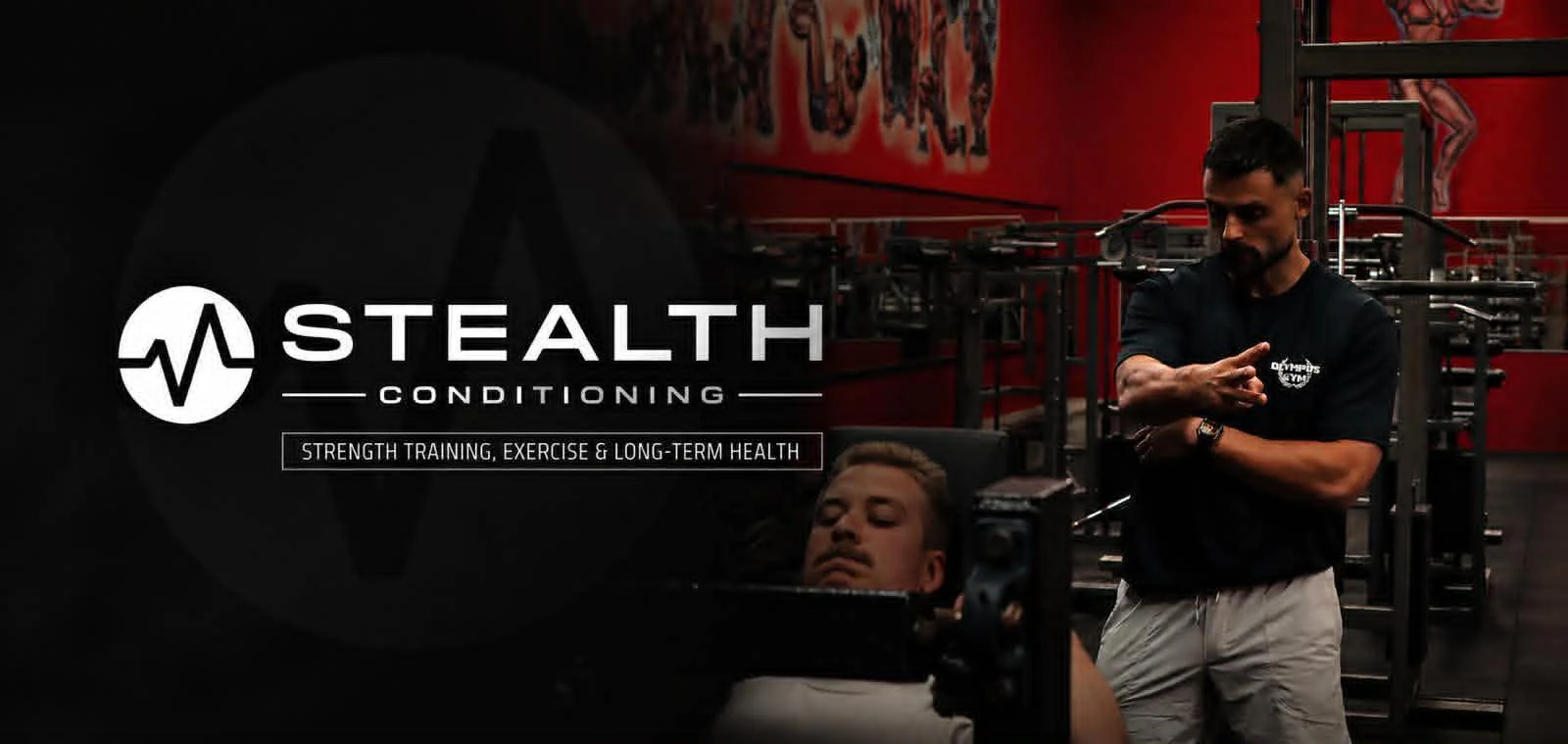
If the industry took one observation seriously, this would be it. Audience is not the lever the coaching media implies it is. Craft is. Coaches like Nick Hogan at Stealth Conditioning built durable online businesses without ever chasing a viral moment, which fits the pattern almost exactly.
Specialism Is Quietly Eating Generalism
A few years ago the typical online coach we saw was a generalist. Strength training, nutrition, lifestyle, all in one offer, all for whoever wanted to buy it. That model still exists and still works for some. But it is not where the growth is anymore.
The fastest-growing coaches we see are deeply specialised. Hypertrophy for women in their 40s. Strength for endurance athletes. Nutrition for shift workers. Hybrid training for hybrid runners. Postnatal return-to-training. The offers have got narrower, the messaging more precise, and the businesses healthier as a result.
There is a clean reason this is happening. Online coaching markets are now mature enough that generalism gets out-competed. A client with a specific problem will pick a specialist who solves that problem over a generalist who solves many problems, almost every time, at almost any price point. Specialisation is no longer a marketing tactic. It is a survival mechanism.
The coaches still trying to be everything to everyone are mostly not making it. The ones picking a lane and going deep are.
Retention Is Made Or Broken in the First Two Weeks
Most coaches assume client churn is something that happens months in, when results plateau or motivation flags. The pattern we see in the platform tells a different story. The biggest single predictor of whether a client will be around six months in is what happens in the first 14 days.
The signal is consistent. Clients who complete their first two weeks of programmed sessions, leave feedback, and receive a coach response in that window are dramatically more likely to still be active half a year later. Clients who fall off pace in the first fortnight rarely come back, regardless of the program quality.
That puts a particular weight on the moments most coaches treat as administrative. The welcome flow. The first program. The first feedback. The first response. These are not setup. They are the highest-leverage moments in the entire coaching relationship, and most coaches under-invest in them because they feel less important than the "real" coaching that comes later.
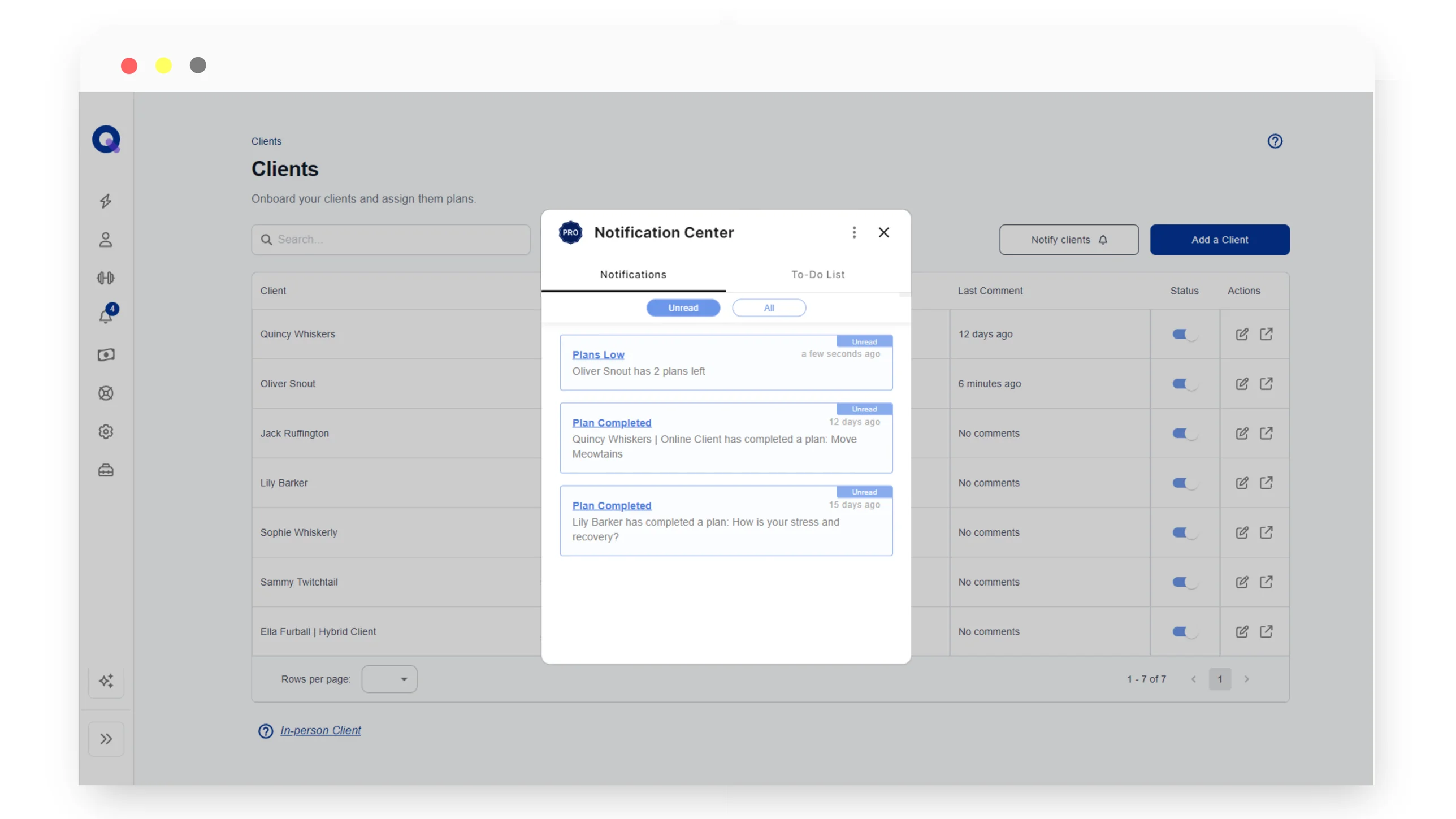
The coaches retaining best on the platform have all worked this out. Their first two weeks of client experience are the most polished part of their service, not the least. Many of them treat the first fortnight as a checklist worth tracking explicitly, which is exactly the kind of work the built-in to-do list inside the QuickCoach app exists for.
Feedback Is Where the Real Coaching Lives
Programs get the attention. Coaches obsess over them, debate them, post about them. But the pattern we see in retention has very little to do with how the program is built and almost everything to do with what happens after the client completes a session.
The clients who stay coached are the clients who feel coached. And the single most reliable signal of feeling coached is whether their coach responds to what they leave behind in the app. The note about the shoulder. The comment that it was harder than expected. The off-hand line about a stressful week at work.
Coaches who treat client feedback as a daily habit, even briefly, see retention curves that look measurably different from coaches who treat it as a weekly admin task. The mechanism is straightforward. A client who learns that what they write gets read keeps writing. A client who keeps writing keeps engaging. A client who keeps engaging stays.
The corollary is uncomfortable. The coach who writes a great program but never closes the feedback loop is delivering a worse client experience than the coach who writes an average program and responds to every note. Programs are not the moat. Responsiveness is.
We have since turned these observations into a practical system, with a copy-paste question set and the cadence that works, in our guide to client check-ins that keep clients.
The Tools Stop Mattering Past a Certain Point
Coaches new to online coaching tend to obsess over tools. Which platform. Which app. Which integration. Which automation. The assumption is that the right stack unlocks the business.
What we observe across thousands of mature coaching businesses is the opposite. Past a basic threshold of capability, the tooling stops being the determinant. Coaches running large rosters on simple setups outperform coaches running small rosters on elaborate ones, frequently and consistently.
What separates the businesses that scale from the ones that do not is almost never the technology. It is the operating rhythm. The weekly cadence of program building, feedback review, and client communication. The discipline of doing the same boring high-leverage tasks every week without negotiation. Tools enable that discipline. They do not create it.
This is worth saying because tool-hopping is one of the most common ways online coaching businesses lose momentum. Three platforms in a year, none of them adopted long enough to build real workflow on. The coaches who scale are usually the ones who picked something serviceable, learned it deeply, and stopped looking. Most of the coaches who came through the platform's recent ownership transition to Hale Health did so because they had already made that decision years earlier and were not interested in starting over.
Pricing Has Loosened, Not Tightened
There is a narrative in the industry that online coaching prices are being squeezed downward by competition. We do not see this. What we see is the opposite, and it is one of the more counterintuitive patterns in the platform.
Prices for the median online coach have generally held flat or risen modestly. Prices for specialist coaches have moved up materially. The price compression that does exist is almost entirely confined to the bottom tier of generalist coaches competing on volume in saturated markets. That is a real phenomenon, but it is a smaller part of the overall picture than the industry chatter suggests.
The headline observation is that online coaching, in aggregate, is professionalising and premiumising at the same time. The coaches who treat their work as a craft are charging accordingly, and clients are paying. The fear that AI tools or low-cost alternatives are going to gut coaching pricing is, in our view, mostly wrong. They are gutting the bottom of the market. They are pushing the top of the market further up.
The Quiet Rise of Hybrid
The cleanest signal we have seen in the past 18 months is the rise of hybrid models. Coaches who are not purely online and not purely in-person, but running both, often with the same clients.
This is not the model the online coaching industry talks about. The dominant narrative is still that online is the future and in-person is the past. The pattern in our community suggests the truer answer is that the future is both, sequenced thoughtfully, with online doing the work it is genuinely better at and in-person doing the work it is genuinely better at.
Hybrid coaches retain better than pure-online coaches. They charge more than pure-in-person coaches. They scale more than pure-in-person coaches and burn out less than pure-online coaches. The model has the structural advantages of both delivery formats and the structural disadvantages of neither.
We expect this pattern to keep accelerating. The coaches who will define the next decade of the profession are mostly not going to be choosing between online and in-person. They are going to be choosing the right blend for their clients, their market, and their business.
What This Means for the Industry
Pulling these threads together, the picture that emerges is meaningfully different from the one most online coaching media still paints.
The growth of the category is global now, not just Western. The businesses that succeed are practitioner-led rather than audience-led, and specialism is beating the generalist model. Retention gets decided in the first two weeks. Feedback matters more than the programs themselves, and rhythm matters more than the tools. Prices are firming up rather than eroding, and hybrid coaching is quietly becoming the model of the next decade rather than a transitional compromise.
Most of these are uncomfortable truths for the parts of the industry built on the older narrative. The audience-first marketing playbook. The generalist-coach business model. The pure-online evangelism. The tool-of-the-month culture. None of them describe the businesses we see actually winning.
What we see winning, instead, is quieter and more durable. A coach picks one kind of client, gets genuinely good at serving them, builds a weekly operating rhythm, and holds it for years. The platforms and the marketing tactics keep shifting around that. The thing underneath, a narrow focus run with consistency, has not moved in the entire time we have been watching.
Frequently Asked Questions
What is the biggest predictor of client retention in online coaching?
What happens in the first 14 days. Clients who complete their initial two weeks of programmed sessions, leave feedback, and receive a coach response in that window are far more likely to still be active six months later than clients who fall off pace early.
Are online coaching prices going down?
No, in aggregate. Prices for the median online coach have generally held flat or risen modestly, and prices for specialist coaches have moved up materially. Compression is concentrated at the bottom tier of generalist coaches in saturated markets.
Does a large social following lead to a successful online coaching business?
Not in the way the industry implies. The coaches whose rosters grow steadily and whose retention holds long-term are usually mid-sized practitioners with deep expertise and almost no public profile. Audience brings clients in. Craft keeps them.
Is hybrid coaching better than purely online or purely in-person?
It is the fastest-growing model in our community. Hybrid coaches retain better than pure-online coaches and charge more than pure-in-person coaches. The combination has the structural advantages of both delivery formats and the disadvantages of neither.
QuickCoach is the lightweight coaching platform used by tens of thousands of coaches around the world, and part of the Hale Health ecosystem alongside FitFocus. Patterns and observations in this article reflect what we see across both platforms and the conversations we have with coaches every day. New coaches weighing where to start often compare the best free coaching software for 2026 before they commit, and many ask how we keep a genuinely free plan viable, which we explain in our piece on building a sustainable free coaching platform. Coaches ready to scale can weigh what the QuickCoach Pro features and pricing add once a roster grows. We publish updated category observations periodically on the QuickCoach blog. For the backstory on how QuickCoach became part of Hale Health, read why we acquired QuickCoach in December 2025.
Last updated June 2026. Observations reflect patterns across the QuickCoach and FitFocus communities and are reviewed as the category shifts.
Questions, feedback, or coaches who want to share their own observations: support@quickcoach.fit.