Search for how to get online coaching clients and you'll find the same list rewritten fifty different ways. Post every day. Niche down. Build a funnel. Start a podcast. None of it is exactly wrong, but almost all of it is written for a coach who already has thirty clients and wants eighty. It skips the stage you're actually stuck at: getting anyone at all to pay you for coaching delivered through a screen.
The first 10 clients are a different problem, and they respond to a different playbook. This is that playbook. Where the first ten actually come from, the order to work in, and what a real coach's sequence looked like. No funnel required.
Quick answer
To get your first 10 online coaching clients, start with people who already know you train people: past clients, gym members, friends of friends. Approach them individually, not by broadcast. Work one channel properly instead of being everywhere. Then let visible client results recruit the rest. Ads come later, if ever.
Why the first 10 online coaching clients are a different problem
A coach with fifty clients sells with proof. Testimonials, transformations, a feed full of client wins. Strangers see the evidence and some of them buy.
At zero clients you have none of that, and pretending otherwise is what makes most new coaches' marketing fall flat. Polished branding with no results behind it convinces nobody. So the standard advice, which assumes proof exists and just needs distribution, doesn't apply yet. What you have instead is trust, concentrated in a small group of people who already know you. The first-10 playbook is built on spending that trust well, then converting it into the proof that everything later runs on.
Three principles carry the whole stage. Warm network before content. One channel done properly rather than five done thinly. Results made visible over marketing made pretty.
Start with people who already know you train people
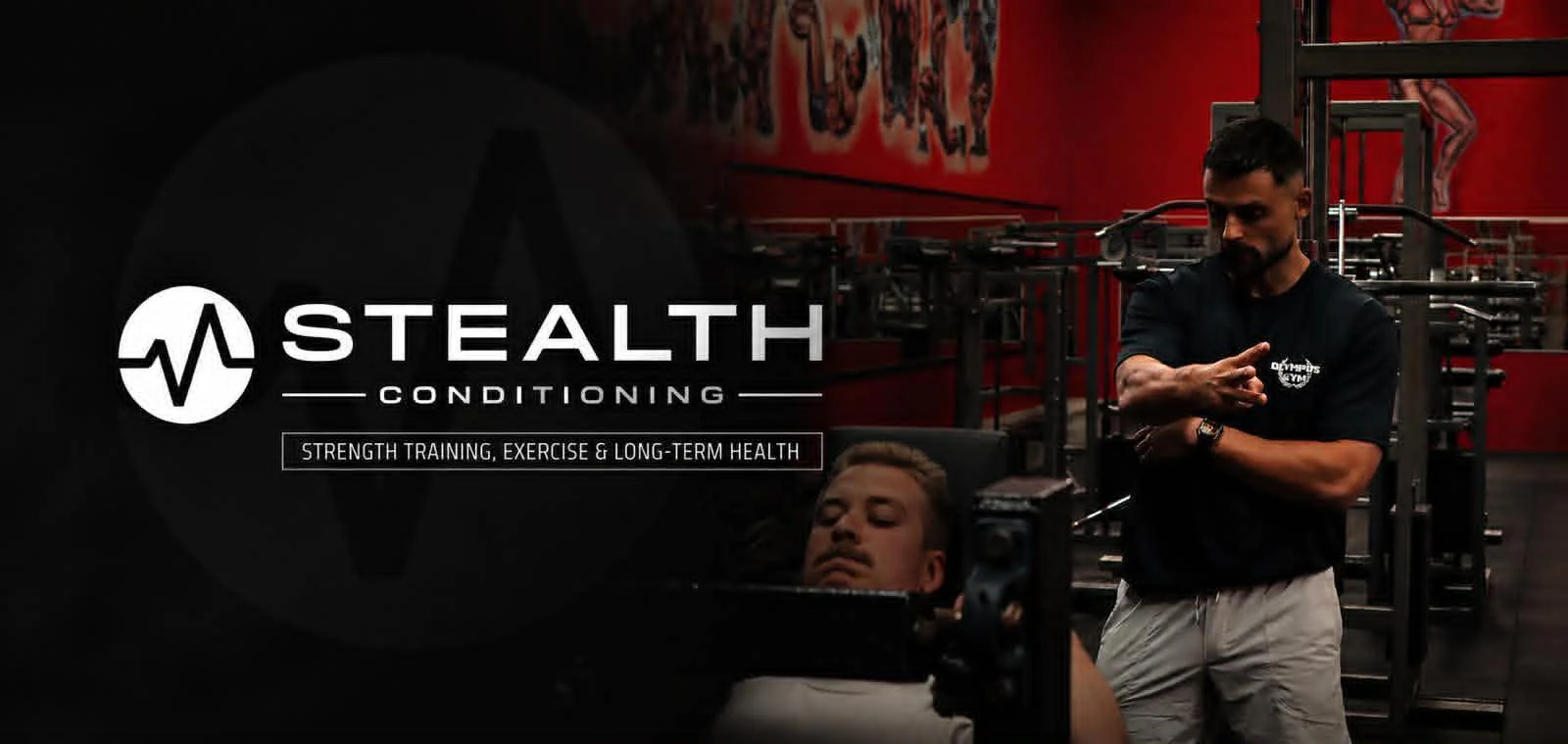
When Nick Hogan took his coaching business, Stealth Conditioning, online, his first online clients were not strangers from Instagram. They were people already training with him at Olympus Gym in Sydney's south-west. He spoke to every one of them individually, face to face at the end of a session or by phone, and most said yes in the conversation. His full account of moving from the gym floor to online coaching is worth reading whole, but the acquisition lesson sits right there in the method: individual conversations with warm people, not announcements to cold ones.
If you're transitioning from in-person work, your warm network is your existing roster and the playbook is his. You don't have to drop the gym floor to do it either: plenty of coaches keep their in-person clients and add online ones alongside, a setup our guide on the hybrid personal training model walks through, pricing and all. If you're starting from nothing, you still have more warm names than you think. Write the list before you decide it's short:
- Anyone you've ever trained, even casually or unpaid
- People at your gym who've asked you form or programming questions
- Friends and family who've mentioned wanting to get in shape, and the people they know
- Old workmates, teammates, and the group chats you're already in
Thirty names is a normal result. Then the part most coaches dodge: message them one at a time. Not a launch post. A direct message that names something specific about them. "You mentioned in March you wanted to get strong again after the knee. I've started coaching people online and I have space for five people. Want me to send you what it looks like?" That message gets replies because it's about them. "Excited to announce my new online coaching business" gets congratulations and no clients.
This is also the honest answer to how to get your first personal training clients online with no audience. You don't need an audience. You need thirty conversations, and you already know who they're with.
Pick one channel and work it properly
The crowded listicles tell you to be everywhere. For your first 10, being everywhere is how you end up nowhere, because every channel takes months of consistent effort before it produces a single client and you can't sustain that effort in five places at once.
Pick the one place your kind of client already pays attention to you. For most coaches that's Instagram. For some it's a local Facebook group, a running club's Strava, a workplace Slack. The channel matters less than the standard you work it to, and "properly" means three things. Show real client work, not stock-photo motivation. Reply to every comment and DM the same day, because at this stage every conversation is a potential client. And hold the routine for ninety days before you judge it.
Measure conversations started, not followers gained. A post that triggers two DMs from people asking what you offer beat the one that got forty likes from other coaches.
Make your results visible early
Proof beats polish, but proof has to be seen to work. From client one, treat documentation as part of the service. Progress photos with permission. Check-in numbers over time. The text where a client says their back pain is gone. Ask each client early whether they're comfortable being shared, and most will say yes when the results are theirs.
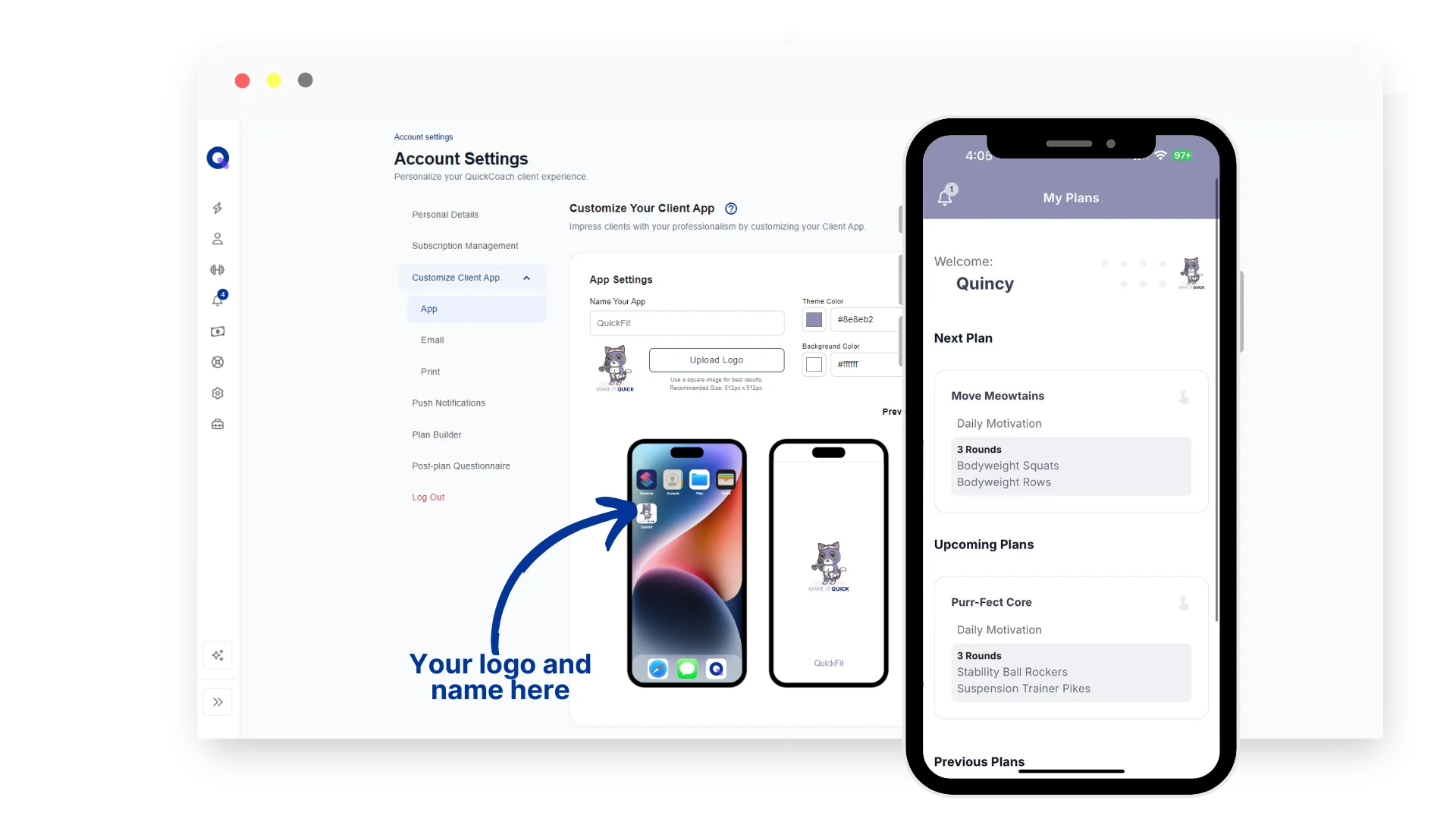
Some of this now happens without you driving it. When a client finishes a session in the QuickCoach app, they can share the completed workout straight to their socials in one tap, and on Pro the share goes out carrying your logo and colours. The workout sharing feature is word of mouth made visible: your client celebrating a session in front of their whole network, with your brand on the graphic. Nick found the enquiries that came from those shared posts warmer than anything paid advertising had produced for him.
One genuine transformation, documented and shared by the person who lived it, will bring you more of your first ten than any amount of branding work. This is why the sequence matters. Coach the first three like the business depends on them, because it does.
Charge properly from client one
The temptation at zero clients is to discount until someone says yes. Resist it. When Nick priced his transition, he held existing clients at their current rate and priced new clients properly from day one. "The value is real, and the price you set on launch is the price that anchors every conversation going forward," as he put it. A founding rate with a defined end date is fine. An apologetic one is not.
If you don't know what the number should be, work backwards from the income you want rather than guessing off a competitor's page. Our guide on how much to charge for online coaching walks the formula, and the free rate calculator does the arithmetic in about a minute.
The first-10 sequence
- Get delivery ready before any outreach. Program library built, check-in cadence set, welcome flow sorted. Nick's rule: tell no one until the systems exist.
- Write your 30 warm names.
- Message ten a week, individually, with a specific personal offer. Expect two or three yeses from the first thirty.
- Coach the first three exceptionally and document everything, with permission.
- Open your one channel and post the proof as it accumulates.
- At each client's first milestone, ask for one introduction. "Who do you know who wants what you just got?"
Run honestly, that sequence tends to produce a split that surprises people: roughly half the first ten from direct warm outreach, the rest from referrals and shared results. Almost none from cold content, which is exactly why leading with content stalls.
Step six is the one coaches skip, usually because asking feels like selling. It isn't, once you have the timing and the words: how to ask clients for referrals covers the moment to ask and three scripts to copy.
Step 1 of the sequence costs nothing
Getting delivery ready means a program library, a check-in cadence, and a client app. QuickCoach gives you all of it free for up to 20 active clients, no time limit, which covers your first 10 twice over.
Start coaching freeOther coaches are a channel too
New coaches treat other coaches as competition. Mostly they're a referral source. A powerlifting specialist gets fat-loss enquiries he doesn't want. A coach at capacity gets DMs she has to turn away. Be visible to the coaches around you, be clear about who you serve, and some of their overflow becomes your roster. The coaching community we work with passes clients sideways constantly, a pattern we've written about in what we've learned from the online coaching community.
The same coach-to-coach word of mouth has a software angle worth knowing about. QuickCoach's Free with Friends referral program gives any coach you refer 50% off their first two months of Pro, and gives you $10 a month off your own bill for up to six months per referral, with no cap. It won't bring you clients. It will cut your costs while the roster is still small, and it gives you a reason to be in conversation with the coaches who'll later send clients your way.
Frequently Asked Questions
How do I get online coaching clients with no audience?
You do not need an audience for the first 10. Most first rosters fill through direct, individual conversations with people who already know the coach trains people: past clients, gym members, friends of friends, old workmates. Content and audience-building matter later, once there are results to show.
Should I coach people for free to get my first clients?
Rarely free, sometimes founding-rate. Open-ended free coaching attracts people who do not show up, and no-shows produce no results to point at. A structured founding arrangement works better: a defined period, a clear outcome, and an agreement to provide a testimonial and progress data at the end, with the full rate stated up front.
How long does it take to get your first 10 online coaching clients?
Coaches working an existing in-person roster or a warm network can sign their first handful within weeks. Starting completely cold, two to four months from first conversation to ten paying clients is a realistic arc, because the second five usually come from results the first five produce.
Do I need paid ads to grow an online coaching business?
Not for the first 10, and usually not for the first 30. Ads amplify proof; they do not replace it. A coach with no testimonials, no transformations, and no visible client work pays for clicks that do not convert. Build the proof loop first, then decide whether paid traffic is worth pointing at it.
Once the tenth client signs, the problem changes shape. The question stops being how to find clients and starts being how many you can serve well, which is where our breakdown of how many clients an online coach can actually handle picks up. Questions about getting started? Reach out at support@quickcoach.fit.
Last updated June 2026.