Ten years ago a glute-specific exercise in a general-population program was a tell that the coach came from physique. Not any more. When we read what coaches assigned on QuickCoach in October 2026, the hip thrust reached a quarter of all clients and sat sixth among 4,721 movements, ahead of the squat. Hip abduction gained more client reach than almost anything else that month.
This report ranks the glute exercises coaches program, shows what changed from September, separates the direct glute work from the hinges and lunges that train the glutes on the way past, and gives a way to fit it all in.
The short answer
The glute exercises coaches program most are the hip thrust (25.8% of clients in October 2026), glute bridge (18.6%) and hip abduction (15.3%), then hip adduction (8.1%), the lateral band walk (6.6%), sumo squat (6.0%) and glute kickback (5.4%). The Romanian deadlift, at 34.9%, trains the glutes too but counts as a hinge.
What this is, in one paragraph
Coaches type exercise names as free text. Every month we group every spelling of the same movement together and count the share of clients assigned each one, the method behind our living what coaches program page. For this report we read the movements whose main job is the glutes from 232,596 verified assigned exercises in October 2026, with September figures where we published the same measure. The full method is at the foot of the page.
What glute exercises do coaches program most?
The hip thrust leads and it isn't close among direct glute work. Then come the glute bridge, which is the floor version most home clients get, and the two machine movements, hip abduction and adduction. The banded and bodyweight activation drills fill out the list.
| Movement | Oct 2026 | Sep 2026 |
|---|---|---|
| Hip thrust | 25.8% | 24.5% |
| Glute bridge | 18.6% | 19.1% |
| Hip abduction | 15.3% | 13.1% |
| Hip adduction | 8.1% | 6.9% |
| Lateral band walk | 6.6% | 6.2% |
| Sumo squat | 6.0% | n/a |
| Glute kickback | 5.4% | 5.2% |
| Sumo deadlift | 4.7% | n/a |
| Clamshell | 3.2% | 4.0% |
| Monster walk | 2.1% | 2.0% |
| B-stance hip thrust | 1.2% | n/a |
| Cable kickback | 0.8% | n/a |
| Frog pump | 0.8% | n/a |
| Glute bridge march | 0.8% | n/a |
| Single-leg hip thrust | 0.5% | n/a |
Share of clients assigned the movement at least once in the month. "n/a" means we didn't publish that movement's September figure. The hip thrust and glute bridge are separate movements and are counted separately: a hip thrust has the shoulders on a bench, a bridge has them on the floor.
October's list leaned towards the loaded and machine end. The hip thrust gained 1.3 points, hip abduction 2.2 and hip adduction 1.2, while the glute bridge and clamshell, the two floor drills, each slipped. That matches the month's wider move towards gym equipment, which we cover in what changed from September to October 2026. The hip thrust also sits four places above the squat (21.2%) in the overall ranking, and well clear of the back squat (12.2%, 31st).
Which other movements train the glutes?
Most of the big lower-body lifts. The Romanian deadlift reached 34.9% of clients in October, the conventional deadlift 16.8% and the trap bar deadlift 9.1%, and all three are hinges where the glutes do the finishing. The single-leg work does the same job with a balance demand on top: the Bulgarian split squat reached 17.9%, the reverse lunge 14.8% and the step-up 10.1%.
We keep those out of the glute table because their main job is the hinge or the lunge pattern, and a client who gets a Romanian deadlift isn't necessarily getting glute-focused work. But a program with a hinge, a single-leg movement and a hip thrust covers the glutes three ways, which is what most coaches on the platform are building. The hinge side is ranked in full in whether coaches program enough hamstring work.
Why has glute training gone mainstream?
Part of it is who's lifting. Strava's 2025 Year in Sport report, which covers activity from September 2024 to August 2025, found women logged weight training at rates 21% higher than men, and that 61% of Gen Z respondents said they lift for aesthetics (reported by Athletech News, December 2025). The Sports & Fitness Industry Association's 2026 participation report describes resistance-machine use in the United States as stable but "evolving demographically".
The hip thrust and the abduction machine are the exercises that demographic asks for, and coaches are programming them.
Part of it is simpler. A hip thrust loads the glutes heavily with almost no technical learning curve and no spinal load, which makes it an easy lift to give an online client in week one. Coaches on the platform give it to one client in four.
Why can't the kickback figures be added together?
Because the same movement is written four ways and our grouping keeps them apart. "Glute kickback" reached 5.4% of clients in October, "cable kickback" 0.8%, "kickback" 0.7% and "triceps kickback", a different exercise altogether, 2.0%. The first three overlap in clients, so the true reach of the kickback sits somewhere between 5.4% and about 6.9%, and we report the grouping as it stands rather than guess.
The same goes for "hip abduction" and "seated abduction" (0.5%). Our guide to exercise names explains why these splits happen and how to keep your own library clean.
How should you program glute work?
Give most clients one hinge, one single-leg movement and one direct glute exercise a week, then add the banded drills as warm-up. That's the shape the platform data describes, and it holds whether the client trains in a gym or at home. This is general coaching guidance alongside our data, not a platform figure.
- Gym client: hip thrust, Romanian deadlift and a hip abduction set, with a reverse lunge or Bulgarian split squat on the second lower-body day.
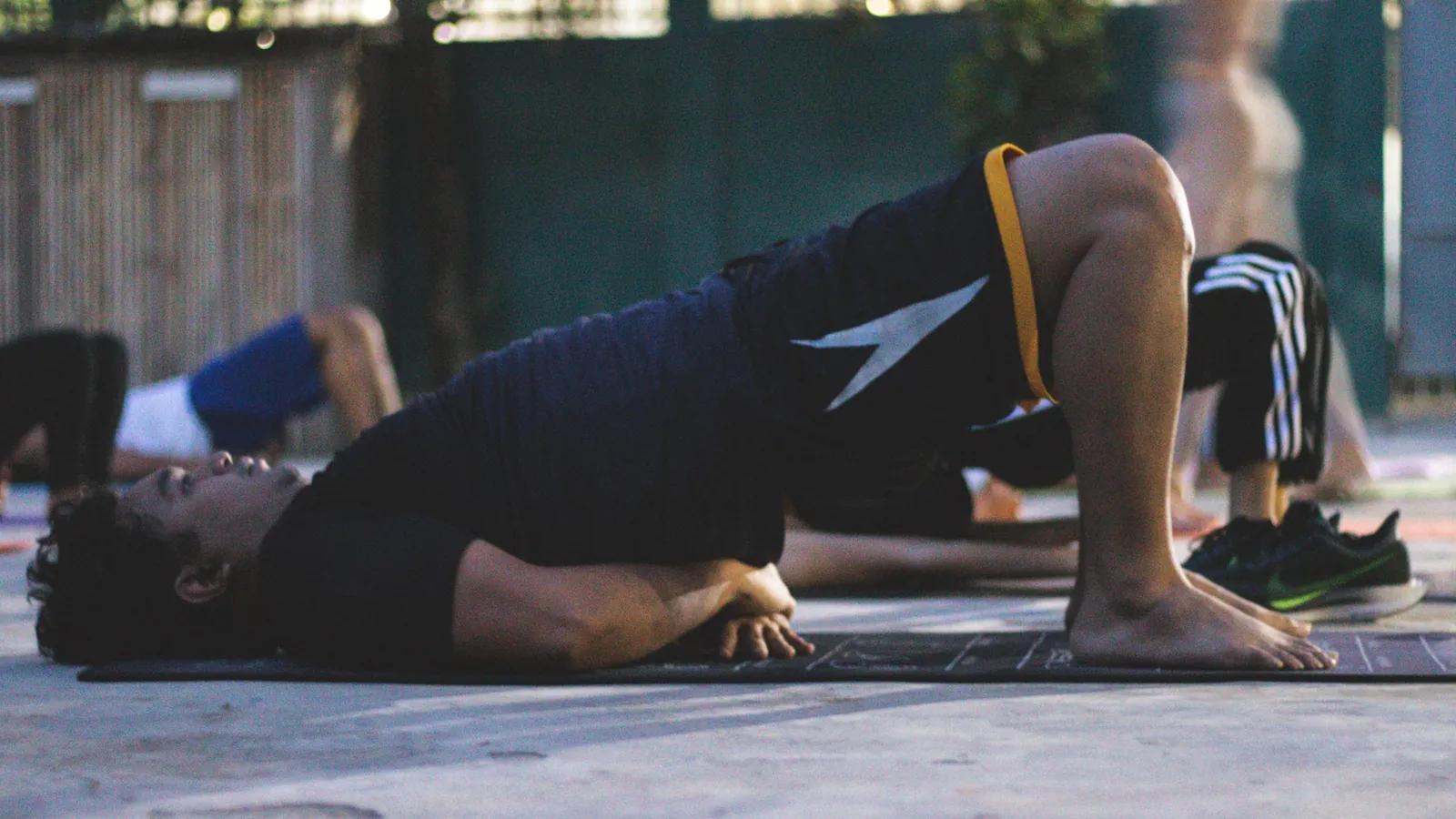
- Home client: glute bridge or a single-leg glute bridge, a dumbbell Romanian deadlift, lateral band walks and clamshells before the session.
- Physique client: the same skeleton with more direct volume: a second hip thrust day, cable kickbacks and the B-stance hip thrust for the weaker side. Our physique prep guide covers how coaches deliver that kind of volume online.
One caution from the data. The clamshell fell to 3.2% of clients in October and the lateral band walk only edged up, so the activation drills are losing a little ground to the loaded work. Both have a place, but if a client is short on time, the hip thrust and the hinge are where the glutes get stronger. The rest of the single-joint picture, from lateral raises to leg extensions, is in the isolation exercises coaches program.
Methodology and limitations
How we got these numbers
Source. October 2026 programming on QuickCoach, a platform used by more than 40,000 coaches and fitness businesses worldwide: 232,596 verified assigned exercises grouped into 4,721 canonical movements. September figures are from the September 2026 read published on what coaches program and in the September data reports. No individual coach, client or plan is identifiable in anything published here.
Definitions. A movement's figure is the share of clients assigned it at least once in the month, every spelling grouped together. "Glute exercises" is our editorial grouping of movements whose main job is the glutes; hinges and lunges are reported separately. Figures for movements with split names overlap and are never summed.
Limits. Where a name doesn't state the movement precisely, we can't tell a hip thrust from a bridge; we report the names as written. External surveys cited above measure different populations and are context, not a like-for-like comparison. Figures are rounded.
Frequently asked questions
What glute exercises do coaches program most?
The hip thrust, by a distance. It reached 25.8% of clients on QuickCoach in October 2026, sixth among all movements. The glute bridge (18.6%), hip abduction (15.3%), hip adduction (8.1%), lateral band walk (6.6%), sumo squat (6.0%) and glute kickback (5.4%) follow.
Is the hip thrust more popular than the squat?
In coaching programs, yes. The hip thrust reached 25.8% of clients in October 2026 against 21.2% for the squat and 12.2% for the back squat. The goblet squat, at 21.3%, is the squat variation closest to it.
What is the difference between a hip thrust and a glute bridge?
Shoulder position. In a hip thrust the shoulders rest on a bench so the hips travel through a longer range and can be loaded with a barbell; in a glute bridge the shoulders stay on the floor. Coaches program the hip thrust for gym clients and the bridge at home. This is general guidance, not a QuickCoach data figure.
Did coaches program more glute work in October 2026?
The loaded and machine end rose. The hip thrust gained 1.3 points, hip abduction 2.2 and hip adduction 1.2 from September, while the glute bridge fell 0.5 and the clamshell 0.8. It matches October's wider shift towards gym equipment.
What glute exercises can a client do at home?
A glute bridge or single-leg glute bridge, a dumbbell Romanian deadlift, lateral band walks, clamshells and a reverse lunge cover the hinge, the direct glute work and the activation drills. All of them already rank in what coaches program, so the home version isn't a compromise.
Published from October 2026 programming data. The full monthly ranking lives on what coaches program. Questions about the data? Reach us at support@quickcoach.fit.