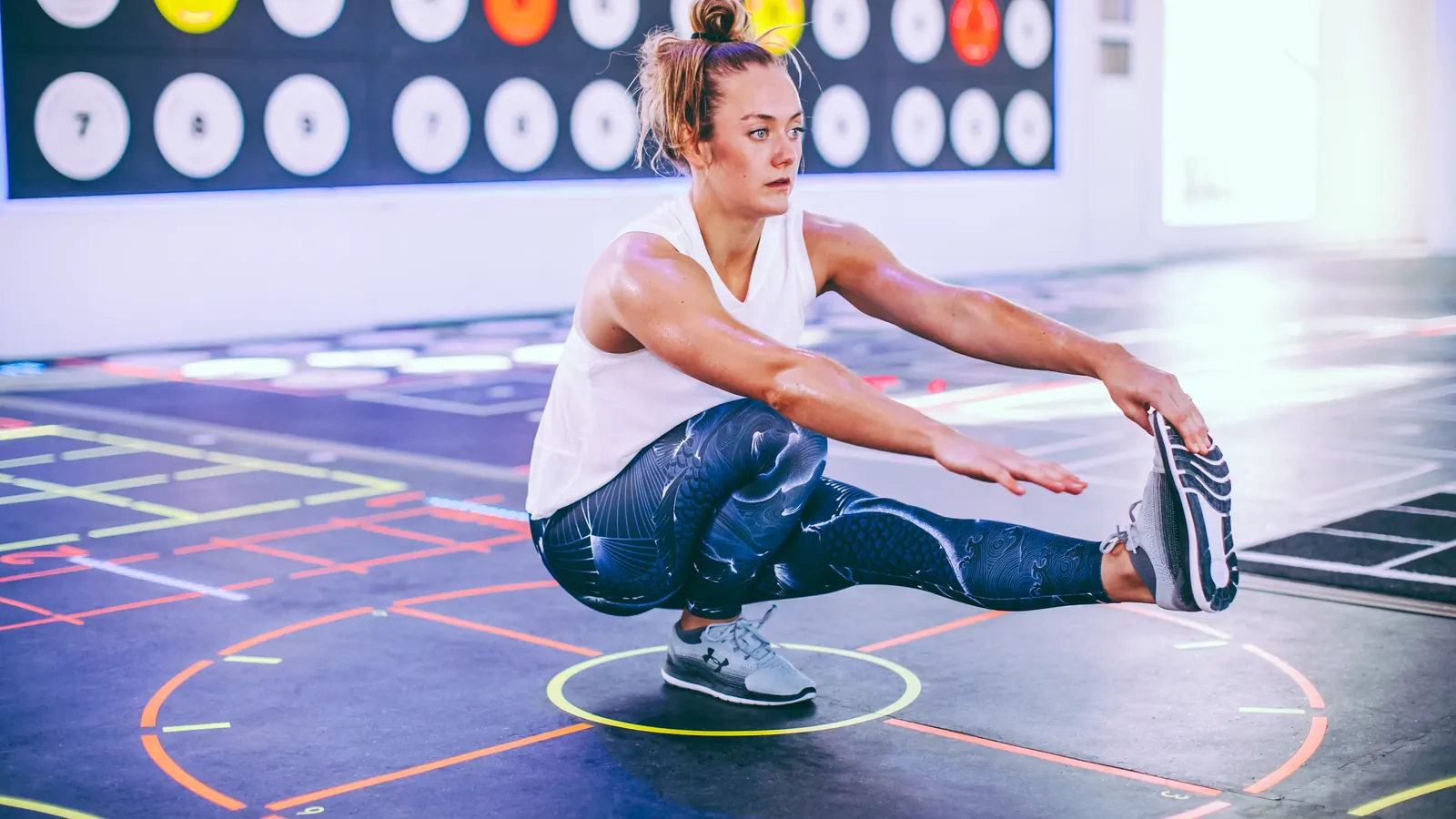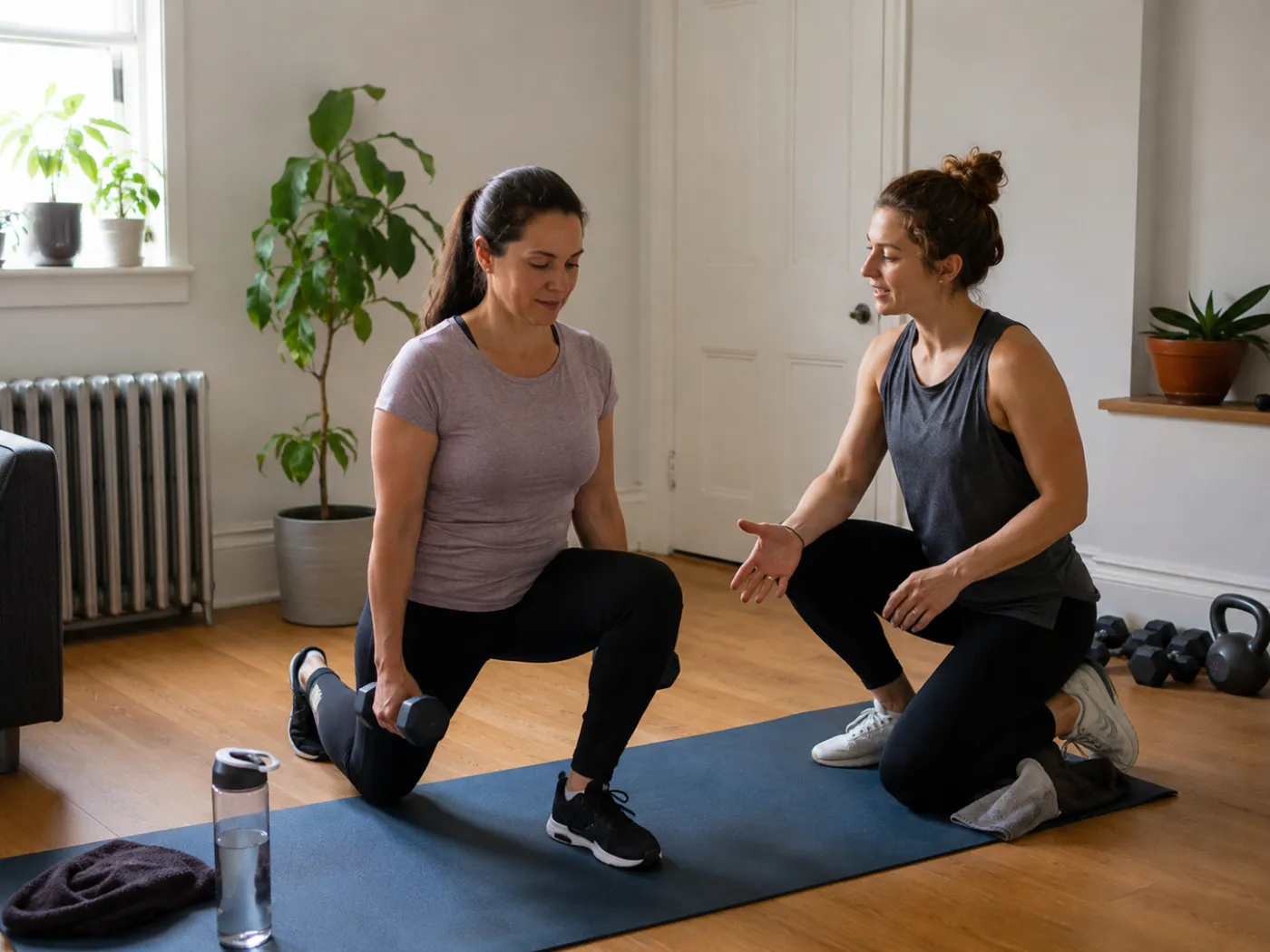
Prehab exercises are the drills coaches add to keep a healthy client healthy: low-load work for the groin, hamstrings, shoulders, knees and trunk, the places training injuries tend to start. They rarely make a highlight reel. They do make programs. When we read what coaches assigned on QuickCoach in September 2026, prehab staples sat right alongside the big lifts.
This report picks out those drills from 229,713 assigned exercises, groups them by body area, and shows how they moved from August. Then it covers what the research says about the standouts and how to fit them into a session without adding time.
The short answer
The prehab exercises coaches program most are the dead bug (18.2% of clients in September 2026) and the face pull (18.0%), both ahead of the deadlift at 15.9%. The Pallof press (13.1%), side plank (12.2%) and bird dog (7.2%) cover the trunk. The Copenhagen plank leads for the groin at 5.8%, up from 4.4% in August.
What this is, in one paragraph
Coaches type exercise names as free text. Every month we group every spelling of the same movement together and count the share of clients assigned each one, the method behind our living what coaches program page. For this report we pulled out the movements coaches typically use as prehab and read their client reach in September 2026, with August figures where we published the same measure. The full method is at the foot of the page.
Which prehab exercises do coaches program most?
Trunk and shoulder drills lead by a distance. The dead bug and the face pull each reached about 18% of clients in September, which puts them in the top 20 of all 4,144 movements. That's more clients than the deadlift, the incline bench press or the pull-up. The Pallof press, at 13.1%, reached more clients than the back squat.
The most-programmed prehab exercises
Share of clients assigned each movement at least once, September 2026
For comparison, the deadlift reached 15.9% of clients and the back squat 10.9% in the same month.
A caveat on two rows. The band pull-apart and shoulder external rotation are each written several ways that our grouping still keeps apart: "band pull apart" (2.6%) and "pull-apart" (1.6%) sit separately from the 4.6% above, and "shoulder external rotation" (2.9%) sits apart from "external rotation". The true reach of both is higher than one row shows. Why names split like this is covered in our guide to exercise abbreviations and name variations.
What do coaches program for each body area?
Sort the drills by the job they do and a clear pattern appears. Coaches cover the trunk and shoulders with common, well-known drills, and use more specialist ones lower down the body.
| Exercise | Sep 2026 | Aug 2026 |
|---|---|---|
| Shoulders | ||
| Face pull | 18.0% | 18.8% |
| Band pull-apart | 4.6% | n/a |
| External rotation | 4.3% | n/a |
| Y raise | 1.4% | 1.4% |
| Wall slide | 1.3% | n/a |
| Trunk | ||
| Dead bug | 18.2% | 15.5% |
| Pallof press | 13.1% | 11.4% |
| Side plank | 12.2% | 12.6% |
| Bird dog | 7.2% | 7.6% |
| Suitcase carry | 3.3% | n/a |
| Hips and groin | ||
| Lateral band walk | 6.2% | 6.8% |
| Copenhagen plank | 5.8% | 4.4% |
| Clamshell | 4.0% | n/a |
| 90/90 hip switch | 2.2% | n/a |
| Hip airplane | 1.6% | 1.4% |
| Knees and hamstrings | ||
| Wall sit | 5.1% | n/a |
| Step down | 2.7% | n/a |
| Reverse Nordic curl | 2.0% | n/a |
| Nordic curl | 1.5% | 1.5% |
| Spanish squat | 1.1% | 1.0% |
| Ankles and shins | ||
| Tibialis raise | 1.2% | 1.4% |
| Calf stretch | 1.1% | n/a |
| Dorsiflexion drill | 0.8% | n/a |
Share of clients assigned the movement at least once in the month. "n/a" means we didn't publish that movement's August figure, so there's nothing like for like to compare.
Some of these do double duty. A face pull builds the upper back for a physique client as much as it protects a presser's shoulders, and a lateral band walk is often a glute warm-up. We've counted them because coaches commonly use them for tissue tolerance, not because every set is prehab.
Is prehab growing?
In September it was. The dead bug gained 2.7 points from August and the Pallof press 1.7 points, the core pattern's share of all assigned work rose from 10.8% to 11.9%, and the Copenhagen plank went from 153 clients to 221. Shoulder external rotation rose from 2.4% to 2.9% of clients. A few drills eased: the side plank and bird dog each slipped about half a point, and the tibialis raise went from 1.4% to 1.2%.
One month is a short window, so read it as a direction rather than a trend. We break down every move in what changed in coaches' programming from August to September 2026.
What does the research say about the standouts?
Two of these drills come with unusually strong evidence from football, which helps explain why they've spread into general coaching.
The Copenhagen plank. In a 2019 cluster-randomised trial of 35 Norwegian semi-professional football teams, published in the British Journal of Sports Medicine, players who did a Copenhagen adduction programme reported groin problems 13.5% of the time over the season against 21.3% in the control group. That's about 41% lower odds of a groin problem. The programme was one exercise, done three times a week in preseason and once a week in season.
The Nordic curl. A 2019 meta-analysis in the same journal, pooling 15 studies and 8,459 athletes, found programmes including the Nordic hamstring exercise reduced hamstring injuries by up to 51%. A later reappraisal argued the effect was less certain than that headline, so treat it as promising rather than proven. Coaches seem to agree with the caution: the Nordic curl reached 1.5% of clients in both months, while the gentler reverse Nordic reached 2.0%.
The evidence for the trunk and shoulder drills is more general. They're low-risk ways to train control and endurance, which is why they suit almost any client.
How should I fit prehab into a client's program?
Small doses, placed where they cost nothing. One or two drills per session, two or three times a week, is plenty for most healthy clients. Three placements work:
- In the warm-up. A lateral band walk or 90/90 hip switch before lower-body work, a band pull-apart before pressing.
- As a filler. Pair a dead bug or Pallof press with the rest periods of a main lift. The client was going to sit there for two minutes anyway.
- As a finisher. A Copenhagen plank or tibialis raise at the end of a lower-body day, two or three short sets.
Progress them like any other exercise. Our data shows coaches writing the level into the name: "bent knee Copenhagen plank" is the short-lever regression and "deficit Copenhagen plank" the hard end. Uncommon drills also need clearer instructions than a squat, so attach a demo video and a one-line cue. Our guide to writing coaching cues for online clients covers what to say.
Where does prehab end and rehab begin?
At the injury. Prehab is training for healthy tissue. Once a client has pain that changes how they move, or a diagnosed injury, assessment and treatment belong with a physiotherapist or another qualified health professional. You keep coaching around it, in line with their advice. Our page on scope of practice for coaches sets out where the line sits.
If you coach clients through and after injury alongside a clinician, the drills above are the vocabulary you'll share. Our guide for rehab and mobility coaches covers the software side, and the long tail of specialist drills is mapped in uncommon exercises coaches actually program.
Methodology and limitations
How we got these numbers
Source. September 2026 programming on QuickCoach, a platform used by more than 40,000 coaches and fitness businesses worldwide: 229,713 verified assigned exercises grouped into 4,144 canonical movements. August figures are from the August 2026 read, published on what coaches program and in our uncommon exercises report. No individual coach, client or plan is identifiable in anything published here.
Definitions. A movement's figure is the share of clients assigned it at least once in the month, every spelling grouped together. "Prehab" is our editorial grouping of movements coaches commonly use for tissue tolerance and injury risk reduction. It isn't a tag coaches apply, and some of these movements are also used for other goals.
Limits. Grouping is imperfect for drills written many ways, so some reach figures understate the true total. We can't see why a coach assigned a drill, only that they did. Figures are rounded. This report describes what coaches program, not a recommendation for any individual client.
Frequently asked questions
What prehab exercises do coaches program most?
The dead bug and the face pull. In September 2026 the dead bug reached 18.2% of clients on QuickCoach and the face pull 18.0%, both more than the deadlift at 15.9%. The Pallof press (13.1%), side plank (12.2%) and bird dog (7.2%) follow for the trunk, and the Copenhagen plank (5.8%) leads for the groin.
What is the difference between prehab and rehab?
Prehab is training a healthy client does to build tolerance in tissues that tend to get hurt, such as the groin, hamstrings, shoulders and knees. Rehab is treatment of an existing injury and usually sits with a physiotherapist or other health professional. Coaches program prehab; they refer injuries on.
Does the Copenhagen plank prevent groin injuries?
There's good evidence it helps in football. A 2019 cluster-randomised trial in the British Journal of Sports Medicine found players doing a Copenhagen adduction programme reported groin problems 13.5% of the time against 21.3% in the control group, about 41% lower odds.
How often should clients do prehab exercises?
One or two drills per session is enough for most clients, two or three times a week. The Copenhagen programme in the 2019 groin trial ran three times a week in preseason and once a week in season. This is general coaching guidance, not a QuickCoach data figure.
Where should prehab go in a workout?
Three places work: in the warm-up, as a filler between sets of a main lift, or as a short finisher. Fillers cost no extra time, which makes them the easiest way to fit prehab into a busy client's session.
Published October 2026 from September 2026 programming data. The full monthly ranking lives on what coaches program. Research summaries are from the British Journal of Sports Medicine papers linked above. Questions about the data? Reach us at support@quickcoach.fit.