Ask ten coaches whether loaded carries are worth programming and most will say yes without thinking. Then look at what they write. On QuickCoach, carries were 1.0% of assigned exercises in August 2026, 0.8% in September and 0.8% in October. Pull is 18.3%. Even conditioning, which coaches also under-program, is 4.6%. Carries are last by a distance, every month.
That gap between what coaches believe and what they write is the subject of this piece. We think it's a blind spot, a structural one, and we think it's worth closing because the fix costs two minutes a session.
The short answer
Carries are 0.8% of assigned exercises because programs are written in sets and reps, built around named muscles, from libraries that mostly have no carry in them. None of those is a judgement on the movement. The farmer's carry still reaches 8.3% of clients, the suitcase carry 3.3%, and both climbed or held in October.
What this is, in one paragraph
Coaches type exercise names as free text. Every month we group every spelling of the same movement together and count the share of clients assigned each one, the method behind our living what coaches program page. Pattern shares are of classifiable assigned exercises on a trimmed set. For this piece we pulled every carry out of the October 2026 read and lined it up against the August and September figures we've already published. The opinions are ours. The full method is at the foot of the page.
Quickfire answers on loaded carries in coaching
- How much of coaching programming is loaded carries?
- 0.8% of assigned exercises on QuickCoach in October 2026, the least-programmed pattern for the third month running. It was 1.0% in August and 0.8% in September. Pulling, the largest pattern, is 18.3%, about 23 times as much.
- How many clients get a farmer's carry?
- 8.3% of clients on QuickCoach in October 2026, up a point from September. The suitcase carry reached 3.3%, and the overhead carry (0.7%), front rack carry (0.7%) and waiter carry (0.5%) sit in the long tail.
- Why do coaches program carries so rarely?
- Four structural reasons, in our reading: a carry is prescribed by distance or time rather than sets and reps, it has no single muscle to sell, it is missing from most stock exercise libraries, and clients never ask for it. None is a judgement on the movement.
- Are loaded carries a core exercise?
- Yes. A farmer's or suitcase carry resists side-bending and rotation under heavy load while walking. The farmer's carry reached 8.3% of clients on QuickCoach in October 2026, more than the bird dog (7.4%), crunch (6.4%) or Copenhagen plank (5.0%).
- How should a coach prescribe a loaded carry?
- By distance or time: three sets of 30 metres or 40 seconds, with the heaviest load the client can hold without the shoulders dropping, at the end of a session once or twice a week. Write the dose in the exercise note.
- Are carries becoming more common in coaching programs?
- Not yet at the pattern level. The carry share stayed at 0.8% from September to October 2026 on QuickCoach, though the farmer's carry gained a full point of client reach, and in August 43% of carry work was an uncommon variation written from scratch.
How little do coaches program carries?
Less than any other pattern, and it's not close. In October 2026 carries were 0.8% of assigned exercises on QuickCoach. The next-lowest pattern, conditioning, was 4.6%, nearly six times as much. Among named movements the farmer's carry reached 8.3% of clients, the suitcase carry 3.3%, "farmer carry" under its own spelling 2.6%, the farmer's walk 1.0%, and the overhead, front rack and waiter carries 0.7%, 0.7% and 0.5%.
Those are not nothing. One client in twelve gets a farmer's carry, and it gained a full point in October, the biggest rise of any core-adjacent movement that month. But a carry is usually one line at the end of one session, which is why a movement that reaches 8% of clients is under 1% of assigned work. Our September to October comparison has the month's full set of movers.
Why do carries get left out?
Four reasons, none of them about the movement. They're about how programs get written. A carry doesn't fit the shape of a program line, it doesn't have a muscle to sell, it isn't in most exercise libraries, and it isn't what clients ask for. Each on its own is small. Together they keep a movement coaches rate out of the plans they write.
It doesn't fit sets and reps
A program line is a name, sets and reps. A carry is a load, a distance and a time. Coaches who write "3 x 10" on autopilot don't have a slot for "3 x 30 metres" or "3 x 40 seconds", so the carry either gets written awkwardly or not at all. Our rep-range report found the median prescription is three sets of ten, and that frame quietly excludes anything you can't count in reps.
It has no muscle to point at
Clients buy a program by body part and coaches often sell it that way. A row is for your back, a hip thrust is for your glutes, a lateral raise is for your shoulders. A carry is for your grip, your trunk, your shoulders, your hips and your breathing at once, which makes it the best thing on the list and the hardest to put in a sentence. Movements that train everything get programmed as if they train nothing.
It isn't in the library
In August, 43% of all carry work on the platform was an uncommon variation, the highest share of any pattern in our uncommon exercises report. Coaches who program carries write waiter carries, overhead carries and front rack marches, and they write them from scratch. That's a sign of a movement living in a few coaches' heads rather than in most coaches' libraries. A coach starting from a stock library that has no carry in it will build a program with no carry in it.
Nobody asks for it
No client has ever opened a check-in with "I'd like more carries". They ask for arms, glutes, a bigger bench or a smaller waist, and the program answers them. The carry is the thing a coach adds because they know better, and it only gets added if the coach is writing deliberately rather than filling slots. On a busy Tuesday, deliberately loses.
What does it cost the client?
The thing most of them came for. Carrying is the one gym movement that looks like life: shopping, a child, a suitcase, a toolbox, a bag of soil. It trains grip, which predicts strength in later life better than almost anything a coach can measure, and it trains the trunk to hold position under load while moving, which is what the trunk is for.
Those are general coaching claims alongside our data, not platform figures, but we don't think many coaches would argue with them.
The client on a plan with no carry still gets stronger. They just get the gym version of strong, the kind that shows up on a bar and not always on a staircase. For the general-population client who is most of the roster, that's the wrong way round.
How do you program carries without rewriting the plan?
Add one carry at the end of one session a week, prescribed by distance or time, with the heaviest load the client can hold without the shoulders dropping. That's the whole change. It takes two minutes of a session and one line of a program. This is general coaching guidance alongside our data, not a platform figure.
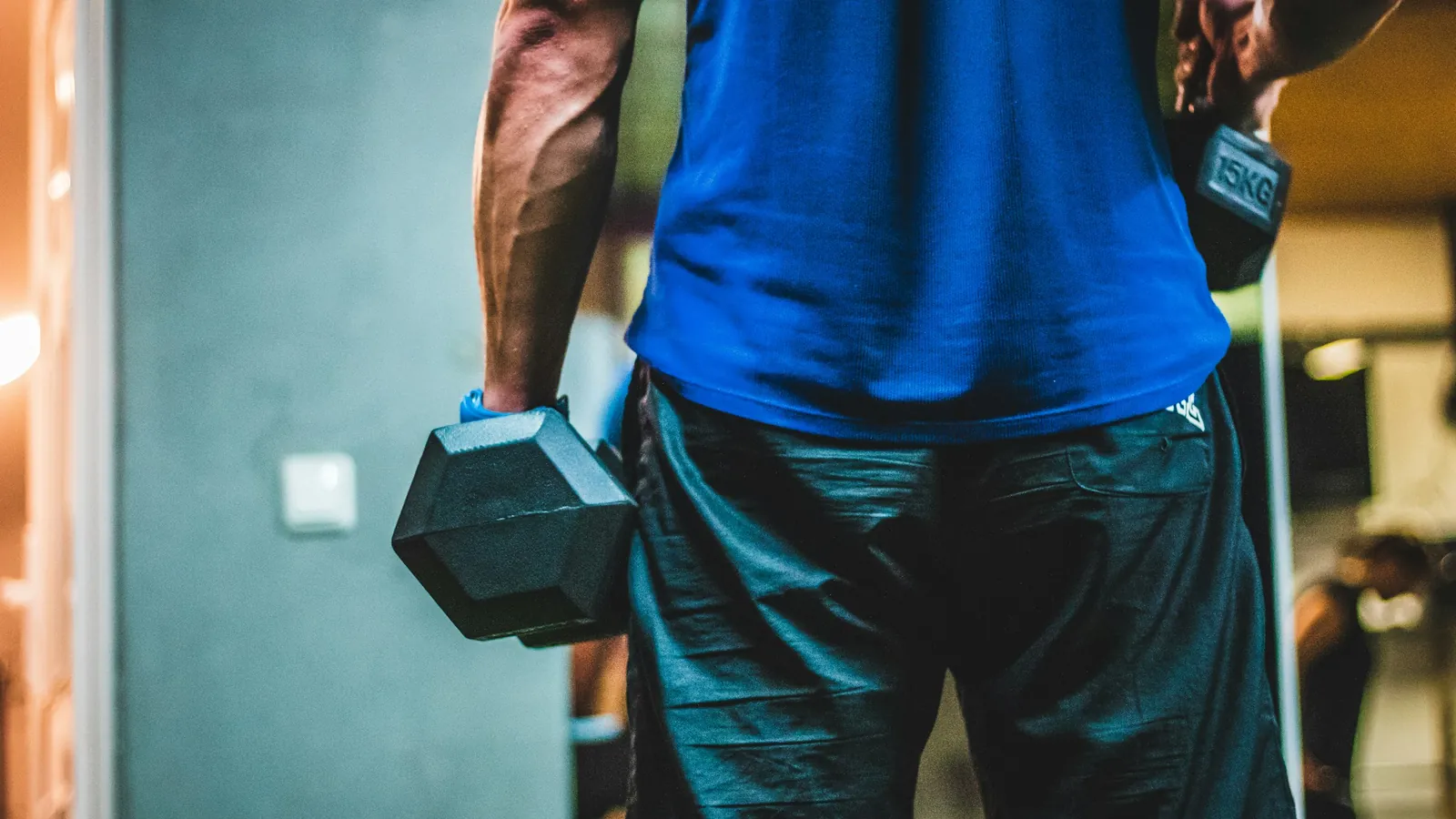
- Start with the farmer's carry. Two dumbbells or kettlebells, 3 sets of 30 metres or 40 seconds. It's already the most-programmed carry, so the client has probably seen it.
- Add the suitcase carry for the trunk. One weight, one side, same distance, swap hands. It trains the anti-side-bend job that side planks train, while walking. We cover where it sits among trunk drills in the core exercises coaches program.
- Write the prescription in the note. "3 x 30 m, heavy, shoulders back" tells the client everything. The name alone tells them nothing, and a carry with no dose is the one that gets skipped.
- Put it in the library once. Save the farmer's and suitcase carry with a demo video and the dose in the note, and they'll end up in programs the way the row does: because they're there when you build.
Three months of data say carries are the one easy gap in most coaches' programming. Not because coaches don't rate them, but because programs aren't shaped to hold them. Change the shape and the number moves. We'll be watching it on the living page each month.
Methodology and limitations
How we got these numbers
Source. October 2026 programming on QuickCoach, a platform used by more than 40,000 coaches and fitness businesses worldwide: 232,596 verified assigned exercises grouped into 4,721 canonical movements. August and September figures are from the reads published on what coaches program and in the August uncommon exercises report. No individual coach, client or plan is identifiable in anything published here.
Definitions. A movement's figure is the share of clients assigned it at least once in the month, every spelling grouped together. "Farmer's carry", "farmer carry" and "farmer's walk" are kept apart by the grouping and overlap in clients, so they are never summed. The carry pattern share is the classifier's, on a 90th-percentile trimmed set of 215,274 entries. The uncommon-variation share is from the August read.
Limits. A carry written inside a circuit line ("finisher: carries and swings") is not counted as a carry. Claims about grip, trunk and transfer are general coaching positions, not measurements. The opinions in this piece are editorial. Figures are rounded.
Frequently asked questions
How often do coaches program loaded carries?
Rarely. Carries were 0.8% of assigned exercises on QuickCoach in October 2026, the least-programmed pattern for the third month running (1.0% in August, 0.8% in September). The farmer's carry reached 8.3% of clients and the suitcase carry 3.3%, usually as one line at the end of a session.
Why don't coaches program carries more?
Four structural reasons: a carry is prescribed by distance or time rather than sets and reps, it has no single muscle to sell, it is missing from most stock exercise libraries, and clients never ask for it. None is a judgement on the movement. That's why we call it a blind spot.
What are loaded carries good for?
Grip, trunk stability under load while moving, shoulder position and conditioning, all at once. Carrying is the gym movement that most resembles everyday life. This is general coaching guidance alongside our data, not a QuickCoach data figure.
How should I prescribe a farmer's carry?
By distance or time, not reps: 3 sets of 30 metres or 40 seconds with the heaviest load the client can hold without the shoulders dropping, at the end of a session once or twice a week. Write the dose in the exercise note so the client knows what heavy means.
Are carries a core exercise?
Yes. A farmer's or suitcase carry resists side-bending and rotation under heavy load while walking, which is anti-movement core work with a conditioning element. The farmer's carry reached 8.3% of clients in October 2026, more than the bird dog, crunch or Copenhagen plank.
An opinion piece built on October 2026 programming data. The ranking it rests on lives on what coaches program and refreshes monthly. Questions about the data? Reach us at support@quickcoach.fit.