Ask most people to name a core exercise and they'll say sit-ups. Ask coaches what they program and you get a different list. When we read what coaches assigned on QuickCoach in October 2026, the dead bug, plank, Pallof press and side plank each reached more than one client in eight. The crunch reached one in sixteen. The sit-up, one in twenty-three.
This report ranks the core exercises coaches program, groups them by the job each one does, shows what changed from September, and explains why the pattern's share fell even though its leading drills didn't.
The short answer
The core exercises coaches program most are the dead bug (18.7% of clients in October 2026), plank (16.0%), Pallof press (13.3%) and side plank (12.7%), then the farmer's carry (8.3%) and bird dog (7.4%). Core is 11.0% of all assigned exercises, and drills that resist movement outrank crunches and sit-ups by a wide margin.
What this is, in one paragraph
Coaches type exercise names as free text. Every month we group every spelling of the same movement together and count the share of clients assigned each one, the method behind our living what coaches program page. For this report we read the movements whose main job is the trunk from 232,596 verified assigned exercises in October 2026, with September figures where we published the same measure. The full method is at the foot of the page.
What core exercises do coaches program most?
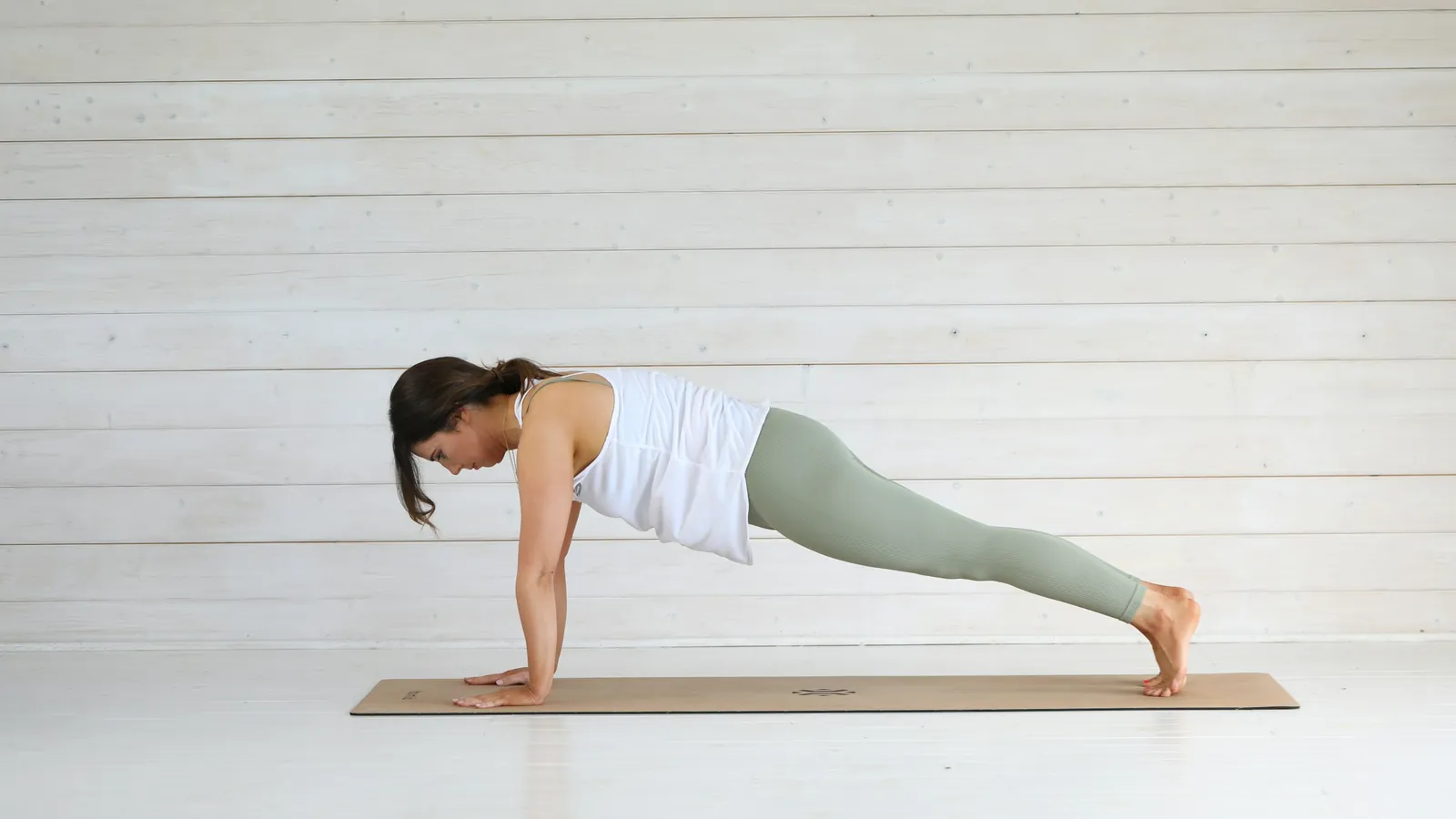
Anti-movement drills take the top four places. The dead bug and plank resist extension, the Pallof press and side plank resist rotation and side bending. The first flexion exercise, the crunch, doesn't appear until seventh, behind a loaded carry and the bird dog.
| Movement | What it trains | Oct 2026 | Sep 2026 |
|---|---|---|---|
| Dead bug | Anti-extension | 18.7% | 18.2% |
| Plank | Anti-extension | 16.0% | 16.3% |
| Pallof press | Anti-rotation | 13.3% | 13.1% |
| Side plank | Anti-lateral flexion | 12.7% | 12.2% |
| Farmer's carry | Loaded carry | 8.3% | 7.3% |
| Bird dog | Anti-extension and rotation | 7.4% | 7.2% |
| Crunch | Flexion | 6.4% | 6.5% |
| Russian twist | Rotation | 5.5% | n/a |
| Mountain climber | Dynamic | 5.0% | n/a |
| Copenhagen plank | Anti-lateral flexion, adductors | 5.0% | 5.8% |
| Sit-up | Flexion | 4.4% | n/a |
| Leg raise | Flexion | 4.3% | n/a |
| Suitcase carry | Loaded carry | 3.3% | 3.3% |
| V-up | Flexion | 2.8% | n/a |
| Reverse crunch | Flexion | 2.6% | n/a |
| Bicycle crunch | Flexion and rotation | 2.5% | n/a |
| Plank shoulder tap | Anti-rotation | 2.4% | n/a |
| Hollow hold | Anti-extension | 2.4% | n/a |
| Hanging knee raise | Flexion | 2.3% | n/a |
| Hanging leg raise | Flexion | 2.1% | n/a |
| Cable crunch | Flexion | 2.0% | n/a |
| Ab wheel rollout | Anti-extension | 1.6% | n/a |
| Bear crawl | Dynamic | 1.4% | n/a |
| Woodchop | Rotation | 1.3% | n/a |
Share of clients assigned the movement at least once in the month. "n/a" means we didn't publish that movement's September figure. "Woodchop" and "wood chop" (1.3% each) and "hollow hold" and "hollow body hold" (2.4% and 1.2%) are kept apart by the grouping and overlap in clients, so they can't be summed.
Add the groups up and the picture is lopsided. The five anti-movement drills in the top six each reach between 7% and 19% of clients. The eight flexion drills in the table, from the crunch down to the cable crunch, reach between 2% and 6.4%. Coaches are training clients to hold a position under load far more than to fold in half.
Why did core work fall in October?
The pattern fell from 11.9% to 11.0% of assigned exercises, but the drills didn't. The dead bug, Pallof press, side plank, farmer's carry and bird dog all gained client reach from September. The plank slipped 0.3 points and the Copenhagen plank 0.8. Nothing else in the top of the list lost more than a tenth of a point.
Our best reading is that the generic lines fell. Some coaches write a core slot as "core, changes weekly", "abs" or "abdominals, generic" and explain the circuit in person or in the note. In October the single biggest raw entry of that kind was assigned 632 times to 76 clients, and another 506 times to 53. Those entries count towards the core pattern but never towards a named drill, so a quieter month for them pulls the pattern share down without any named movement moving. We can't see it directly in the grouped figures, so treat it as a reading rather than a measurement. The month's full set of movers is in what changed from September to October 2026.
Why do coaches program anti-movement drills instead of crunches?
Because the trunk's job in the big lifts is to stay still. A squat, deadlift, row or press loads the spine and asks it not to bend, so coaches train that: the dead bug and plank resist extension, the Pallof press and side plank resist rotation and side bending, and a suitcase carry does both while walking. The crunch and sit-up train the opposite, flexing the spine against load, which has a place but a smaller one.
The wider market has moved the same way. The American College of Sports Medicine's worldwide fitness trends survey for 2026 ranks "balance, flow and core strength" fifth of its top ten, up with the strength and older-adult trends, and the drills coaches program here are the stability end of that trend rather than the ab-circuit end. Most of the top six also double as injury-prevention work, which is why the dead bug and Pallof press lead the prehab exercises coaches program too.
Do loaded carries count as core work?
Yes, and coaches are starting to treat them that way. The farmer's carry gained a full point in October to reach 8.3% of clients, the biggest rise of any core-adjacent movement, and the suitcase carry held at 3.3%. A carry is anti-lateral flexion and anti-rotation under heavy load with the added demand of walking, which makes it one of the highest-transfer trunk exercises there is.
The carry pattern as a whole is still only 0.8% of assigned exercises, the least-programmed pattern on the platform. If a coach wants an easy way to add trunk work without adding floor time, a carry at the end of a session is it.
How should you program core work for online clients?
Give most clients one anti-extension drill and one anti-rotation or carry per session, placed after the main lifts, and add flexion work only when the client wants it or the sport needs it. That's the shape the data describes. This is general coaching guidance alongside our data, not a platform figure.
- Beginner or home client: dead bug, side plank and a suitcase carry with a single dumbbell or kettlebell. All three rank highly and need no equipment beyond one weight.
- Gym client: Pallof press on a cable, a loaded plank or ab wheel rollout, and a farmer's carry with the heaviest dumbbells they can hold for 30 metres.
- Rehab and mobility clients: the same anti-movement menu is the mainstream corrective work on the platform, delivered as prescribed drills with video cues. Our rehab and mobility guide covers how coaches in that space deliver it.
- Mat and Pilates work: the dead bug, hollow hold and bird dog map straight onto mat repertoire, which is why core movements run through online Pilates programming.
Name the drill. A core slot written as "abs" loses its demo video and its history, and it's invisible in your own data when you look back at what a client did. Save each core exercise once in your library with a video, then build the session from templates so the dead bug a client gets this block matches the one they got last block.
Methodology and limitations
How we got these numbers
Source. October 2026 programming on QuickCoach, a platform used by more than 40,000 coaches and fitness businesses worldwide: 232,596 verified assigned exercises grouped into 4,721 canonical movements. September figures are from the September 2026 read published on what coaches program and in the September data reports. No individual coach, client or plan is identifiable in anything published here.
Definitions. A movement's figure is the share of clients assigned it at least once in the month, every spelling grouped together. "Core exercises" is our editorial grouping of movements whose main job is the trunk; the "what it trains" column is our classification, not a measured property. The core pattern share is of classified assigned exercises on a 90th-percentile trimmed set of 215,274 entries. The generic-entry counts are raw name counts from the same month and are not grouped.
Limits. Many trunk exercises also appear under warm-up or prehab labels and are counted where the name puts them. Split names overlap and are never summed. External surveys cited above measure different populations and are context, not a like-for-like comparison. Figures are rounded.
Frequently asked questions
What core exercises do coaches program most?
The dead bug, plank, Pallof press and side plank. In October 2026 they reached 18.7%, 16.0%, 13.3% and 12.7% of clients on QuickCoach. The farmer's carry (8.3%) and bird dog (7.4%) come next. The crunch is the first flexion exercise, at 6.4%.
How much of a coaching program is core work?
About one exercise in nine. Core was 11.0% of assigned exercises on QuickCoach in October 2026, down from 11.9% in September and roughly level with August's 10.8%. Pull (18.3%), push (17.3%) and mobility (13.7%) are the only larger patterns.
Are planks better than crunches?
For most clients, coaches think so. A plank trains the trunk to resist movement, which is its job in a squat, deadlift or press, while a crunch trains it to bend. Coaches program the plank for 16.0% of clients and the crunch for 6.4%. This is general guidance alongside our data, not a prescription.
Do loaded carries count as core exercises?
Yes. A farmer's or suitcase carry loads the trunk against side bending and rotation while walking. The farmer's carry reached 8.3% of clients in October 2026, up a full point from September, though carries overall are still only 0.8% of assigned exercises.
Why did core work fall in October 2026?
The named drills held or gained, so the fall came from elsewhere. Our best reading is that generic placeholder entries such as "core, changes weekly" were assigned less, which lowers the pattern share without moving any named movement. We can't measure that directly in the grouped figures.
Published from October 2026 programming data. The full monthly ranking lives on what coaches program. Questions about the data? Reach us at support@quickcoach.fit.