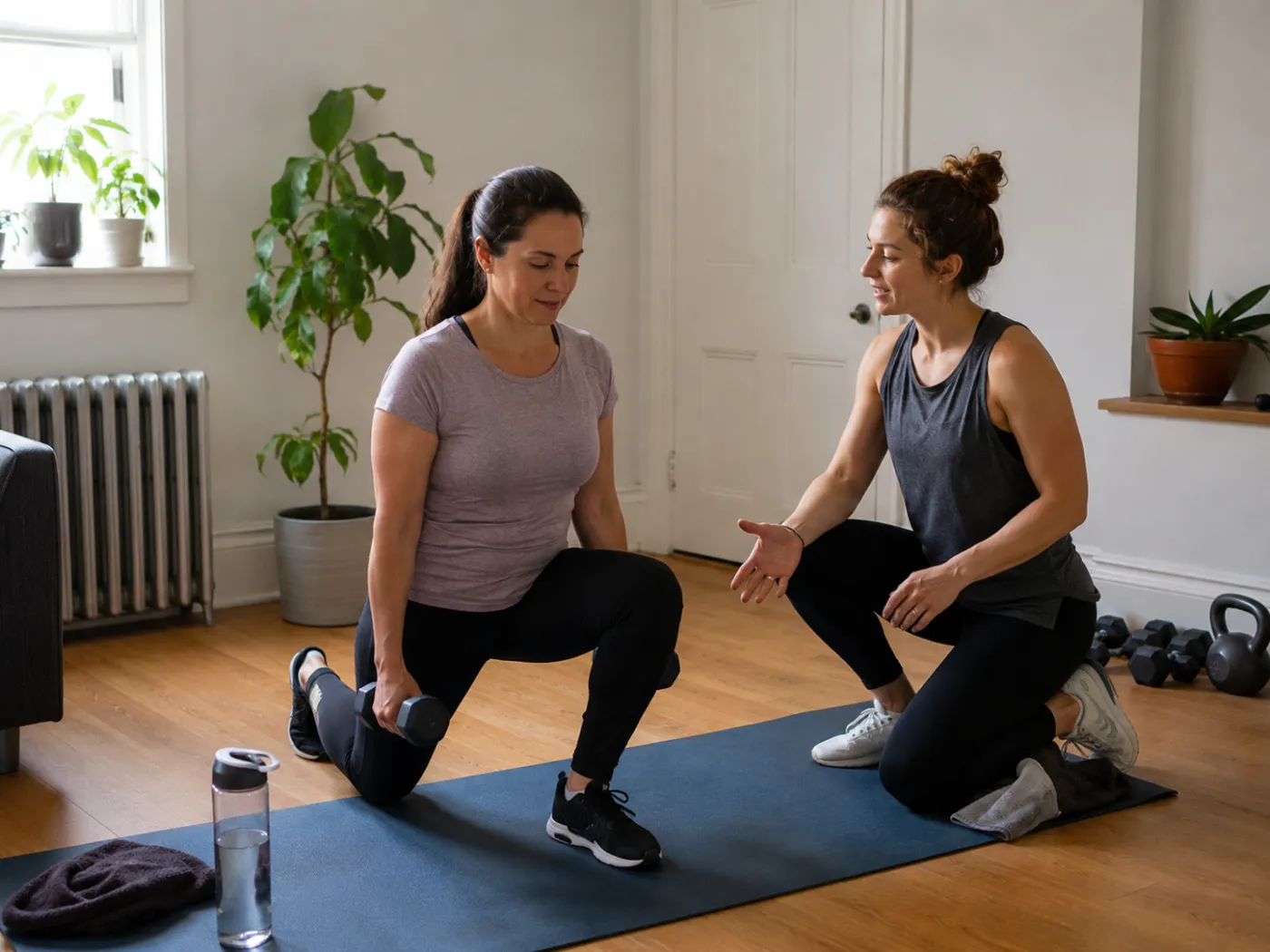
Strength and conditioning coaching sits between sport coaching and rehabilitation, and the questions coaches ask reflect that. Most are practical: which credential, which load marker, how to sequence blocks, how to peak without losing fitness. The answers that hold up are the ones grounded in method, not opinion.
This page collects the questions that come up most often from coaches working with athletes, framed for people who already programme training rather than newcomers reading a definition for the first time. Every answer is short, self-contained, and quotable, with a link into the coaching-methods reference where the method gets unpacked in full.
Quick answer
Strength and conditioning coaching is the planning and supervision of training that improves athletic performance. The CSCS is the most recognised credential, load is prescribed through intensity and volume and tracked over time, and block periodisation, autoregulation, and tapering are the methods coaches use to peak an athlete on a date.
What does a strength and conditioning coach actually do, and who do they work with?
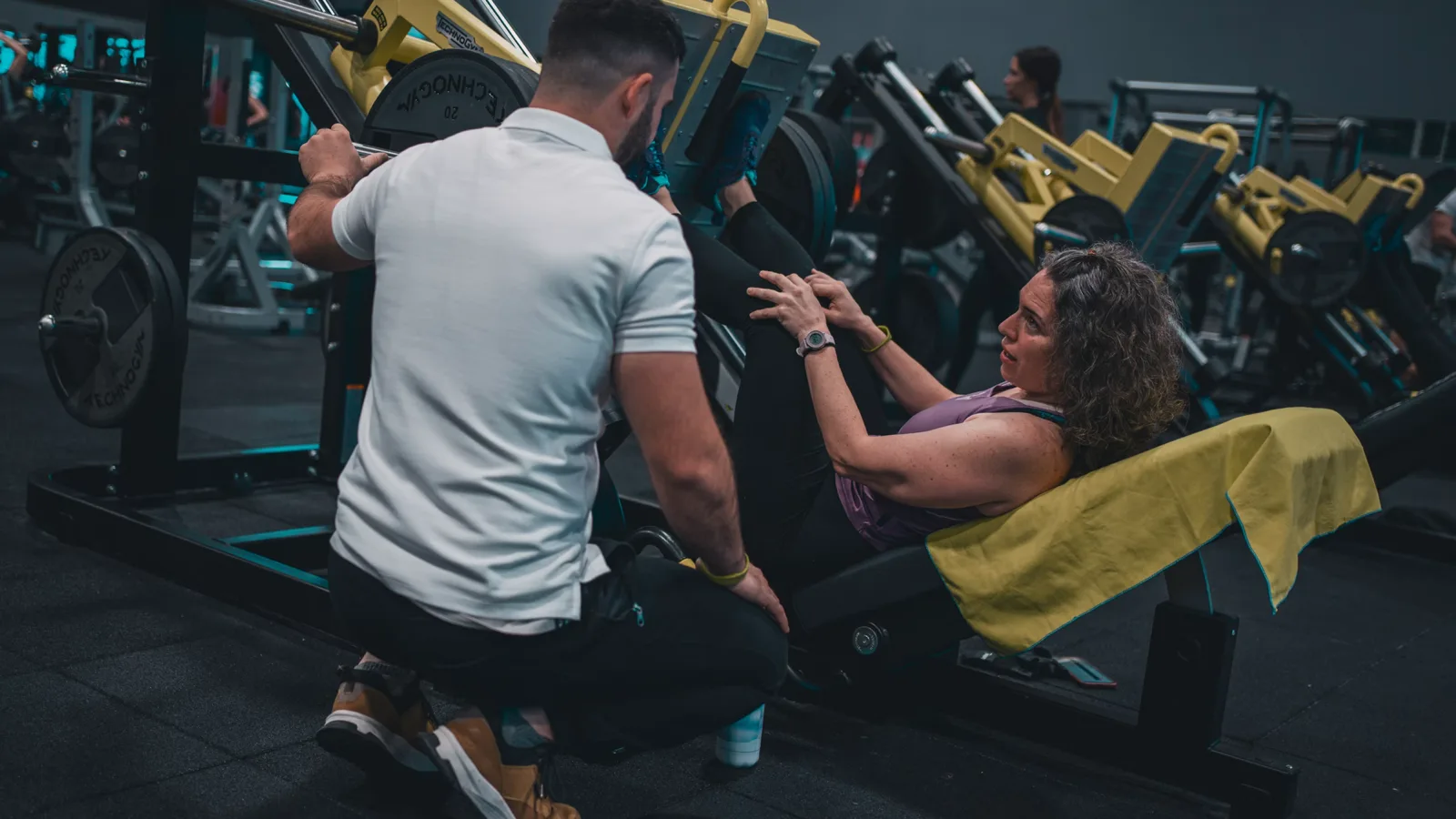
A strength and conditioning coach plans and supervises training that improves athletic performance, covering strength, power, speed, and conditioning. They work with athletes, teams, and active clients across gym, field, court, and clinical settings, designing programmes that build physical qualities and reduce injury risk rather than teaching sport skills themselves.
The role sits between the sport coach, who handles skill and tactics, and the medical team, who handle rehabilitation. Our coaching-methods reference breaks down the methods that sit underneath the work.
Which certification should a strength and conditioning coach hold before taking on athletes?
The CSCS from the NSCA is the most recognised strength and conditioning credential worldwide and is what most employers and teams expect. UK and Australian roles often accept ASCC via the UKSCA or ASCA Level 2/3 in parallel. Without a recognised S&C qualification, coaches should limit work to general fitness clients rather than competitive athletes.
See the NSCA and CSCS page for what the exam covers and how recertification works.
How do strength and conditioning coaches prescribe load across a training week?
Load is prescribed by assigning intensity (how heavy or hard) and volume (sets and reps) to each session, then sequencing sessions so cumulative fatigue recovers before the next hard bout. Coaches track tonnage, sets above a percentage threshold, or session RPE to keep weekly load within a range the athlete can absorb and adapt to.
Two common intensity references are percentage of 1RM and RPE, and most programmes use both.
What is the real difference between percentage of 1RM and RPE for prescribing training load?
Percentage of 1RM fixes the weight as a fraction of a tested one-rep maximum, so load is consistent week to week but ignores daily readiness. RPE asks the athlete to rate how hard a set felt and adjusts the load to that readiness, trading objectivity for day-to-day flexibility.
Percentage-based work suits stable, well-tested athletes. RPE suits groups with variable readiness or unknown maxes, and pairs well with autoregulation.
How do you use block periodisation to organise a strength and conditioning programme?
Block periodisation sequences focused training blocks, typically accumulation, intensification, and peaking, each lasting two to six weeks. Each block prioritises one adaptation such as hypertrophy or strength, while retaining enough of the others to avoid losing them, so fatigue stays manageable and the athlete peaks on the target date.
Our block periodisation page sets out block lengths and the carryover between them.
How many reps should a strength and conditioning programme prescribe for different goals?
Rep ranges track the adaptation: roughly one to five reps for strength and power, six to twelve for hypertrophy, and fifteen plus for endurance and conditioning. These bands overlap, and the real drivers are effort proximity to failure and total hard sets per muscle group each week.
See rep ranges for online coaching and the rep ranges method page for how to programme them.
How do strength and conditioning coaches autoregulate training when an athlete turns up underrecovered?
Autoregulation adjusts load to the athlete's readiness on the day using RPE, RIR, or a velocity-based device that stops the set when bar speed drops. It keeps working intensity high on good days and pulls volume back on bad ones, so a programme adapts to the athlete instead of the athlete forcing the programme.
The autoregulation page compares RPE, RIR, and velocity loss thresholds.
What is concurrent training, and how does the interference effect limit gains?
Concurrent training combines resistance and endurance work in the same programme. The interference effect describes the signal conflict where high-volume endurance work blunts hypertrophy and power adaptations, especially when cardio is hard, long, and placed close to lifting. Coaches manage it by separating sessions from lifting by several hours and keeping easy cardio genuinely easy.
Read concurrent training for how to order sessions and minimise interference.
How do strength and conditioning coaches manage training load to reduce injury risk?
Coaches track acute-to-chronic workload ratio, session RPE, and wellness markers, then progress load gradually so the athlete's tissues adapt rather than break. Sudden spikes in weekly tonnage or high-intensity sessions are the most common cause of soft-tissue injury, so load is increased in small, reviewable steps with recovery built in.
The load management page covers ACWR and wellness monitoring in detail.
How do strength and conditioning coaches run athlete check-ins when coaching remotely?
Remote check-ins combine a short weekly questionnaire on readiness, soreness, sleep, and stress with session-RPE the client logs as free text after each session. Coaches read what came back alongside completed session footage or metrics, then adjust the next block based on the pattern rather than one bad day, keeping the loop tight without daily hand-holding.
Our online coaching check-ins guide sets out the questions and the cadence.
What software do strength and conditioning coaches actually use to deliver programmes?
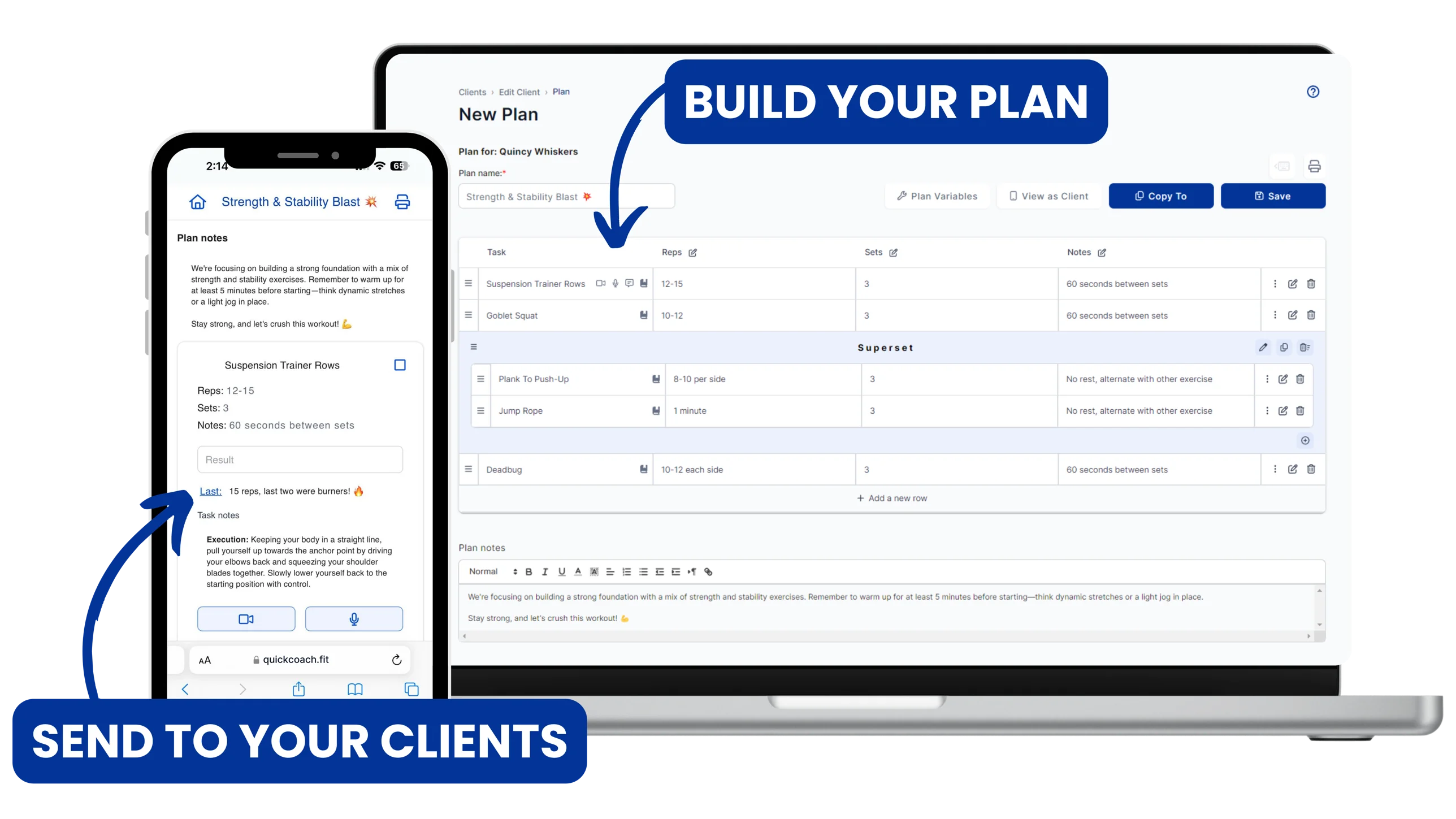
Most use a coaching platform that holds the programme library, delivers sessions to a client app, and collects each athlete's completion and session feedback. The coach reviews each athlete's returned session and check-in rather than chasing screenshots. Spreadsheet-only delivery works for one or two athletes but breaks down once a roster grows past single figures.
See how to choose coaching software in 2026 for the decision factors that matter for an S&C roster.
How do you peak an athlete for a specific competition date without losing fitness?
Peaking uses a taper that drops training volume by 40 to 60 percent over one to three weeks while keeping intensity high, so fatigue clears and the adaptations from the previous block express themselves on the day. Sport-specific sharpness is retained through short, fast, high-quality work with full recovery.
The tapering page covers taper length and the volume-intensity split.
How long should a strength and conditioning macrocycle be for a typical season?
A macrocycle usually runs the full competitive season, split into mesocycles of three to six weeks each, with the off-season, pre-season, in-season, and transition phases mapped out in advance. Coaches plan backwards from the main competition date so each block feeds the next and the peak lands on the right week.
What is the difference between muscular strength and muscular power, and why does it matter for programming?
Strength is the maximum force a muscle can produce, measured by a one-rep maximum. Power is force produced quickly, the product of force and velocity. Strength is the foundation, power is the expression, so programmes build maximal strength first, then convert it with explosive work like jumps, throws, and speed lifting.
Should strength and conditioning coaches include unilateral training, and how much?
Yes. Unilateral work addresses side-to-side strength differences and exposes asymmetries that bilateral lifts hide, carrying over to sport movements that happen on one leg or one arm at a time. Most programmes slot one or two unilateral lifts into each session after the main bilateral lift.
How do strength and conditioning coaches test athletes without disrupting training?
Testing is folded into normal sessions where possible, using estimated 1RMs from heavy triples and routine jump tests as readiness checks rather than running a separate test day. Dedicated test weeks happen two to four times a year at block boundaries to benchmark and reset training maxes.
What role does tempo play in a strength and conditioning programme?
Tempo controls the time under tension of each rep, splitting the eccentric, pause, and concentric phases. Slower eccentrics build hypertrophy and movement control, faster concentrics build power and rate of force development. Coaches prescribe tempo when the default self-selected speed does not produce the intended adaptation.
The tempo page covers the four-digit notation and when to use each phase.
How do strength and conditioning coaches handle in-season training without overloading athletes?
In-season training drops volume to roughly two to three hard sets per main lift, kept at high intensity to preserve strength, with sessions placed at least 48 hours from competition. Sport practice and games carry the conditioning load, so gym work focuses on power and injury resilience instead of building new fitness.
What is accommodating resistance and when should coaches use bands or chains?
Accommodating resistance adds bands or chains to a barbell lift so the load increases where the athlete is strongest, near lockout, and decreases at the weak point. It matches the strength curve to the movement and develops rate of force development, suiting intermediate and advanced lifters rather than beginners learning technique.
The accommodating resistance page explains band and chain setup.
How far does a strength and conditioning coach's scope of practice extend?
S&C coaches programme training and coach lifting technique, but do not diagnose injuries, prescribe rehabilitation, write meal plans for clinical conditions, or provide medical advice. When an athlete is injured or has a health condition, the coach refers to a physiotherapist, dietitian, or doctor and works within their guidance.
The scope of practice page draws the lines clearly.
How do strength and conditioning coaches programme for team sports versus individual athletes?
Team sports need a shared framework, with blocks aligned to the competitive calendar and position-specific work layered on top, while individual athletes get a fully bespoke programme built around their testing data, weaknesses, and one target event. Team sessions trade some individual precision for logistics, individual programmes optimise without that constraint. The delivery mechanics for the team side, one block cloned per athlete with the individual tweaks, is covered in our guide to coaching a squad online.
What does a first strength and conditioning session with a new athlete actually look like?
The first session covers screening, baseline testing, and movement coaching rather than a hard workout. Coaches run a movement screen, test a conservative lift or jump, teach the technique standards the programme will use, and agree on how training and check-in feedback will flow, so later sessions can progress with no ambiguity.
Want to put these methods into a programme without building spreadsheets? QuickCoach holds the programme library, delivers sessions to a client app, and returns each client's completion and session feedback to you, with up to 20 clients free. Start free at quickcoach.fit, or read more on the QuickCoach blog.