What is online personal training, and how is it actually different from in-person PT?
Online personal training is coaching delivered remotely, where a trainer writes and delivers programmes through an app or platform rather than coaching a client through each rep in a gym. The training is the same. The delivery, accountability loop, and communication model are what change.
The workout principles do not move when you go online. What moves is how you see adherence, how you cue technique, and how you keep the client engaged between sessions.
What software does an online personal trainer actually need to run a roster?
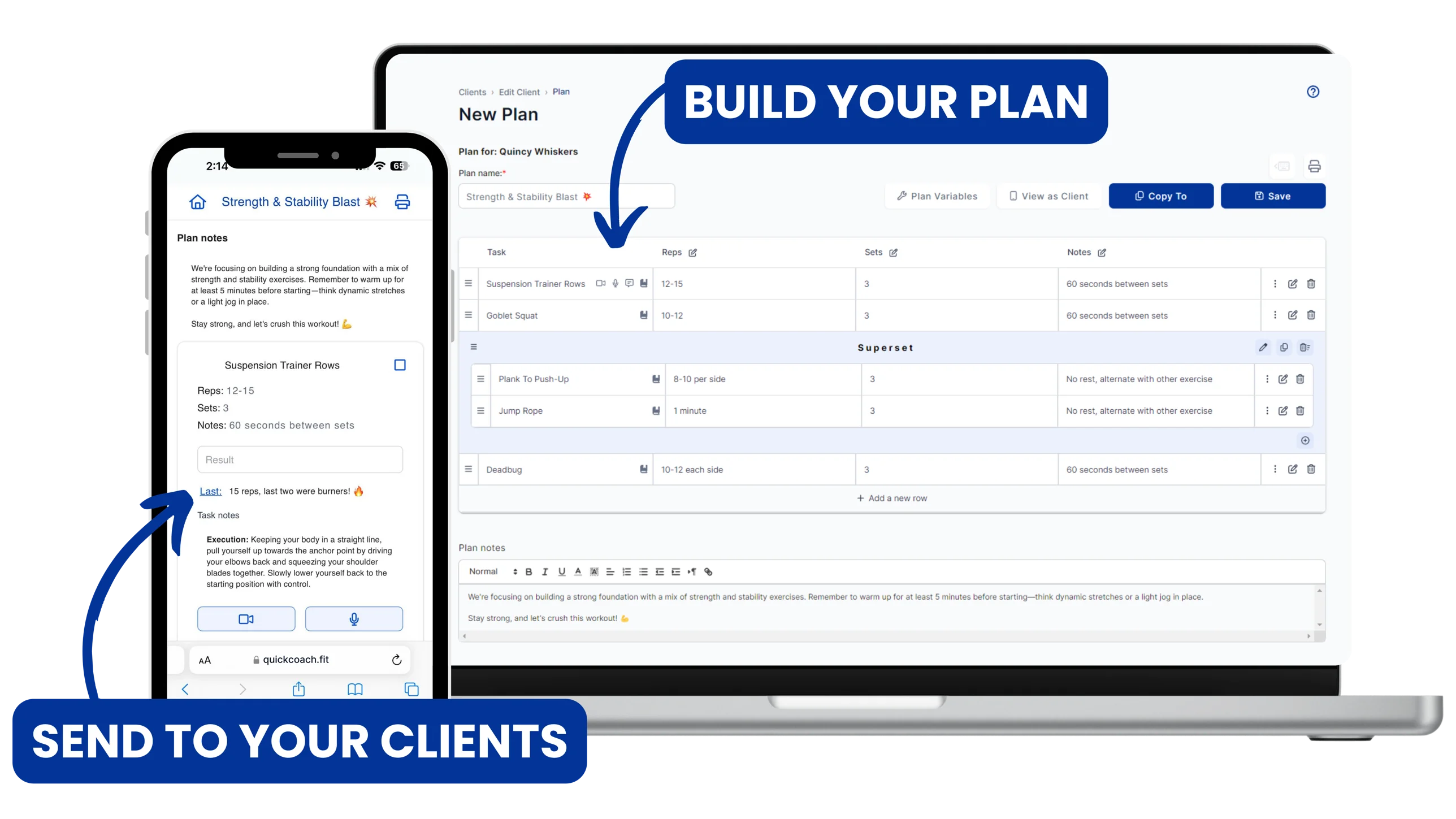
An online personal trainer needs a program builder, a client app for delivery, a check-in channel, and somewhere to store progress data. Most coaches add habit tracking and nutrition later, and keep the client chat on WhatsApp or email. A platform like QuickCoach bundles the programme, check-in, and progress record side of that work, with up to 20 clients on the free plan.
If you want a fuller framework for matching software to your stage, read how to choose coaching software in 2026 and our breakdown of free versus paid coaching software.
How many online clients can one personal trainer realistically manage?
A full-time online personal trainer can usually manage 30 to 50 active clients before service quality drops, with the ceiling set by how much weekly check-in and message volume each client generates. Coaches using templates and habit packs push higher. Free platforms cap at 20 clients before a paid tier is needed.
Capacity is a function of how repeatable your check-in and programming workflow is. The less you reinvent each week, the more clients you can carry without dropping service.
How do online personal trainers deliver workout programmes to clients?
Online personal trainers deliver programmes through a coaching app that pushes sessions to a client's phone, complete with exercise demos, sets, reps, and notes. The client logs results back through the same app, and the coach reviews the data at the next check-in rather than standing beside them.
The delivery is instant and the record is permanent, which is why most coaches move off spreadsheets and email once the roster passes five clients.
What should an online personal trainer charge, and how do I work out my rate?
Your rate is a function of the income you want, your client capacity, and how many sessions each client needs per month, not a number you copy from another coach. Work the maths backwards from a target, then price packages against it. A free rate calculator does this for you.
Run the numbers with the free online coaching rate calculator rather than guessing from what other trainers post on social media.
How do online personal trainers run client check-ins without seeing the client?
Most online personal trainers run weekly written check-ins through their coaching app, asking about adherence, energy, sleep, and soreness, plus a progress photo where relevant. Some add a short video call monthly. The structure matters more than the channel, and a fixed question set keeps the loop tight.
For the structure itself, see how to run online coaching client check-ins and our bank of client check-in questions.
Do online personal trainers need a certification, and which one should I get?
In most markets you do not legally need a certification to coach online, but carrying one signals competence and satisfies insurer and platform requirements. The NSCA Certified Strength and Conditioning Specialist and ACSM Certified Exercise Physiologist are the most widely respected. Pick the one that matches the population you coach.
The NSCA and ACSM reference pages cover scope, exam structure, and how each fits an online practice.
How do online personal trainers take payment from clients?
Most online personal trainers take payment through Stripe or a similar processor, billing clients monthly for a package of programmes and check-ins rather than per session. Some platforms bundle payments, but many leave you to handle billing externally. Set up recurring billing so revenue does not depend on you chasing invoices.
Package the programme and the check-ins together. Selling sessions one at a time online is a recipe for irregular income and clients who drift away between purchases.
Can I start online personal training for free, or do I need to pay for software from day one?
You can start online personal training for free. QuickCoach's free plan supports up to 20 active clients with the full program builder and client app, no time limit, which is enough to run a real early roster. Most paid platforms only become worth it once client count or branding needs outgrow free.
Read our free versus paid coaching software guide for the one signal that tells you when to step up.
How do online personal trainers keep clients accountable when they are never in the same room?
Accountability online comes from a fixed check-in rhythm, clear weekly tasks, and visible progress data, not from watching a client lift. Habits and check-in prompts give the client something to report between sessions. Coaching cues in the programme keep technique on track without you standing there. Consistency beats proximity.
For the cue side, our coaching cues for online coaching page shows how to write cues that survive being read on a phone screen.
What is the difference between online personal training and online coaching?
Online personal training usually means individualised programme design centred on workouts, while online coaching is the broader umbrella that also covers nutrition, habits, and lifestyle change. The line blurs in practice. Most online personal trainers coach the whole person over time, and most online coaches still write training programmes.
The distinction matters for marketing and positioning, less so for the day to day work once a client is on your roster.
How do I move my existing in-person personal training clients online without losing them?
Move clients in cohorts of two or three rather than all at once. Keep the programme design the same and only change the delivery channel, so clients see continuity. Run a parallel check-in loop for a few weeks while they learn the app. Most clients stay once the convenience is clear.
Speed up the programme writing side with our guide to writing client workout programmes faster, and ground the structure in the anatomy of an online coaching programme.
How long should an online personal training programme be before it changes?
Most online personal training programmes run a four to six week block before the coach progresses load or changes movements, with small weekly progressions inside the block. Shorter cycles suit beginners and strength peaks, longer cycles suit hypertrophy and habit work. Match the block length to the client's goal and adherence.
The block periodisation reference covers how to structure progression inside a block without redlining the client.
What equipment does a client need to start online personal training?
A client needs a phone, access to the exercises you programme, and whatever equipment the programme assumes, from bodyweight only through to a full home gym. Programme to what the client actually has, not to an ideal setup. Most new online clients start with dumbbells, bands, or bodyweight before investing further.
The fastest way to lose a beginner is to programme movements they cannot do at home. Match the kit to the client on day one.
How do online personal trainers track client progress without in-person sessions?
Online personal trainers track progress through logged workout data, weekly check-in answers, progress photos, and the metrics the client cares about, such as bodyweight, lifts, or habit adherence. The coaching app aggregates it. Review trends across weeks, not single sessions, and report the trend back to the client monthly.
One monthly summary the client reads beats a weekly dashboard they ignore. Keep the report short and tied to the goal they set at onboarding.
Do online personal trainers need insurance, and what kind?
Yes, most online personal trainers carry professional liability insurance that covers advice given remotely, and some add general liability if they ever train clients in person. Check that the policy explicitly covers online coaching, because older policies were written for gym floors only. Online specific cover is now widely available.
Insurers in Australia, the UK, and the US now offer online specific policies, but the wording varies. Read the remote coaching clause before you buy.
How do I onboard a new online personal training client so they actually stick around?
A good onboarding covers the app walkthrough, the check-in cadence, the first programme, and a clear single next step, all in the first week. Ask for one piece of baseline data, not ten. The client should log a result within seven days, because early momentum predicts retention better than anything you say later.
Strip the first week back to one habit and one session. Add complexity only once the client has shown they will log the first result.
What metrics should an online personal trainer report back to clients?
Report the metrics the client chose as their goal, plus adherence. That usually means the main lift or performance measure, bodyweight or girth if relevant, and the percentage of sessions and habits completed. Skip vanity metrics. A monthly one page summary beats a weekly dashboard the client stops reading.
If a metric does not tie to the goal the client set at onboarding, it probably does not belong in the report.
How often should online personal trainers programme a deload for clients?
Programme a deload every fourth to sixth week for most clients, sooner if the client reports persistent soreness, stalled lifts, or poor sleep. Older clients and high volume strength blocks need deloads more often. A deload is a planned reduction in volume and intensity, not a missed week, and it is built into the block.
The RPE reference helps you autoregulate that decision when the client's reported effort says the deload should come earlier than the calendar suggests.
Does online personal training actually work for beginners, or only for experienced gym goers?
Online personal training works well for beginners as long as the onboarding includes a movement screen or baseline assessment and the first programmes assume nothing. Beginners often do better online because the app's demos and cues answer questions between sessions. The coach's job is to keep the first month simple and consistent.
Experienced lifters already know how a movement should feel. Beginners do not, which is why your written cues and video demos carry most of the load in the first eight weeks.