Ask a coach what a white-label app is and you will get two different answers, sometimes from the same coach. One means an app with their logo on it. The other means an app with their name in the App Store. Those are different products, priced differently, and the difference is where coaches get burned.
This page is the distinction, written for coaches who have been told they need a white-label app and are not sure what that means. The short version: a custom-branded app puts your identity inside an app that still belongs to the vendor, and a full white-label app is your own listing in the stores. Most coaches want the first, and the second is a different budget entirely.
Quick answer
A custom-branded app puts your logo, colours and business name inside an app that is still listed under the vendor's name. A full white-label app is your own listing in the App Store and Google Play, with the vendor's name absent. Most coaches want the branded app, and it is a fraction of the white-label cost.
The two things "white label" can mean
The term white label is used for two different products, and the ambiguity is the problem. The first is theming: your logo, your colours, your business name applied to an app that is still the vendor's app. The second is full white-label: the vendor's entire product rebranded as yours, including your own listing in the app stores, so a client who searches for your name finds your app and never sees the vendor's.
The difference is not cosmetic. It decides the cost, the maintenance and the client experience. A themed app is a setting. A full white-label app is a product, with store listings, review processes and ongoing upkeep. The two are priced accordingly, and a coach who asks for one while meaning the other will either overpay or be disappointed.
The honest framing, and the one this page uses throughout: custom-branded means your logo inside their storefront. Full white-label means your own storefront. Everything else follows from that.
Custom-branded app: your logo, their storefront
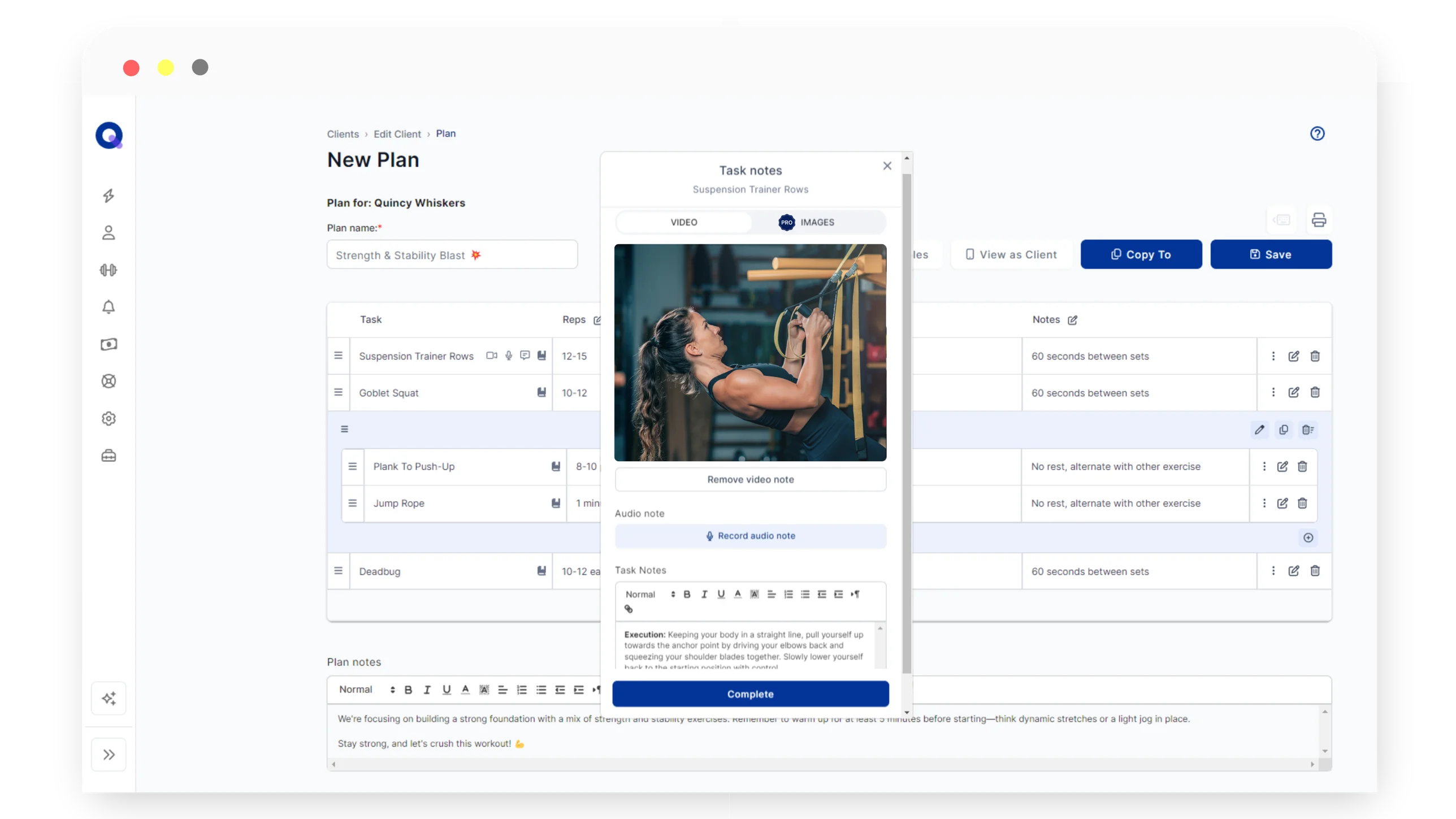
A custom-branded app is the version most coaches actually want. The client opens the app and sees your name, your colours, your logo. The sessions, the check-ins and the messages all carry your identity. From the client's side, it is your app.
The catch, and it is a small one, is the storefront. The app is still listed under the vendor's name, and the vendor's name can appear in the install flow or the store listing. For most coaching relationships this never matters, because the client installs the app from a link you send them, not from a search. The client who opens your branded app and sees your name on every screen is not checking who published it.
The setup is the other advantage. A custom-branded app is a configuration, not a build. The full mechanics of setting one up, including the logo, the colours and the business name, are in our guide to the branded client app, and it takes minutes rather than weeks.
Full white-label: your own App Store listing
A full white-label app is the version that costs real money. The vendor's product is rebranded as yours end to end, and you get your own listing in the App Store and Google Play. A client who searches for your name finds your app, downloads it, and never encounters the vendor's brand.
What that buys is control over the storefront, and what it costs is the storefront itself. A full white-label app carries the App Store and Google Play review processes, the developer account, the ongoing submission and the maintenance that comes with a published app. It is a product to run, not a setting to turn on.
The honest question is whether a coach needs it. For most coaches, the answer is no. The client installs the app from a link, sees the coach's brand on every screen, and never searches the store. The full white-label is for businesses where the app is a product in its own right, a studio with a name to protect in search, or a brand that sells the app as part of a package. The distinction between the two, and the honest read on which one fits, is the subject of this page, and the cost comparison below is the practical part.
What each costs (the honest ledger)
The prices below are the verified figures from the category pricing ledger, and they are the reason the distinction matters. Custom-branded is cheap. Full white-label is not.
QuickCoach. The branded client app is part of Pro at $39 a month, or $32.50 a month effective on annual billing. It is a Progressive Web App, so clients install it from the browser with no App Store review, and the branded version is live the moment it is set up. There is no setup fee and no store fee.
Trainerize. The Custom Branded App is a $169 one-time setup fee on top of the plan, plus a separate $99 a year Apple Developer fee paid to Apple. It is theming, not full white-label.
TrueCoach. Custom theming is included from the Standard tier at $69.98 a month, or $57.99 a month effective on annual billing. The theming is logo and colours inside an app still listed as TrueCoach, not a full white-label App Store listing.
Everfit. Custom branding starts from $19 a month on Pro, with the usual note that it is logo and colours rather than a full App Store listing.
My PT Hub. The Custom-Branded App is a $145 one-time fee for a branded icon, still listed under My PT Hub. The Full White-Label App is $225 a month for your own App Store listing, on top of the plan. That is the price of the real thing.
PT Distinction. Branded apps are included on Pro at $59.90 a month and Master at $89.90 a month, with custom-branded iOS and Android apps. Basic does not include branding.
The pattern is clear. Theming runs from free to a few hundred dollars. Full white-label runs to hundreds a month. The full cost picture, priced at the roster sizes coaches actually carry, is in our guide to how much a branded coaching app costs, and the free-versus-paid picture is in our free versus paid coaching software guide.
Which one does a coach actually need?
The honest answer is that most coaches need the custom-branded app, and the full white-label is a different business decision. The test is simple: does the client ever search the app store for your name?
If the client installs the app from a link you send, which is how almost all coaching apps are installed, the storefront does not matter. The client sees your brand on every screen, and the vendor's name in the install flow is noise. The custom-branded app delivers the client experience, and it costs a fraction of the white-label.
If the client searches the store, because the business is a studio with a name to protect, or the app is sold as a product, the full white-label earns its cost. That is a brand decision, not a coaching decision, and it is worth the money only when the storefront is part of the product. The value question, whether the branded app is worth the money at all, is answered in our guide to whether the branded app is worth it.
The same logic applies to the free tier. A coach testing the workflow does not need branding at all, and the free tier is the honest pilot. The full comparison of free plans across the category, and which free tiers are actually usable, is in our best free coaching software round-up.
The PWA middle path
There is a third option, and it is the one that sidesteps the store entirely. A Progressive Web App installs from the browser, with no App Store review, no developer account and no store listing. The client taps a link, adds the app to their home screen, and it behaves like a native app.
The PWA path is what makes the custom-branded app cheap. There is no store to review, no listing to maintain and no fee to pay, so the branding is a configuration rather than a product. The branded version is live the moment it is set up, and the client experience is the same as a store app without the store overhead.
The trade-off is the storefront itself. A PWA does not appear in App Store search, which is exactly why the full white-label exists. For a coach whose clients install from a link, the PWA is the honest middle path, and it is the one most coaches should take. The full breakdown of what Pro includes, including the branded client app, is on our the Pro features and pricing page.
Frequently Asked Questions
Is a branded app the same as a white-label app?
No, and the difference matters. A custom-branded app puts your logo and colours inside an app that is still listed under the vendor's name. A full white-label app is your own listing in the App Store and Google Play, with the vendor's name nowhere in sight. Most coaches want the first, and the two are priced very differently.
Do clients see the vendor's name on a branded app?
On a custom-branded app, the client sees your logo, colours and business name inside the app, and the vendor's name can appear in the store listing or the install flow. On a full white-label app, the vendor's name is absent entirely. The practical question is whether the client ever notices, and for most coaching relationships they do not.
What does a white-label app cost?
Full white-label is the expensive end of the category. My PT Hub charges $225 a month for a full white-label App Store listing, on top of its Premium plan. Custom-branded options are far cheaper: QuickCoach Pro includes the branded client app at $39 a month, or $32.50 a month effective on annual billing, and Everfit's custom branding starts from $19 a month on Pro.
Published August 2026. The branded-versus-white-label distinction is the commercial core of the branding cluster in the the coaching guides hub, and it sits alongside the free-versus-paid guide and the best-free round-up. If you are deciding which option fits your business, the how to choose coaching software guide works through the wider decision, and the branded app itself is the Pro feature to test.