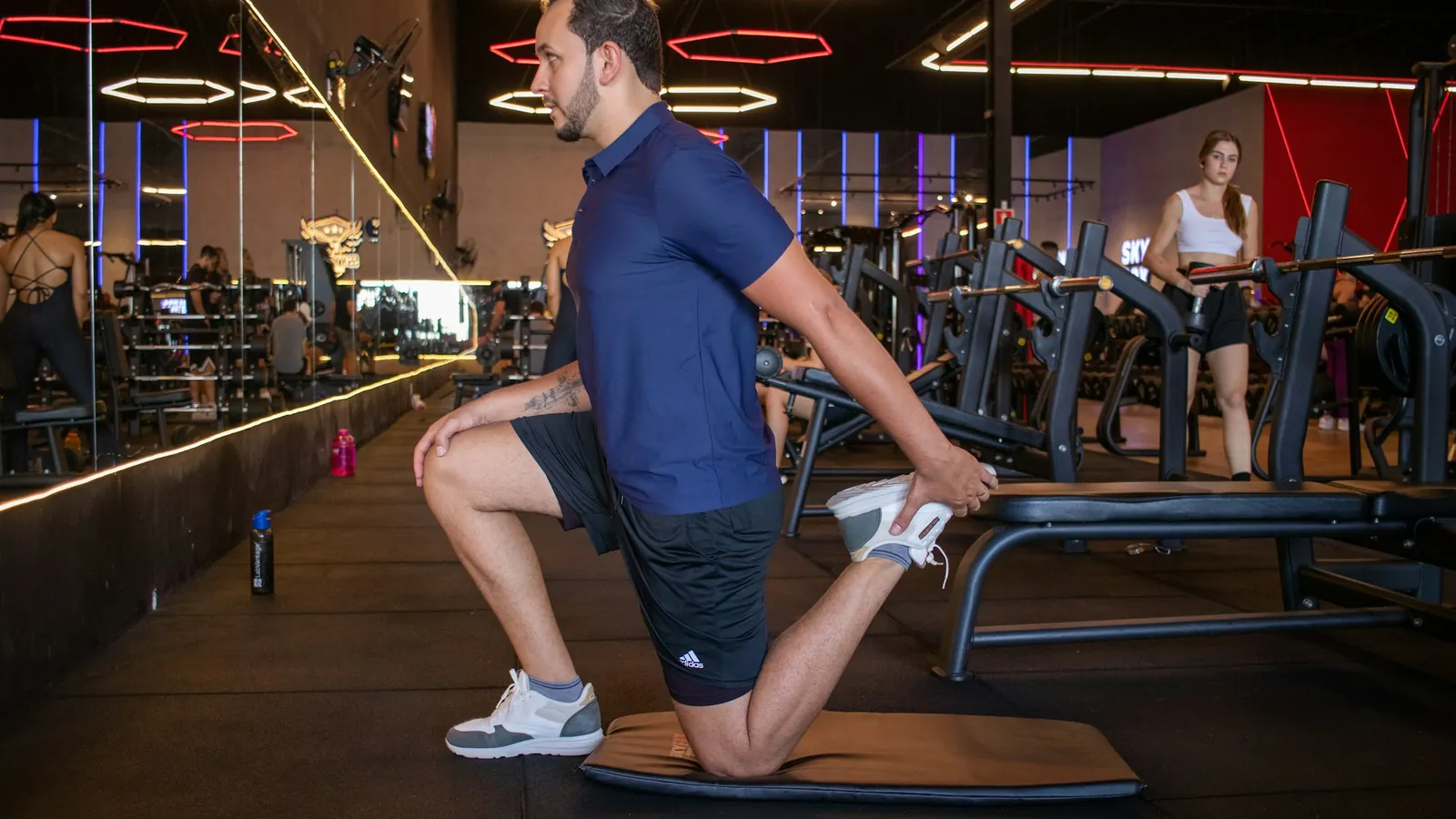
Every program needs warm-up exercises, but most programming advice treats them as a footnote. The data doesn't. When we read what coaches assigned on QuickCoach in September 2026, warm-up and mobility drills made up a bigger slice of programs than squats. Coaches write the on-ramp to a session as carefully as the session.
This report ranks the warm-up drills coaches reach for, shows how they split by job, and ends with a template you can save once and reuse.
The short answer
The warm-up exercises coaches program most are the lateral band walk (6.2% of clients in September 2026), cat-cow (4.8%), the hip flexor stretch (4.3%), the world's greatest stretch (4.0%) and the couch stretch (3.1%). Mobility and warm-up work is 13.9% of everything coaches assign, more than the squat pattern at 7.7%.
What this is, in one paragraph
Coaches type exercise names as free text. Every month we group every spelling of the same movement together and count the share of clients assigned each one, the method behind our living what coaches program page. For this report we pulled out the warm-up, mobility and activation drills from 229,713 verified assigned exercises in September 2026. The full method is at the foot of the page.
How much of a program is warm-up?
Close to one exercise in seven. Mobility and warm-up drills made up 13.9% of everything coaches assigned in September 2026, the third-biggest pattern after pulling (17.7%) and pushing (17.0%). That's more than the whole squat pattern (7.7%) and more than hinging (9.8%). It barely moved from August, when it was 14.0%.
That number says something about how coaches work. Writing the warm-up into the program, rather than telling clients to "warm up first", is a choice. It means the client starts the same way every time, and the coach can see it was done.
What warm-up exercises do coaches program most?
Hip and glute work leads. The lateral band walk, cat-cow and the hip flexor stretch top the list, with the world's greatest stretch, a full-body flow that hits hips, hamstrings and the upper back in one drill, close behind.
The most-programmed warm-up and mobility drills
Share of clients assigned each movement at least once, September 2026
Every spelling of each drill is grouped together. Some drills are still split across names (for example "90/90 hip switch" and "90-90"), so their true reach is a little higher.
None of these needs more than a mat and a band. That fits the rest of our data: the equipment report found that most online programs are written to run with minimal kit, and the warm-up keeps that footprint.
What jobs does a coach's warm-up do?
Sort the drills by purpose and three groups appear. Coaches use them in roughly this order.
| Job | Drills coaches program (share of clients) |
|---|---|
| Raise the heart rate | Rowing machine 2.6%, assault bike 2.2%, air bike 2.0%, stationary bike 2.0%, treadmill 1.8%, jumping jack 1.6% |
| Mobilise the joints | Cat-cow 4.8%, hip flexor stretch 4.3%, world's greatest stretch 4.0%, couch stretch 3.1%, 90/90 hip switch 2.2%, thoracic rotation 2.0%, leg swing 2.0%, open book 1.6%, inchworm 1.5% |
| Switch on the muscles | Lateral band walk 6.2%, clamshell 4.0%, monster walk 2.0%, plus glute bridges (19.1%) and band pull-aparts (4.6%), which often open a session |
Share of clients assigned the movement at least once, September 2026. Some movements, like the glute bridge, also appear as main exercises.
The fourth job, lighter sets of the first lift, rarely shows up as its own line, because coaches tend to write it into the sets and reps of the main exercise. If that's how you work, say so in the exercise note so the client knows the first sets are ramp-ups.
Do coaches write the warm-up out, or just say "warm up"?
Both, and the difference matters. Alongside the named drills, a plain "Warm Up" entry reached 1.9% of clients, "Full Body Warm-Up" 1.4% and "Dynamic Warm-Up" 0.6%. Those are coaches leaving the content to the client.
A single line is quick to write, but it can't carry a demo video, and the client has to guess what "warm up" means today. Named drills fix both. They also give you a record: if a client's hip flexor stretch disappears from their logs, you know the warm-up is being skipped before their squat starts to feel off.
Is foam rolling still in the warm-up?
For some clients. Foam rolling appears under three entries: general foam rolling (2.2% of clients), foam rolling the quads (2.0%) and the glutes (1.9%). That's a steady minority habit, well behind active drills. Most coaches seem to treat it as an optional extra a client can do before the warm-up proper.
Do warm-ups change from client to client?
More than any other part of a program. In September, mobility drills were 13.9% of all assigned work but 24% of the uncommon long tail, the exercises outside the mainstream. That's the same pattern we found in uncommon exercises coaches actually program: coaches keep the main lifts standard and personalise the edges. The warm-up is where a coach answers a stiff hip or a tight upper back. The low-load prehab drills that often sit in the warm-up are covered in the prehab exercises coaches actually program.
How do I build a warm-up I can reuse?
Build one for each session type, save it, and adjust it per client instead of writing it fresh. A simple structure takes five to ten minutes:
- Two to three minutes to raise the heart rate. Bike, rower or jumping jacks, whatever the client has.
- Two or three mobility drills for the joints the session uses. Cat-cow and the world's greatest stretch before lower body, thoracic rotation and a lat stretch before upper body.
- One activation drill. A lateral band walk or glute bridge before squats and hinges, a band pull-apart before presses.
- Lighter sets of the first lift, written into that exercise's note.
Then reuse it. Save the warm-up as the opening block of a template so every new program starts with it already in place, which is the idea behind writing client programs faster. If a client needs something specific, swap one drill rather than rewriting the block. And pick one name per drill: our report on exercise names found the same movement written dozens of ways, and the warm-up is where that drift is easiest to avoid.
Methodology and limitations
How we got these numbers
Source. September 2026 programming on QuickCoach, a platform used by more than 40,000 coaches and fitness businesses worldwide: 229,713 verified assigned exercises grouped into 4,144 canonical movements. No individual coach, client or plan is identifiable in anything published here.
Definitions. A movement's figure is the share of clients assigned it at least once in the month, every spelling grouped together. The mobility and warm-up share is the share of classified assigned exercises tagged to that pattern, on a 90th-percentile trimmed set (201,022 entries), so a few very high-volume accounts can't skew it. The long-tail share is mobility's slice of exercises classed as uncommon or novel. Which drills count as warm-up is our editorial grouping; coaches don't tag them.
Limits. Grouping is imperfect for drills written many ways, so some reach figures understate the true total. We can't see where in a session a drill sits, only that it was assigned. Figures are rounded.
Frequently asked questions
What warm-up exercises do coaches program most?
In September 2026 the lateral band walk led, reaching 6.2% of clients on QuickCoach, followed by cat-cow (4.8%), the hip flexor stretch (4.3%), the world's greatest stretch (4.0%) and the couch stretch (3.1%). Glute bridges (19.1%) also often open a lower-body session.
How much of a workout program is warm-up?
A lot more than most people think. Mobility and warm-up work made up 13.9% of everything coaches assigned on QuickCoach in September 2026, more than the whole squat pattern (7.7%) and the hinge pattern (9.8%).
How long should a warm-up before strength training be?
Five to ten minutes covers most clients: two or three minutes to raise the heart rate, a few mobility drills for the joints the session uses, one activation drill, then lighter sets of the first lift. This is general coaching guidance, not a QuickCoach data figure.
Is foam rolling still part of coaches' warm-ups?
Yes, for a minority of clients. Foam rolling shows up under three separate entries in our September 2026 data, general foam rolling (2.2% of clients), quads (2.0%) and glutes (1.9%). It's an optional extra rather than the core of most warm-ups.
Should I write out a client's warm-up or just say warm up?
Write it out. A plain warm-up line leaves the client to guess, and it can't carry a demo video. Save a warm-up as a short block of named drills and reuse it, so every client gets the same instructions.
Published from September 2026 programming data. The full monthly ranking lives on what coaches program. Questions about the data? Reach us at support@quickcoach.fit.