Most nutrition coaches collect the food log and then stop. The client logs meals, the coach opens the diary, reads the week and says something about protein. The numbers get read. The story does not. A nutrition coach check-in is the conversation that closes that gap.
The food log is the evidence, not the conversation. It shows what the client ate. It does not show why, or how the food felt, or what got in the way. This page is the check-in that goes beyond macros: five questions to ask each week, how to read a week of logs for patterns instead of perfection, and what to do when the numbers are fine but the client is not.
Quick answer
A nutrition coach check-in is a weekly conversation that reads the client's food log for patterns and asks about the week behind the numbers. Five questions cover what went well, where the plan fell apart, energy, hunger and one change for next week. The log is the evidence, the conversation is the coaching.
What the food log does and does not tell you
A week of food log entries is a small dataset. Read honestly, it tells you three things. Adherence, which is how closely the client followed the plan. Pattern, which is where the plan holds and where it bends across the week. And context, which is how the eating sits beside training, sleep and the rest of the coaching picture.
What the log cannot tell you is the story behind the entries. Why Tuesday fell apart. Whether the client ate the chicken because they wanted it or because they were afraid not to. How energy felt at 3pm. What the plan felt like to follow. Those answers live in the conversation, not the diary.
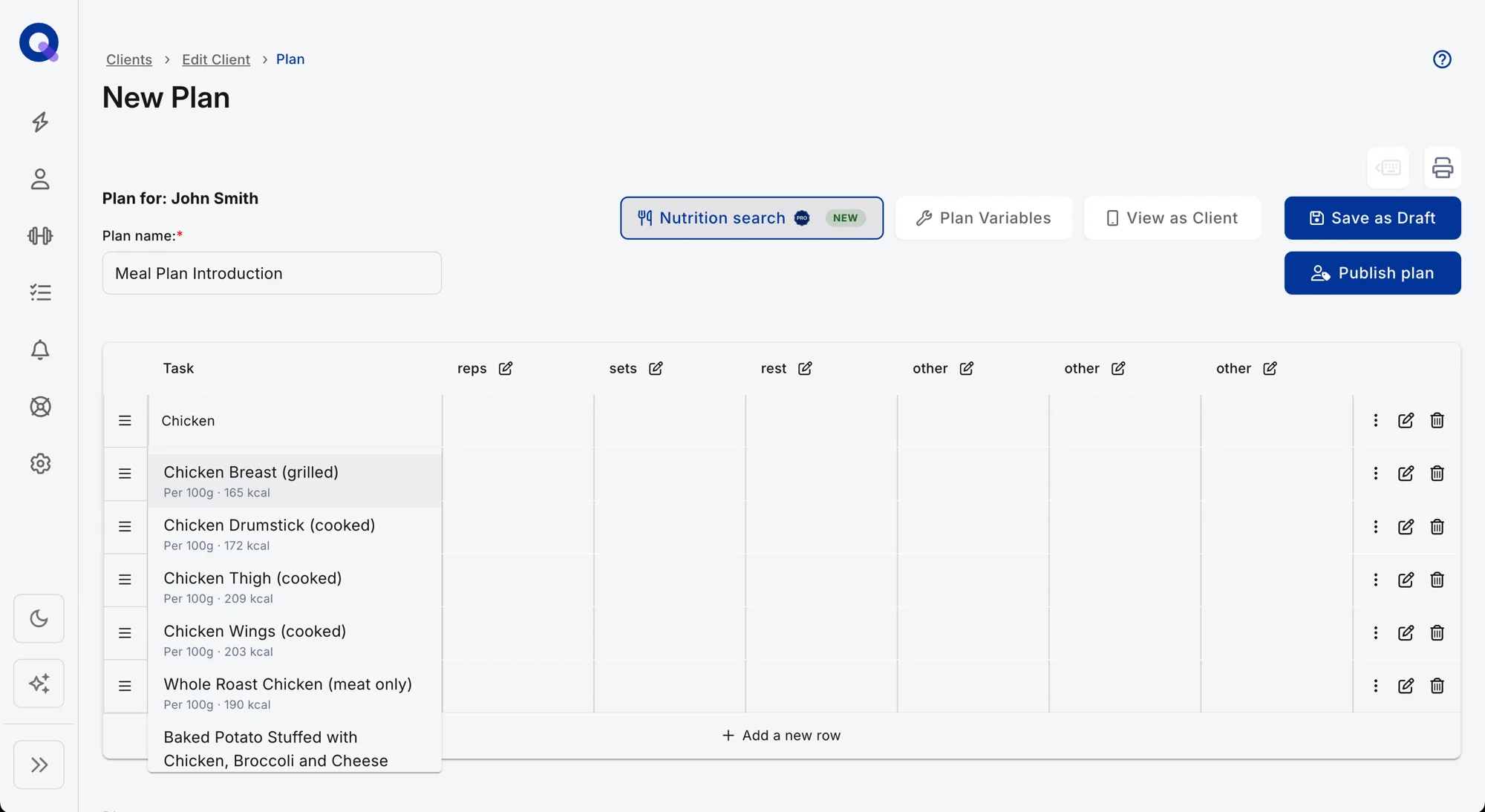
Software collects the evidence side. On QuickCoach the client's food log sits in the same app as their training, so the coach opens one page and sees the week beside the program, and the full stack is covered in our guide to nutrition coaching software. The check-in is what turns that page into coaching.
The weekly nutrition check-in: five questions that go beyond macros
Once a week, in the client's own words, five questions. The whole thing takes the client about five minutes and you about ten to read and reply. Send it as a short form the client can answer from their phone, and keep the reply forward-looking. What happened this week. What we change next week.
Copy-paste weekly nutrition check-in
Weekly nutrition check-in for [client], week of [date]: 1) What went well with your food this week? 2) Where did the plan fall apart, and what was happening around it? 3) How is your energy through the day? 4) How did hunger and fullness feel? Were there cravings? 5) What is one small change you want to make next week?
CopiedEach question earns its place. The first finds the win, which is where you build. The second finds the failure and, more usefully, the context around it, because the log shows what happened and the client tells you why. The third checks whether the food is actually fuelling the client, since a week of perfect macros with flat energy is a plan problem, not a discipline problem. The fourth is the behavioural read: hunger, fullness and cravings tell you how the plan feels to live on, not just how it looks on paper. The fifth hands the client the decision, and a change the client chooses is a change they keep.
These five are the weekly pulse, not the full question bank. The wider set of nutrition coaching questions, from scope of practice to supplements and macro handling, is collected in the nutrition coaching questions hub, each answered directly so a single answer can be lifted on its own.
Reading the log for patterns (not perfection)
Read the week, not the day. One off day is noise. Three similar days is a pattern, and the pattern is what you coach.
Four shapes show up constantly. The steady line, where the client hits most targets most days. The all-or-nothing week, where three perfect days end in a collapse. The weekend drift, where the plan holds on training days and loosens on rest days. And the missing log, where the diary itself is the first thing to go. Each shape needs a different move. The steady line wants progression. The collapse wants a smaller plan, not more discipline. The weekend drift wants the plan reshaped around the actual week. The missing log wants a smaller ask before anything else.
A worked example. The client logs cleanly Monday to Friday and the diary goes quiet every Saturday for three weeks in a row. That is not three bad weekends. That is the plan not fitting the weekend, and the fix is a redesign, not a reminder about discipline. The log is read this way all the way down: a single skipped day is noise, the same skip on the same day three weeks running is the pattern you coach.
The discipline of reading a run of data for its shape rather than its streak is the subject of our guide to habit check-ins, and the same reading works for food. The log is a month of small data points. Read it like one.
Habit check-ins for nutrition clients
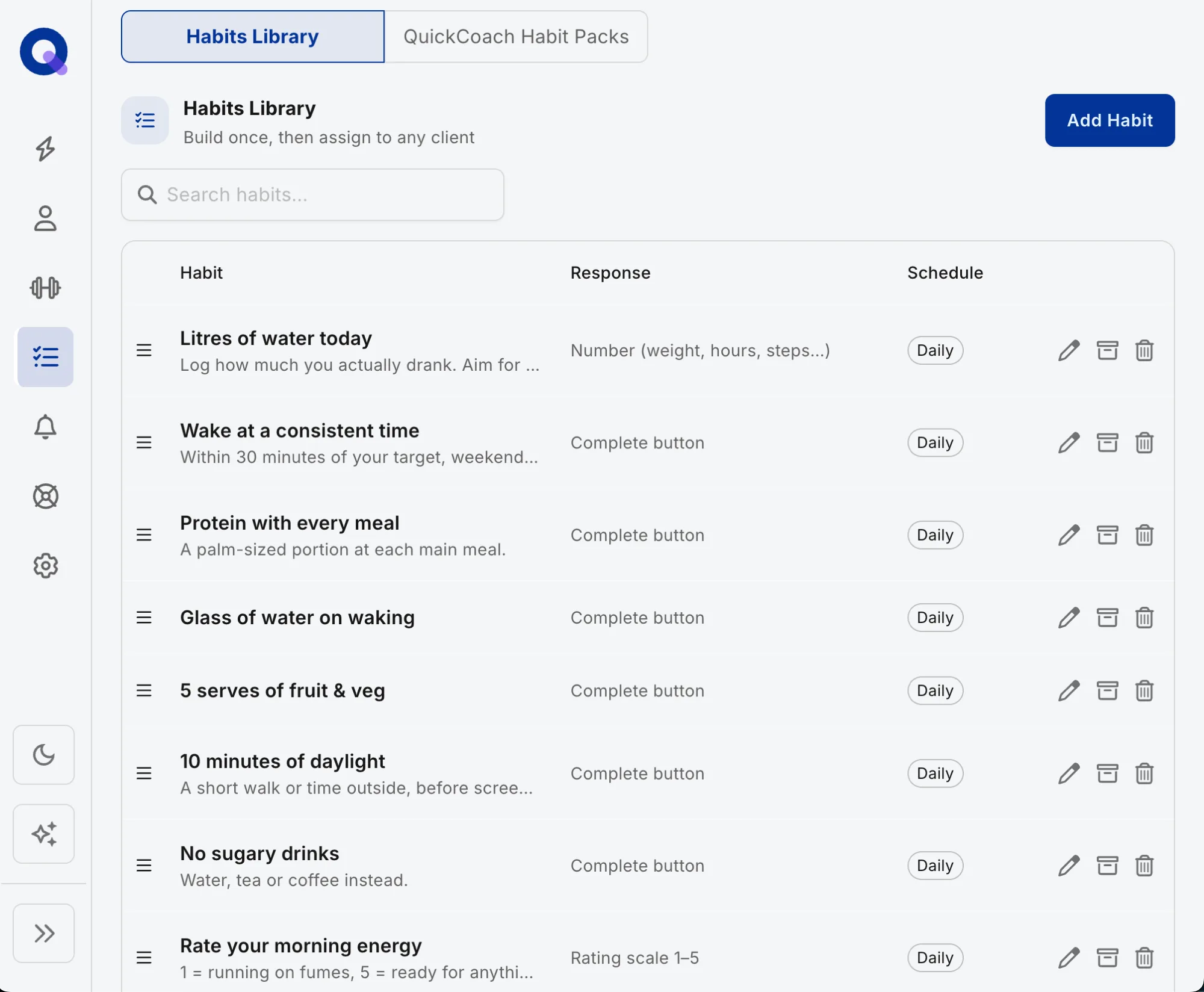
Most nutrition coaching is habit coaching wearing a macro belt. The client's food log is the behaviour you are trying to change, and most coaches assign logging as a habit in its own right. How widely coaches assign habits, and which categories lead, is covered in the habit assignment report, which is the right place for those numbers rather than this page repeating them.
The habit check-in for a nutrition client reads the tick data beside the food log. Did the water target hold when the plan tightened? Did the vegetable habit survive the busy week? The two datasets, the log and the ticks, tell you different things, and reading them together is where the coaching happens.
On QuickCoach, habit tracking is available on every plan, and Pro adds multiple habits per client, richer response types, ready-made packs and full history. The release that brought nutrition and habit tracking into Pro walks through the food log, photo scanning and habit stacks in detail.
When the numbers are fine but the client is not
Sometimes the log looks perfect and the client sounds exhausted. The macros are hit, the plan is followed, and the person on the other end has started to worry about food in a way they never did before. This is the check-in that the numbers cannot flag, and it is exactly why the conversation matters.
The warning signs are specific. Perfect logging with flat energy. Distress over a single off-plan meal. A client who logs every gram and still feels out of control. The coaching move is usually to loosen the plan, not tighten it. Drop logging to three representative days a week. Take a meal off the numbers. Move the conversation towards how food feels rather than what the scale says.
There is a line here. When the relationship with food is disordered, weight is dropping too fast, or the client is restricting around an injury or illness, that is outside a coach's remit, and the right move is a referral to a registered dietitian or clinician. The scope question is covered properly in the nutrition coaching questions hub.
The review that turns a month of logs into a plan change
The weekly check-in keeps the engine running. The monthly review decides where the plan goes next, and it is the nutrition version of the client progress review.
Once a month, pull the month of logs and read the trend. Adherence across the month, macro balance, bodyweight if you track it, and the client's own read of how it felt. Then name the plan change out loud: more food, less food, a new meal structure, a habit swap. A month of data earns a plan change. A week does not.
If you are building the weekly rhythm from scratch, the cadence, response habits and question design sit in our guide to check-ins that keep clients, and the nutrition lane of the coaching guides hub collects this page alongside the pillar, the question hub and the habit guide.
Frequently Asked Questions
How often should nutrition clients check in?
Most nutrition coaches run a weekly check-in and a monthly review. The weekly check-in is the five-question form on this page, short and forward-looking. The monthly review reads a month of logs and changes the plan. Stable clients can move to a fortnightly check-in, and daily food logging never requires a daily conversation.
Do I need the food log every day?
No. The log is a tool, not a tax. If daily logging is onerous for a client, three representative days a week still gives you a picture, and the check-in reads whatever the client logs. Demanding perfect logging teaches a client to log perfectly while eating no better, which is the worst trade in nutrition coaching.
What about clients who do not log?
Run the check-in anyway. The five questions work as a conversation without the diary. Ask about meals in general terms, use photos or rough descriptions, and keep the questions behavioural rather than numerical. A client who will not log will usually still answer the questions, and the answers are where the coaching lives.
Published August 2026. The nutrition check-in sits in the coaching guides hub alongside the nutrition software pillar, the question hub and the habit check-in guide. If you are building this weekly rhythm with a small roster, QuickCoach's free tier holds up to 20 clients with no time limit, and the food log, macros, multi-habit tracking and full history that make the reading possible are core to Pro at $39 a month, or $32.50 a month on annual billing. No separate nutrition fee, and no forced upgrade.