This page is a question hub, not a guide. Each heading is a long question a working coach asks, followed by a short answer you can quote, then a line or two of context with a link to the deeper page. Read it top to bottom or jump to the question you need.
Everything here stays inside a non-clinical scope. Where a question crosses into medical territory, the answer says so and points to a clinician. The coaching-methods reference collects the underlying concepts in more detail.
What exactly is nutrition coaching, and how is it different from what a registered dietitian does?
Nutrition coaching helps clients build better eating habits through behaviour change and accountability. It does not diagnose or manage medical conditions. Dietitians are regulated health professionals who can prescribe clinical diets for disease. Coaches work with generally healthy clients or those cleared by a clinician.
The dividing line matters for what you can legally say yes to. The scope of practice reference sets it out in full.
If I'm not a dietitian, what nutrition credential should I actually hold before coaching clients?
Precision Nutrition Level 1 is the most widely recognised nutrition coaching credential for non-dietitians. It covers behaviour change, energy balance, macronutrients, and coaching practice within a non-clinical scope. It is not a licence to practise as a dietitian, and it does not qualify you to treat disease.
Our PN1 breakdown covers what the course actually teaches and where it leaves off.
What is the actual scope of practice for a nutrition coach, and where does it stop?
A nutrition coach can assess general eating patterns, educate on energy balance and macronutrients, design habit-based interventions, and hold clients accountable. A coach cannot diagnose medical conditions, prescribe therapeutic diets, manage eating disorders, or treat disease. When a client crosses into clinical territory, the correct step is referral to a clinician.
The full coaching methods reference lists every spoke, including the ones that border on clinical work.
How do nutrition coaches actually deliver meal plans to clients online without it turning into a spreadsheet nightmare?
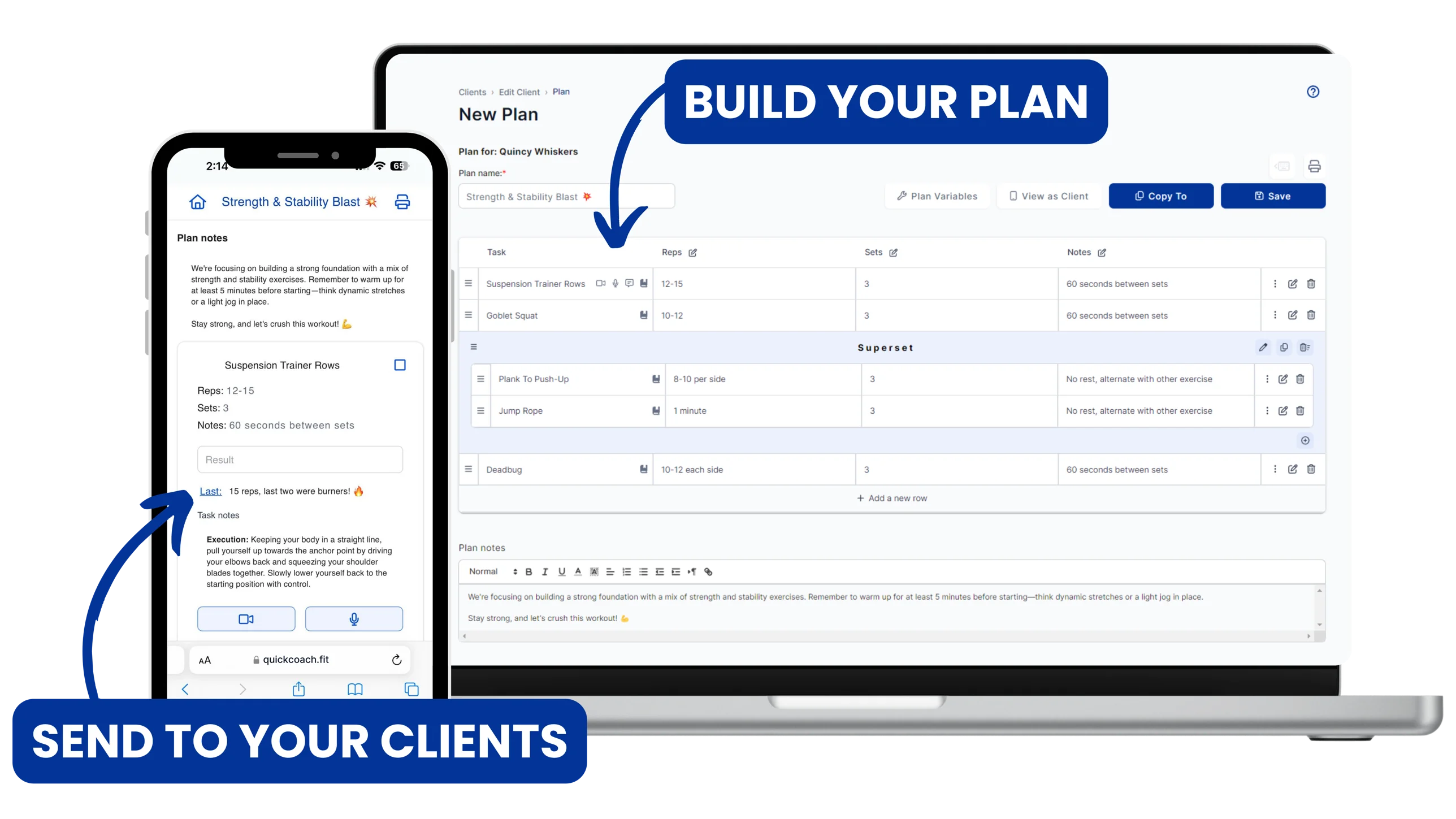
Most working coaches deliver meal plans through coaching software rather than email attachments or spreadsheets. The software holds the plan, the client logs food against it, and the coach reviews adherence in the same place they track workouts and habits. This keeps nutrition and training in one timeline per client.
See the nutrition coaching software guide for how the workflow looks end to end.
Do online coaches actually assign nutrition and food logging, or is that still mostly a dietitian thing?
About 58% of online coaches assign nutrition or food logging to their clients, based on platform data. Nutrition has moved from an optional add-on to a core part of how generalist coaches deliver programmes. It is no longer the exclusive domain of dietitians, though clinical work still is.
The numbers behind that figure, and what else coaches assign, are in our online coaching habits report.
How do nutrition coaches use habit stacking to change behaviour, and does it actually work better than telling people what to eat?
Habit stacking attaches a new behaviour to an existing cue, such as drinking water with the morning coffee. Coaches use it because it lowers the cognitive cost of change and survives busy weeks better than a full diet overhaul. It works best for adherence, which is the part most clients struggle with.
The habit stacking method page breaks down how to sequence cues and pick a first habit.
Can a nutrition coach recommend supplements to clients, or is that outside what they're allowed to do?
A nutrition coach can suggest commonly available supplements such as protein, creatine, or vitamin D within a general wellness scope, provided they do not prescribe for a diagnosed condition. Medical advice, dosing for disease, and anything involving restricted substances sits outside the role and requires a clinician.
Our data on what coaches actually recommend is in do online coaches recommend supplements.
How do nutrition coaches track calories and macros with clients without making it feel obsessive?
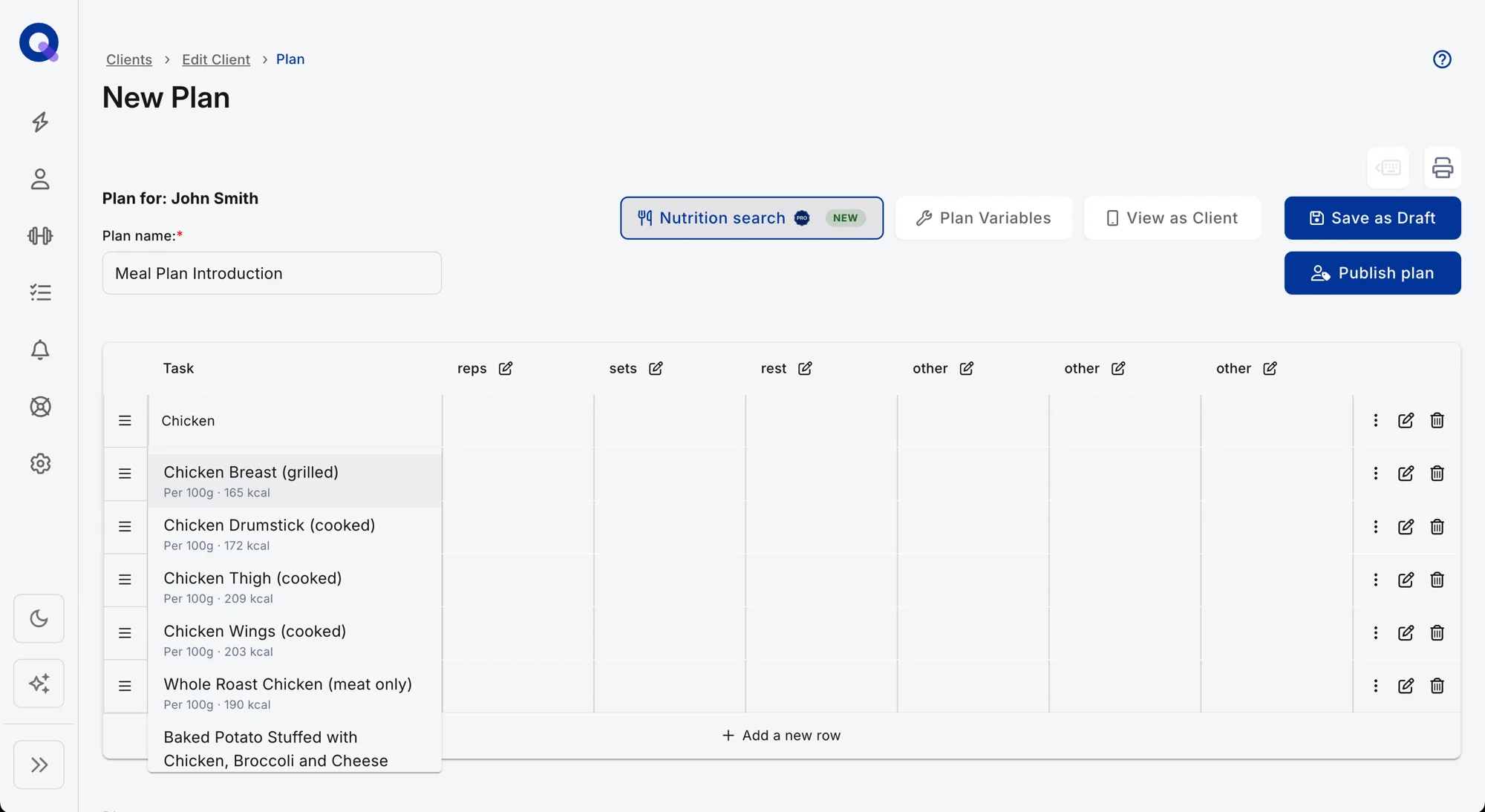
Coaches track calories and macros through a client food log inside the coaching app, usually with a food database lookup so clients do not type numbers manually. The coach reviews trends rather than daily totals, which keeps the focus on patterns and removes the anxiety of perfection every single day.
The QuickCoach nutrition and habit tracking update shows how that looks in the app, including photo scanning.
What is reverse dieting, and does it actually repair your metabolism the way people claim online?
Reverse dieting is a gradual increase in calories after a long deficit, intended to raise energy expenditure and bodyweight set point without rapid fat regain. The evidence that it repairs a damaged metabolism is weak. What it does well is help restrained eaters reintroduce food without bingeing.
For the honest read, see our reverse diet explainer.
How do nutrition coaches run check-ins with clients, and what should they actually cover each week?
A weekly check-in reviews nutrition adherence, weight trend, measurements or photos, energy, and any life events affecting the plan. The coach keeps it short and forward-looking: what happened, what to adjust, what to try next. Most coaches run it through coaching software with a short form and a written reply.
The full workflow is in how online coaches run check-ins, with the prompts in client check-in questions. For the weekly nutrition check-in that reads the food log for patterns, see our guide to nutrition coach check-ins.
What software do nutrition coaches actually use, and is there one that does nutrition and training together?
Most nutrition coaches use a coaching platform that combines nutrition logging with programme delivery and check-ins. QuickCoach, Trainerize, TrueCoach, Everfit, and My PT Hub all offer some nutrition tooling. The best fit depends on roster size, branding needs, and whether you coach nutrition alone or alongside training.
For a structured decision process, read how to choose coaching software in 2026.
How should a nutrition coach handle a client who mentions a medical condition, an eating disorder, or a recent diagnosis?
Refer out. A nutrition coach is not qualified to manage clinical conditions or supervised diets, and eating disorders fall outside the role too. The correct response is to pause nutrition work, flag the issue clearly, and refer the client to a registered dietitian or their GP, with a mental health specialist added when relevant.
The scope of practice reference covers where the line sits and how to phrase a referral.
Can a personal trainer also coach nutrition, or do they need a separate qualification to do it legally?
A personal trainer can coach general nutrition habits without a separate qualification in most markets, provided they stay inside the non-clinical scope. A dedicated nutrition credential such as Precision Nutrition Level 1 is strongly recommended, because it covers the behaviour change side that a training certification does not.
How much does a nutrition coach typically charge, and does it price differently from personal training?
Nutrition coaching usually prices as a monthly retainer or a programme package rather than a per-session rate. Rates range widely depending on the coach's credentials, the client's goals, and how much check-in access is included. Most working coaches bundle nutrition with training rather than selling it as a standalone service.
To turn an income goal into a per-client rate, try the free coaching rate calculator.
How long does a nutrition coaching programme take before a client sees real, lasting results?
Most clients see initial changes in four to eight weeks once habits stick, with meaningful body composition change at twelve to twenty-four weeks. Lasting results depend on adherence past the novelty phase, which is why habit-based coaching outperforms strict meal plans over a year even when the weekly rate of change looks slower.
Should a nutrition coach weigh clients, take photos, or just track how they feel?
Weight, photos, and how a client feels all matter, and most coaches use a combination. Weight is noisy on its own, so it is read as a trend alongside photos and energy. Mood and sleep often move first, and they catch problems before the scale does.
What does a first nutrition coaching session actually look like, and what should the coach cover?
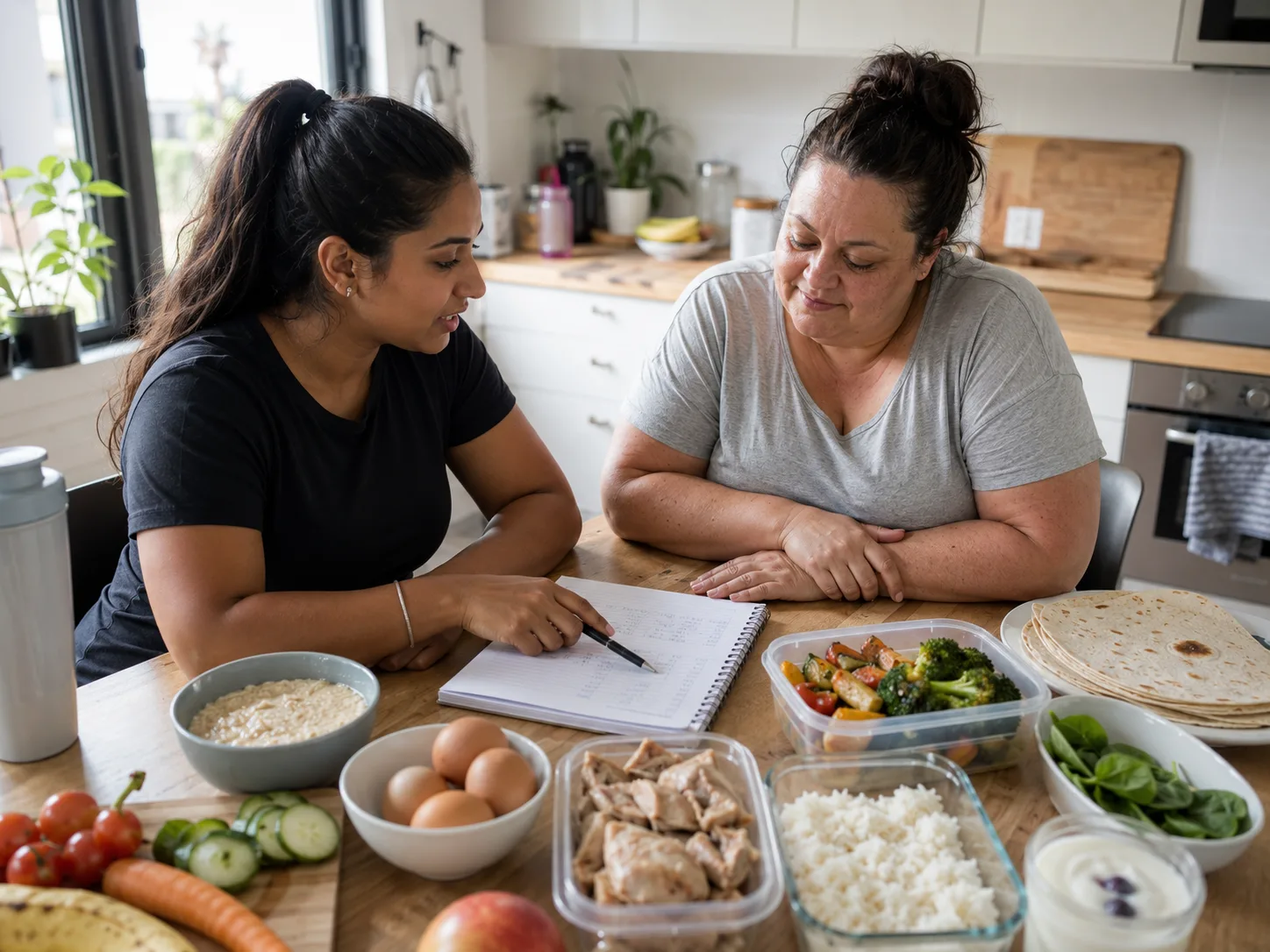
A first session covers the client's goals, current eating patterns, medical history relevant to scope, lifestyle constraints, and what success looks like to them. The coach does not hand over a meal plan yet. They gather context, agree a starting habit, and set the first check-in so the client leaves with one clear next step.
For what wraps around that session, our anatomy of an online coaching programme maps the full client journey.
Can a nutrition coach diagnose a vitamin deficiency or tell a client to take a specific dose?
No. Diagnosing a deficiency and prescribing a dose for it is clinical work that sits with a doctor or dietitian. A coach can flag that a client's intake looks low and suggest they raise it with food or speak to a clinician, but not name a deficiency or set a dose.
How do nutrition coaches handle clients who travel constantly or eat most meals from restaurants?
Coaches shift the focus from meal prep to decision frameworks: protein at every meal, portion cues, alcohol limits, and picking the least-bad option on a menu. Logging still helps, even rough entries. The goal is consistency under constraint, not perfection, which is what habit coaching is built for.
Is meal delivery a useful tool in nutrition coaching, or just a gimmick for clients who can afford it?
Meal delivery can help clients who lack cooking time or skill to hit a calorie and protein target without the friction of planning. It is a bridge, not a permanent solution. Coaches use it for the first few weeks of adherence, then taper it as the client learns to replicate the structure themselves.
Does a nutrition coach need professional indemnity insurance, even if they only coach online?
Yes. Professional indemnity insurance is recommended for any coach delivering paid nutrition guidance, online or in person. It covers claims that advice caused harm, even when the coach stayed in scope. Most policies for fitness and nutrition coaches are inexpensive and bundle with public liability if you also train clients face to face.
More on the methods behind these answers in the coaching methods reference. For the software side, the nutrition coaching software guide covers platforms and features. Want the wider decision frame? Read how to choose coaching software in 2026. Questions about which plan is right for you: support@quickcoach.fit.