These are the questions that come up repeatedly from Pilates instructors moving into online coaching. Each one gets a direct answer first, then a short note on how it plays out in practice. Where coaching software is part of the answer, we say exactly what it does and does not do.
What is Pilates coaching and how does it differ from teaching studio Pilates?
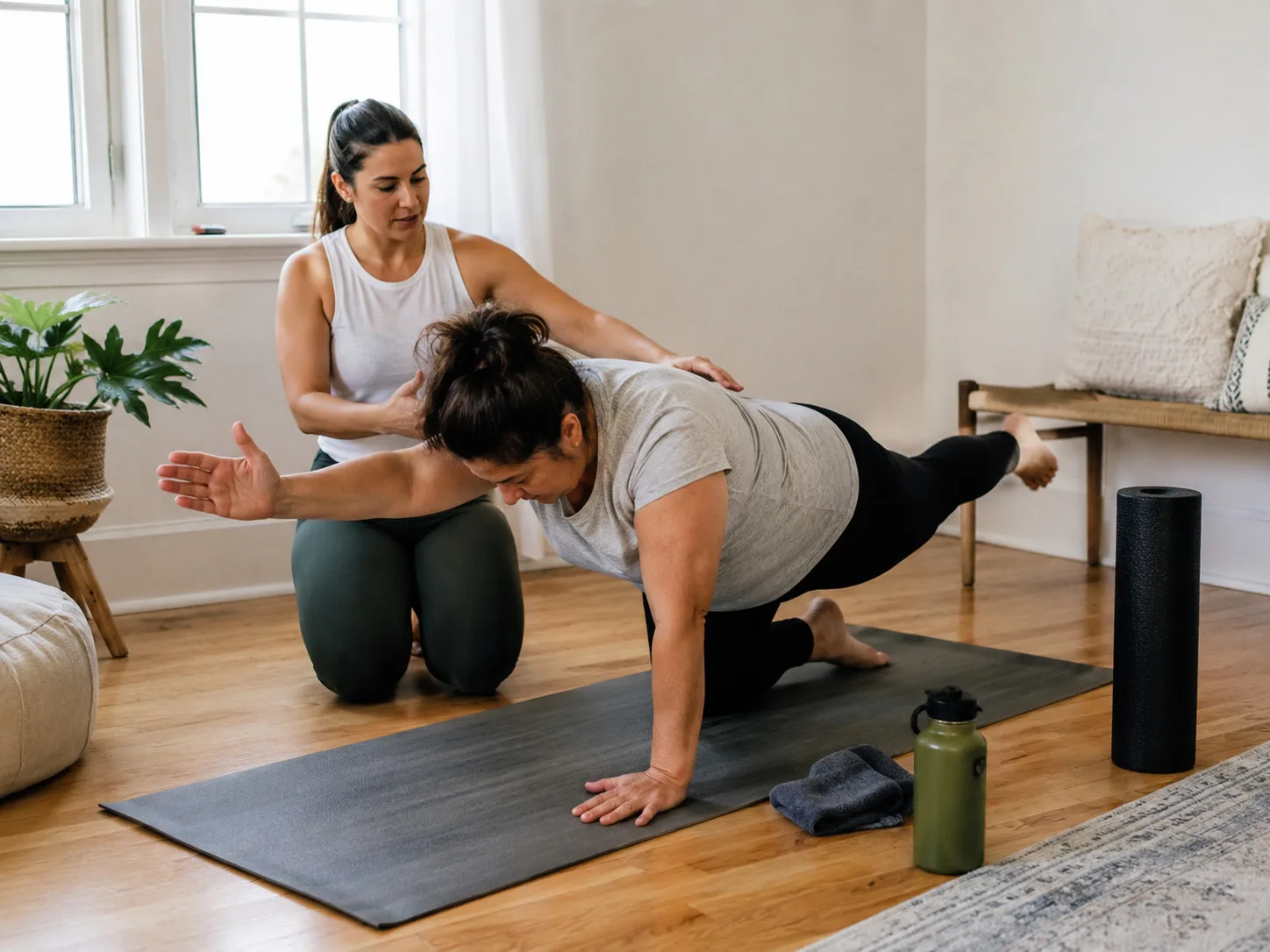
Pilates coaching is the programmed delivery of Pilates sessions to a client over time, usually online or one-to-one, with progressions, check-ins, and home work between sessions. Studio Pilates is drop-in class teaching. Coaching owns the client's longer-term development rather than a single class attendance.
Studio instructors often move into coaching when they want to own a client's progression over months rather than deliver a one-off class. The skill set shifts from cueing a room to programming a sequence.
What credential should a Pilates instructor hold before coaching clients?
Most insurers and studios expect a recognised Pilates mat and reformer qualification, not a weekend intro. The two most cited credentials are BASI Pilates and STOTT Pilates, both of which run comprehensive training pathways. A generic personal training certificate alone does not cover Pilates scope.
See the BASI Pilates and STOTT Pilates method pages for what each pathway actually covers.
What is the actual difference between BASI Pilates and STOTT Pilates?
BASI Pilates follows the original Joseph Pilates lineage with a block-based progression and a strong biomechanical framework. STOTT Pilates applies a contemporary approach with updated spine articulation principles and shoulder and pelvic placement focus. Both are respected. The split is lineage versus contemporary biomechanics.
Both pathways are covered in detail on the BASI and STOTT pages. Neither is objectively better; the choice usually comes down to which school is accessible locally or online.
Can Pilates be taught online, and does coaching software actually work for it?
Yes, mat Pilates transfers well to online delivery because it needs minimal equipment and the movements are visible on camera. Coaching software programmes the mat sessions and the home work, tracks adherence, and runs check-ins. It does not handle class bookings or studio scheduling, which are separate tools.
For the broader decision framework around which platform to use, see how to choose coaching software in 2026.
What is the scope of practice for a Pilates instructor?
A Pilates instructor teaches movement, programmes sessions, and progresses clients safely within their current ability. Diagnosing injuries, prescribing clinical rehabilitation, or treating diagnosed medical conditions sits outside that scope and belongs to physiotherapists and allied health. The line is movement coaching versus clinical care.
The full breakdown is on the scope of practice page. Knowing where your line sits protects both you and the client.
Can a Pilates instructor rehabilitate a client's injury?
No, not unless the instructor also holds an allied health qualification. Pilates is often used in rehabilitation settings, but the instructor's role is delivering the movement programme a physiotherapist has prescribed, not diagnosing or treating the injury itself. Refer out, then support the plan.
Refer clinical work out, then deliver the programme the physiotherapist has written. More on this on the scope of practice page.
How do Pilates instructors deliver mat programmes to online clients?
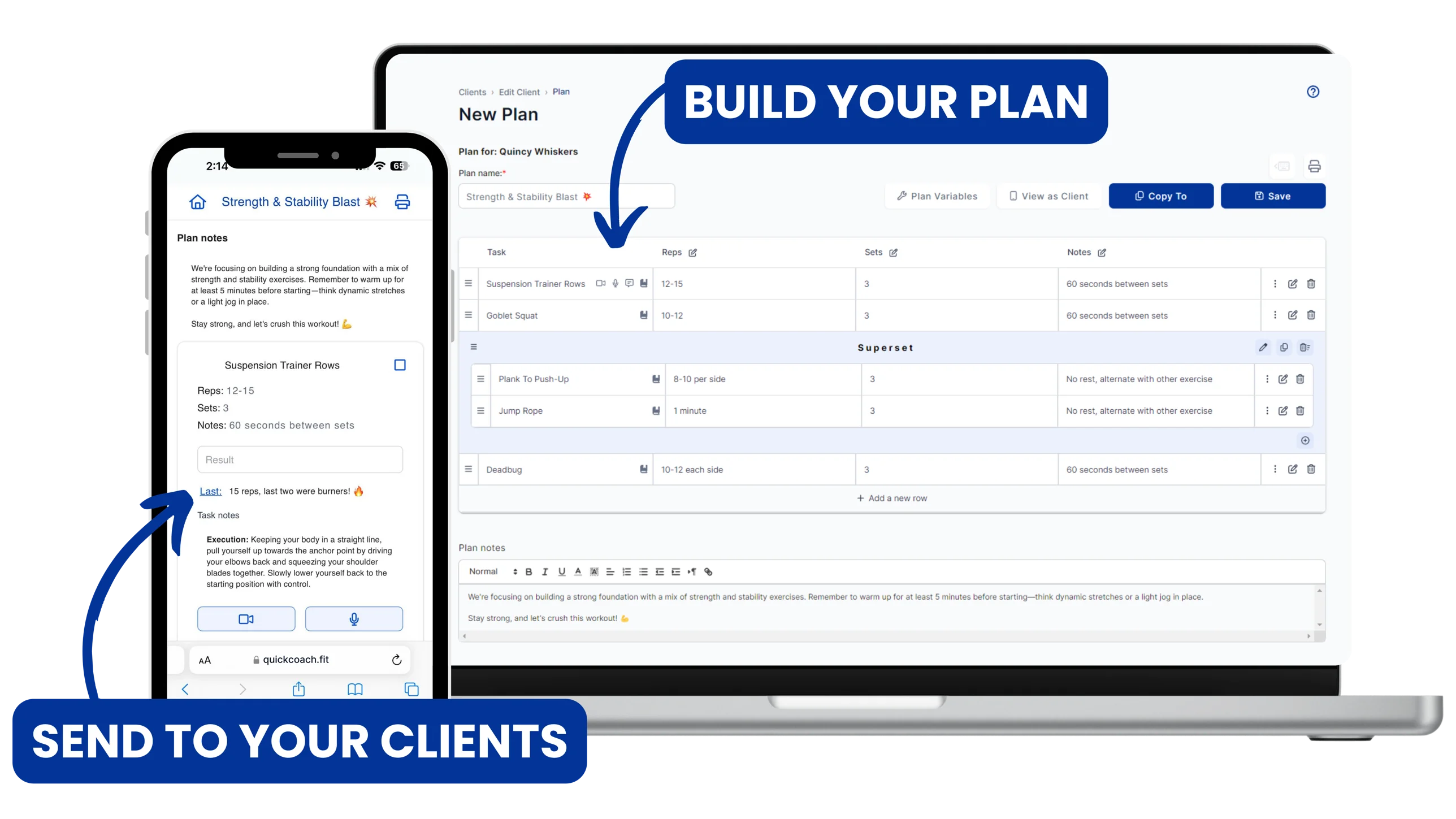
Most build a reusable programme of mat sessions in a coaching app, attach video or written cues per exercise, and assign it to the client for the week. The client trains on their own schedule and logs completion. A check-in closes the loop each week.
The mechanics of building sessions quickly are covered in writing client workout programmes faster, the structure of a full online programme in the anatomy of an online coaching programme, and the mat-repertoire workflow with home-equipment substitution in our guide to the pilates program builder.
What equipment does an online Pilates instructor need?
A camera, a stable internet connection, a quiet space, and a mat. A laptop webcam usually suffices for one-to-one sessions, though a phone on a tripod frames the body better. A small speaker and decent lighting finish the kit. Reformer work needs the reformer itself.
Reformer adds a reformer to that list, which is a real barrier for at-home clients and narrows who you can serve.
How do Pilates instructors run client check-ins?
A weekly written check-in works for most online Pilates clients. Ask how the sessions felt, whether anything is sore, and what felt too easy or too hard. A short form in the coaching app keeps it consistent. Video check-ins suit clients who prefer to talk it through.
A template saves reinventing the form each week. The online coaching client check-ins guide covers the structure, and the client check-in questions list gives you the prompts.
What software do Pilates instructors actually use?
A mix. Some run everything on a generic coaching app that programmes sessions and tracks client work. Others keep bookings on a studio management tool and deliver programmes separately. The honest fit for coaching software is the programming and check-in side, not class scheduling or studio payments.
The branded client app is also where a studio's identity lives between sessions, which is the subject of the pilates studio branding guide. The full walkthrough of the app for an instructor, what it carries and what it costs, is in our guide to the branded client app for Pilates instructors.
If you want the decision framework, how to choose coaching software in 2026 walks through it step by step.
How does Pilates fit alongside a client's strength training?
Pilates and strength training complement each other rather than compete. Pilates builds trunk control, breath, and joint stability, which carries into heavier lifts. Programming both in the same week works well, with Pilates on lighter days or as a warm-up to resistance sessions. Total volume still needs managing.
The interaction between modalities is covered on the concurrent training page.
Can a Pilates instructor prescribe nutrition to clients?
Only with a separate nutrition qualification. Pilates certification covers movement, not dietary prescription. General healthy-eating guidance sits in a grey area, but individualised meal plans or macronutrient targets require a nutrition credential. Refer out, or add a recognised nutrition coaching qualification to your scope.
General healthy eating talk is one thing. Individualised prescription is another. See precision nutrition and the scope of practice page for where the line sits.
How many clients can a Pilates instructor take on at once?
One-to-one online Pilates coaching usually caps where the coach's weekly hours and check-in capacity do. A working figure for a full-time online instructor is 20 to 40 active clients, depending on session frequency and how much manual feedback each client needs. Software does not change that ceiling.
Most coaches hit the ceiling on time before they hit it on software capacity.
Do you need insurance to practise as a Pilates instructor?
Yes. Public liability and professional indemnity insurance are standard for practising instructors, whether online or in a studio. Most insurers ask for a recognised Pilates qualification before they will cover you. A generic personal training policy may not extend to Pilates, so check the wording before assuming you are covered.
Check the policy wording before you assume an existing personal training policy covers Pilates. Often it does not.
What is the difference between mat and reformer Pilates for online delivery?
Mat Pilates is the easier online sell. The client needs a mat and a screen, nothing else. Reformer Pilates requires the client to own or access a reformer, which narrows the audience and raises the price point. Most online Pilates coaches lead with mat and treat reformer as a premium add-on.
Reformer narrows your market but raises what you can charge per session.
How long should a Pilates programme run before progressing a client?
Most beginners stay on the same foundation programme for four to six weeks. That is long enough to learn breathing, placement, and the basic movement vocabulary. Progressions then layer in, rather than swapping the whole programme. Intermediate clients progress on a roughly monthly cycle once the basics are stable.
Progressing too early is the most common mistake new coaches make. Patience here pays later.
Can Pilates help with back pain?
Often yes, but with a scope caveat. Pilates is frequently used to build trunk strength and movement control in clients with non-specific low back pain, usually under a physiotherapist's plan. A Pilates instructor delivers the movement, not the diagnosis or treatment. Work with, not instead of, the client's health team.
Work alongside the health professional, not in place of them. The scope of practice page sets the boundary.
How do you price online Pilates coaching?
Most online Pilates coaches price by the month, not the session, because the value is in the programme and the check-ins between live work. A common range is $80 to $200 per month per client depending on session count, access, and whether reformer is included. Your roster size sets the floor.
The coaching rate calculator turns your income goal into a per-client rate so you can sanity check your monthly price.
What should a first session with a new Pilates client cover?
Screen for injuries and movement history first, then watch them breathe and move. A short assessment of pelvic placement, spine articulation, and core engagement tells you where to start. Skip the workout on day one. The first programme is built from what the assessment shows, not a generic template.
An assessment-first approach is what separates coaching from generic class delivery.
Is a Pilates certification worth it for an existing personal trainer?
Usually yes, if you want to teach Pilates rather than borrow the odd exercise. Personal training certification does not cover Pilates scope, and insurers and studios know that. A recognised BASI or STOTT pathway opens a second service line, broadens the clients you can take on, and lifts your credibility with rehab referrals.
It is a time investment, but it widens the clients you can work with and the referrals you can receive.
Answers reflect current Pilates industry norms as of July 2026. For the broader software decision, our guide to choosing coaching software in 2026 covers the factors that matter. More on QuickCoach and the free coaching platform model on the QuickCoach blog.