Coaches ask us a version of this question every week. Sometimes politely, sometimes suspiciously, often after a bad experience with another platform that promised free and then was not. The question: how is QuickCoach actually free, and is the model going to hold?
It's a fair question. A free online coaching platform always invites a degree of scepticism, and the fitness software category has earned its share. Platforms get acquired. Pricing changes. Free tiers shrink. Coaches who built their businesses on a particular promise end up paying for what used to be free, or moving to a new platform mid-roster.
The best response to that scepticism is not a slogan. It's a clear, honest explanation of how the model actually works. That's this article.
Quick answer
Yes, QuickCoach is genuinely free. The free tier supports up to 20 active clients with the full program builder and client apps, no time limit. Paying Pro subscribers fund it, the same freemium model Slack and Figma use. Coaches can run an early practice on free indefinitely.
The short version
QuickCoach has two parts. A free tier with the core tools a coach needs to run their practice and no time limits. And a Pro tier that costs a fixed monthly subscription and unlocks tools coaches need once they're operating at scale.
The free tier is not a trial. It is not a loss-leader designed to push every coach toward Pro within 30 days. It is a real, fully functional coaching platform that thousands of coaches use as their primary tool, indefinitely, without paying us anything.
Pro exists because some coaches outgrow the free tier and need more from us. Those coaches choose to pay, and their support is what keeps the broader platform going for everyone else.
Why free is the right place for most coaches to start
Most coaches getting started online are running an experiment. They're testing whether they can convert their existing in-person clients to online delivery, or pick up a few online clients alongside their day job, or whether the whole online coaching idea actually fits the way they want to live. Coach Nick Hogan walks through one version of that transition in the in-person to online playbook that worked for him.
Asking that coach to commit to a monthly software subscription before they have proven the experiment is a barrier in the wrong place. Software cost is not what makes or breaks a coaching business in the early stages. The work and the consistency are. A free tier that actually works lets a coach focus on those things instead.
By the time a coach has built a roster that justifies investing in better software, they will know it. And they will know exactly what they need from us, because they will have used the platform long enough to see what works.
What's actually in the free tier
The free tier is a real coaching platform, not a stripped-down preview. Coaches running their practice on it have access to:
- Unlimited, customisable task library
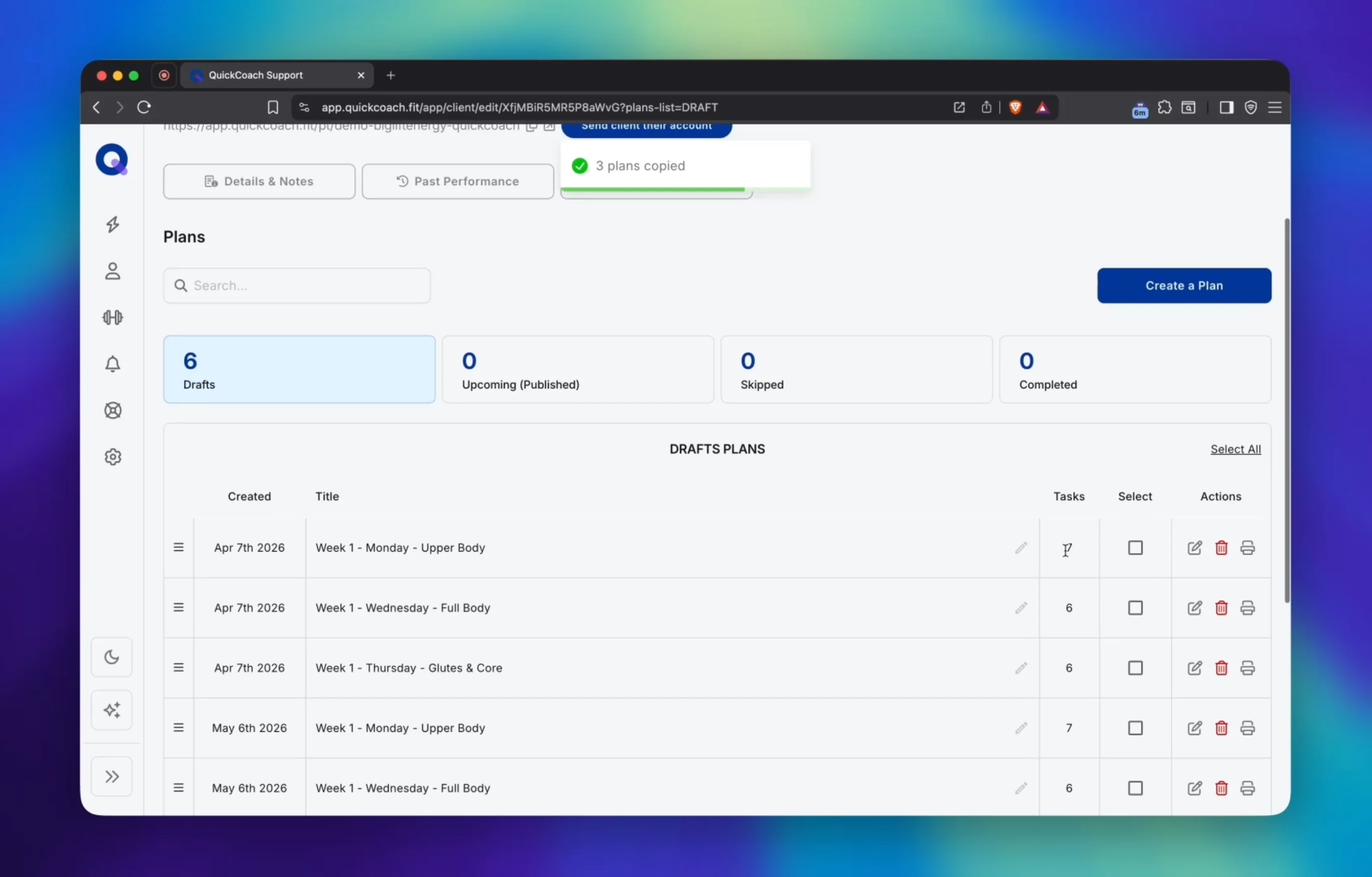
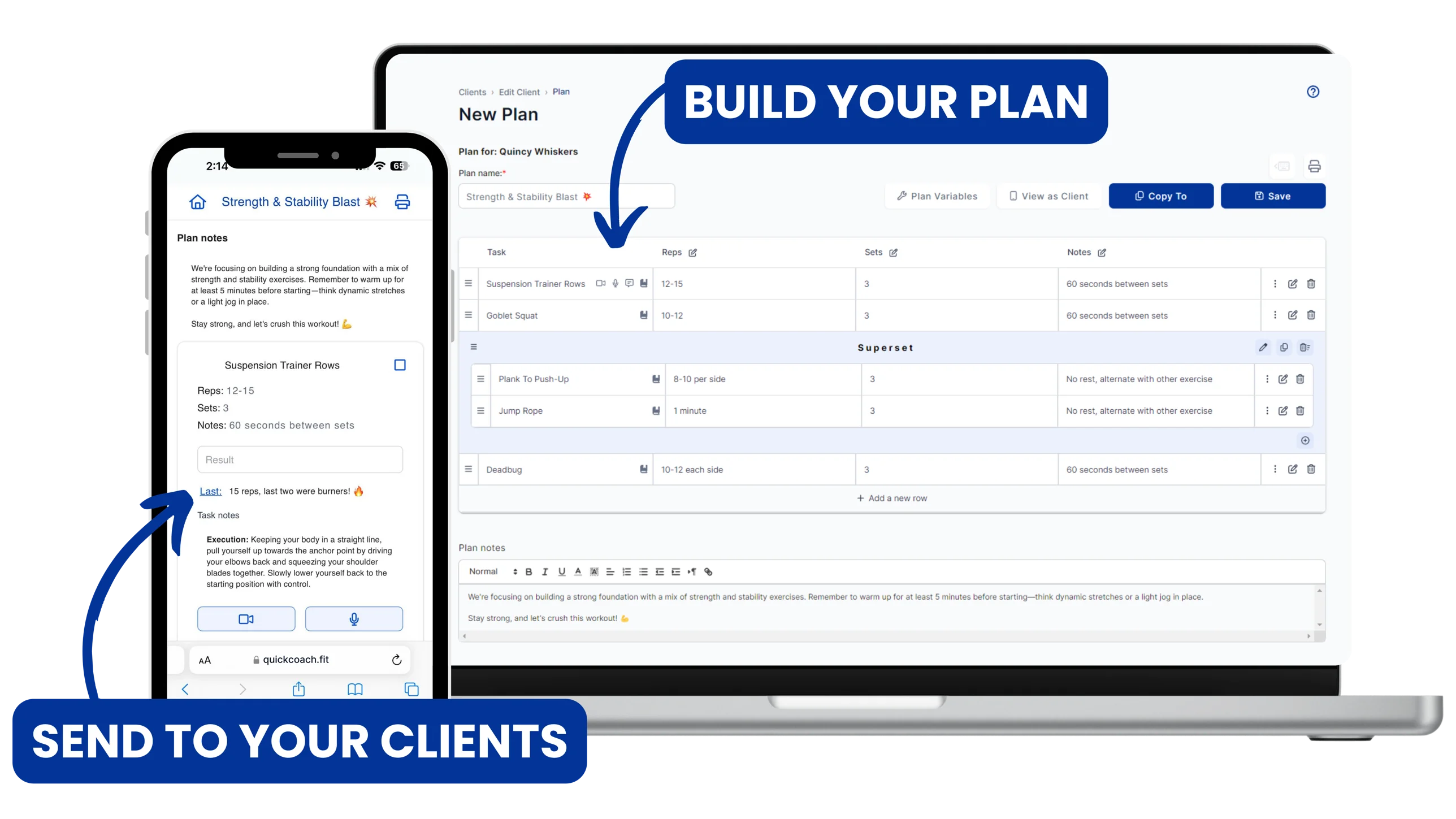
- Unlimited reusable, editable programs (with cloning and templates to cut program-building time in half)
- Client mobile and web apps, so clients have a proper experience for completing their training
- Up to 20 clients
No time limit. No countdown to a forced upgrade. Coaches who never need anything beyond the free tier can keep using it indefinitely.
The 20-client cap is not a token figure either. For a coach doing genuinely individual work, 20 clients is most of a full-time roster; the capacity maths in our guide to how many clients an online coach can actually handle puts the realistic high-touch 1:1 ceiling at 15 to 25.


What we ask in return is honest. Give the platform a fair go, share feedback that helps us improve it, and consider Pro when your business has grown to the point where it genuinely makes sense for you. That is the social contract.
What Pro is, and who it's actually for
Pro is for coaches who have grown past the early stage and want their coaching to feel and look more polished, plus the room to keep growing past 20 clients.
What is in Pro:
- Unlimited clients
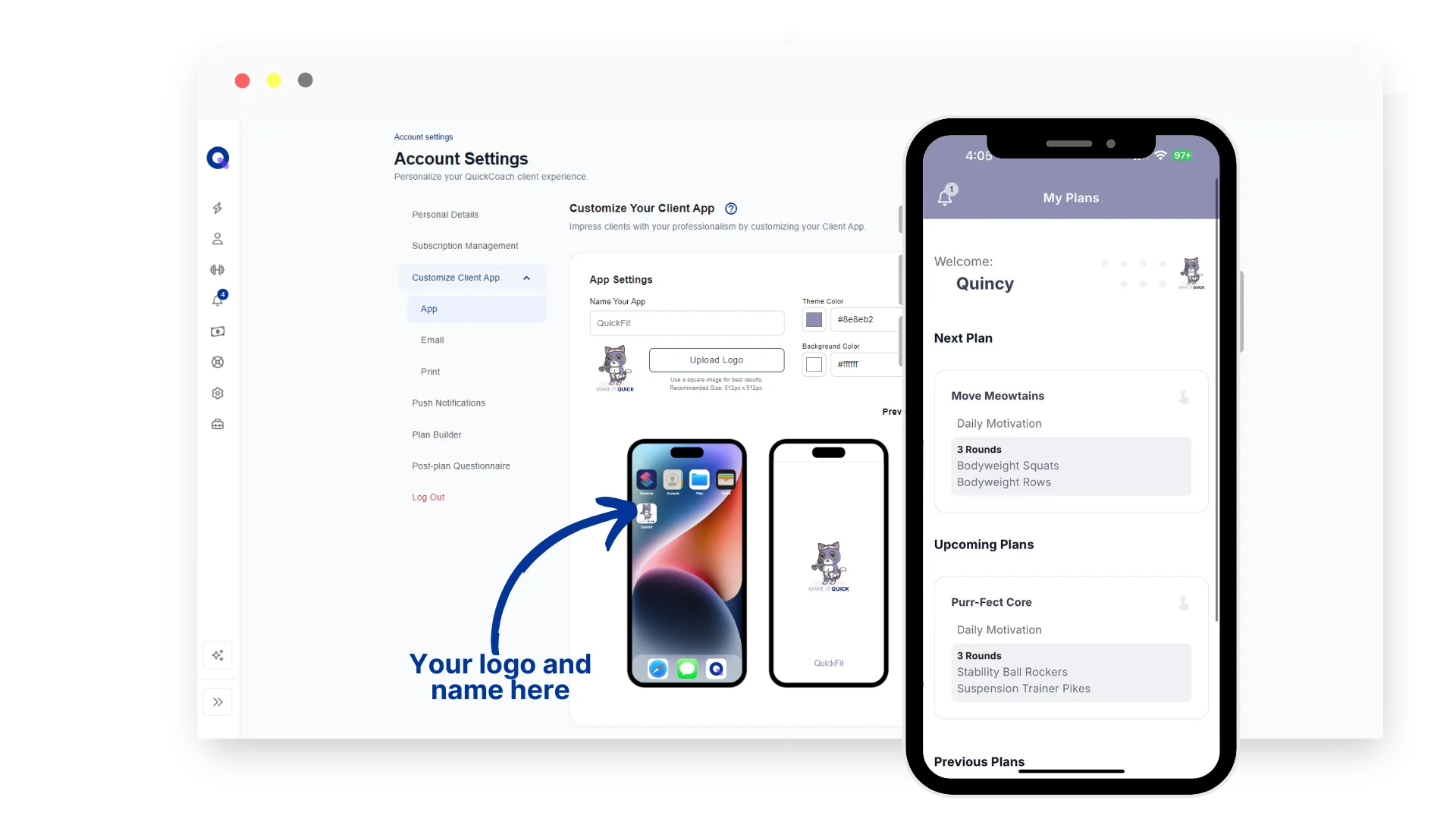
- Custom branding on the client app, branded client emails, and printed plans
- Client notifications and coach alerts
- Images and voice recordings on tasks, from the coach or the client
- Ad-hoc exercises, so a coach can add any exercise on the fly
- Activity insights tab, a dedicated view for client activity
- Workout sharing with branded templates and one-tap share
- Access to workouts and files older than 180 days
- Dark mode
- Priority support, with same-day replies
Most of these features matter more as a coach grows, with one exception. Plenty of coaches add a branded client app early, because it makes even a small roster look established. More than half of paying coaches are still within the free limit, so going Pro is usually a choice about the experience rather than the client count. A coach building a more visible business wants it sooner still. Pro is built around that genuine difference in needs, not around artificially limiting the free tier to push people into upgrading.
There's a category of freemium software that puts genuinely essential features behind a paywall and dares users to function without them. We've tried to build the opposite. The free tier is enough to actually run an early coaching practice. Pro is a real upgrade for coaches who have a real reason to upgrade. Both make sense on their own terms.
How the model stays sustainable
A free tier that runs alongside a paid tier is one of the most well-established business models in software. Slack, Notion, and Figma have run versions of this model for years. The mechanics are not unusual or fragile. They depend on a paid tier that's genuinely useful to the coaches who choose it, a free tier that's genuinely useful to the coaches who don't, and a product team that does both jobs well.
We're seeing it work. Coaches who upgrade to Pro tend to stay on Pro because the tools are doing real work for their business. The platform stays healthy as a result, and the free tier stays well-supported alongside it.
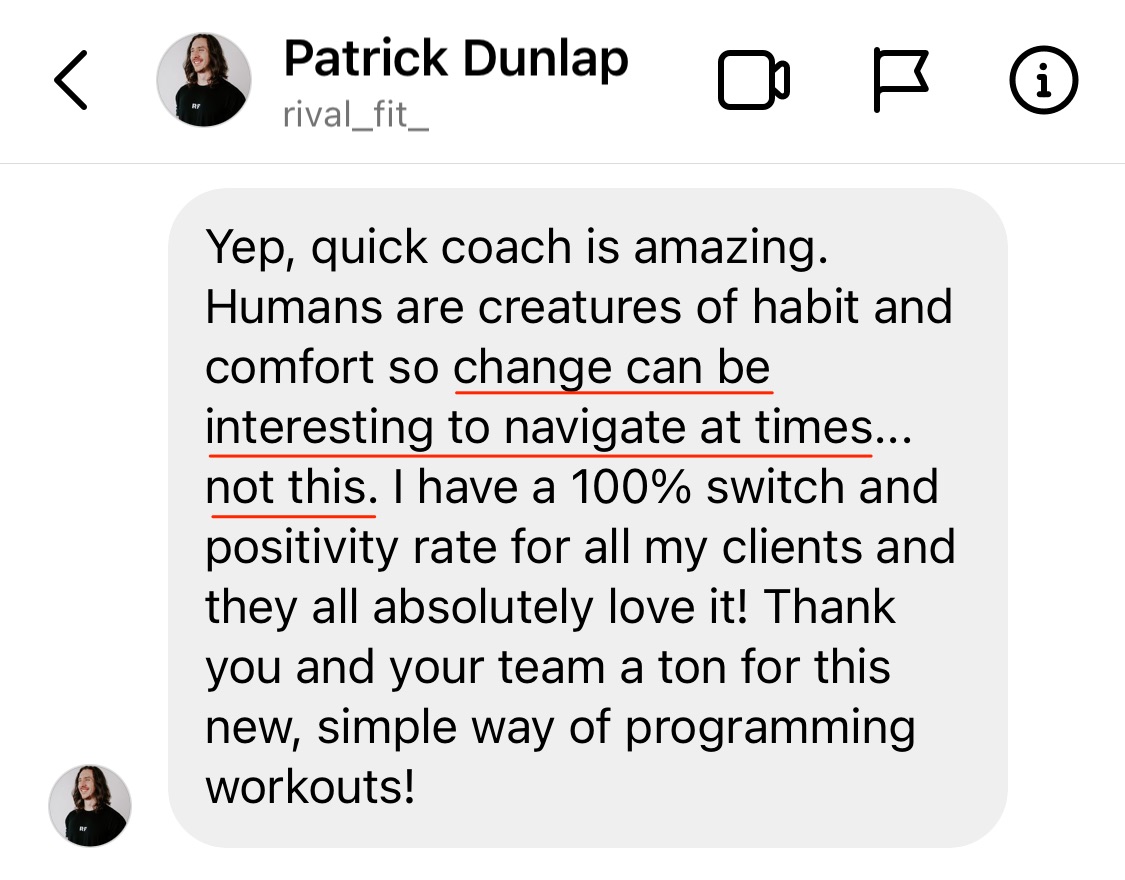
“I have a 100% switch and positivity rate for all my clients!”
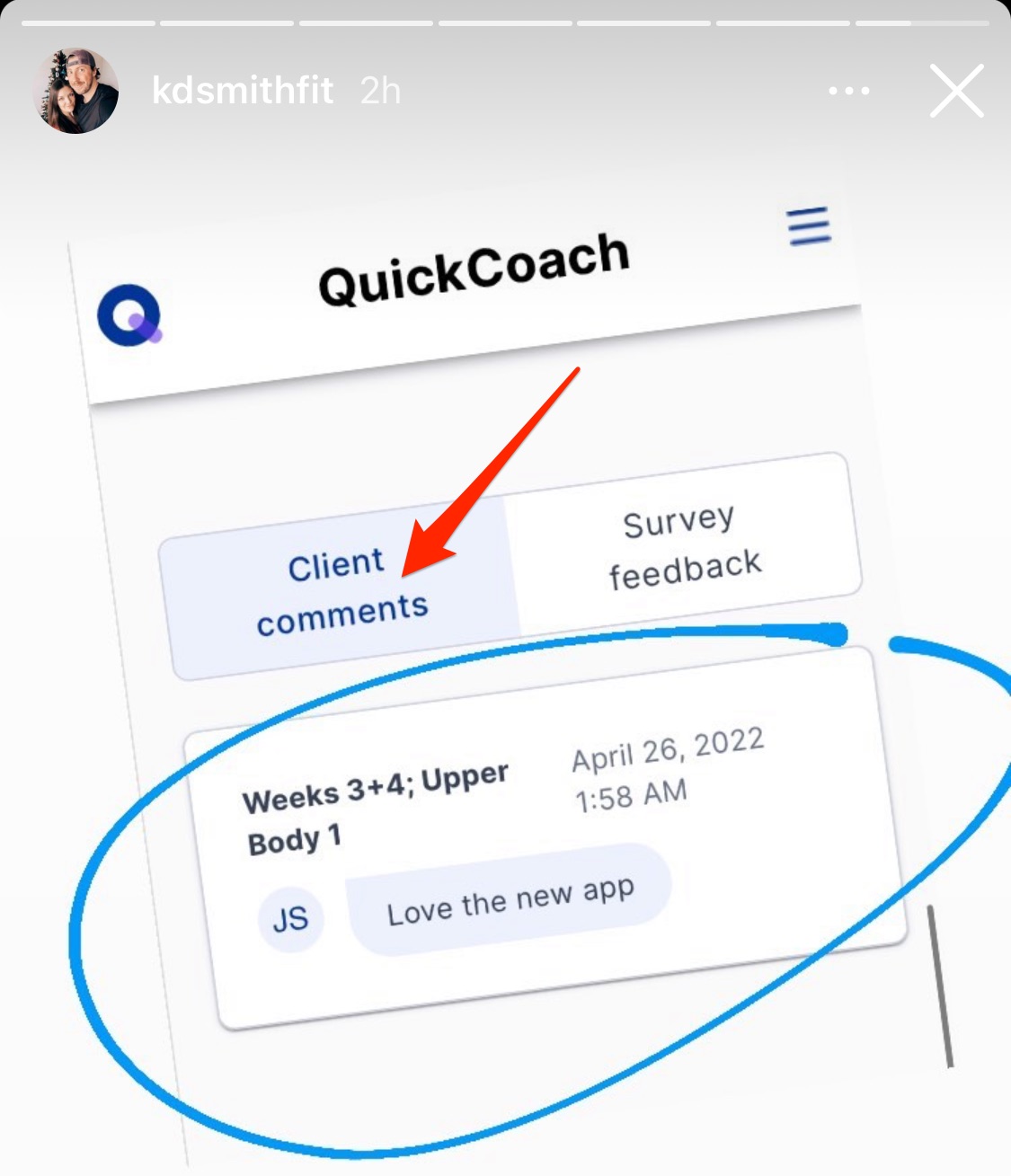
“Love the new app!”
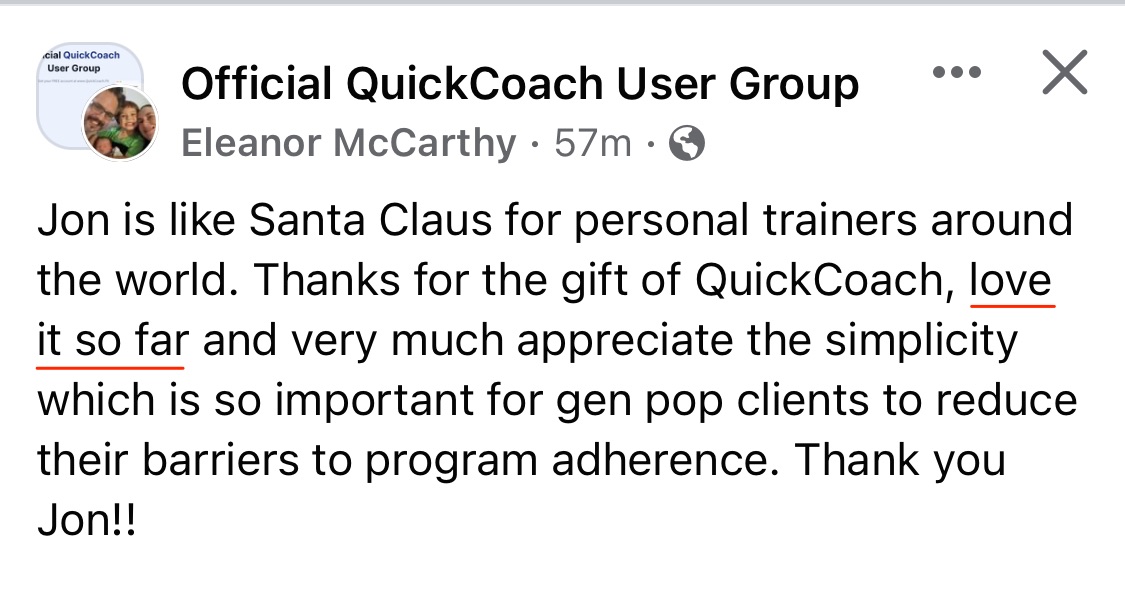
“It reduces barriers to program adherence!”
The model also works because we're deliberate about cost discipline. QuickCoach is built and operated by a focused team. We do not run an enormous sales operation or brand-marketing campaigns at scale. We invest in the product and the community and let those compound. The lower the cost base, the smaller the Pro conversion volume needs to be to keep the whole thing healthy.
It also helps that QuickCoach does not operate in isolation. As part of the Hale Health ecosystem alongside FitFocus, we share infrastructure, engineering resources, and learnings across products. A pattern we identify in one platform informs how we build the other. The full backstory is in why we acquired QuickCoach in late 2025.
Some of the most important support for QuickCoach's sustainability has come from coaches on the Pro tier. Historically the gap between free and Pro here has been smaller than on most platforms in the category, so the coaches who upgraded and stayed did it partly out of genuine backing for the platform, not strict feature math. That support is what keeps the current work going, and we don't take it for granted. The Pro tier will keep getting better because of it, never at the expense of the free tier, which is still where most of the platform's growth happens.
None of this is a guarantee that nothing will ever change. Every product evolves. What we can commit to honestly is that the underlying model, a free tier with real tools for coaches getting started and a Pro tier for coaches operating at scale, is the model we are building around for the long term, because it is the model we believe in.
How QuickCoach compares to other free personal trainer apps
Most "free" tools for personal trainers fall into two camps. One is a paid platform with a short trial dressed up as free; after a week or two, the work of setting up clients evaporates. The other is a free tier that locks the client app, the program builder, or both, leaving a coach with software that can't actually run a practice. The difference between a free plan and a free trial is why these two camps exist, and our free plan versus free trial reference defines both.
QuickCoach is neither. The free tier includes the full program builder, the full client mobile and web app, unlimited programs, an unlimited task library, and up to 20 clients. No countdown timer. No feature lockout on the parts a coach actually uses every day. For coaches weighing it against the best free PT apps in the category, that's the difference worth checking.
Here is how the free tiers stack up across the platforms coaches compare us against most often.
| Platform | Free tier client limit | Time limit / trial |
|---|---|---|
| QuickCoach | Up to 20 active clients | No time limit, free indefinitely |
| Everfit | Up to 5 active clients | No time limit on the free Starter plan |
| Trainerize | 1 client | Free Basic plan, functions as a trial |
| TrueCoach | No free tier | 14-day trial only |
| My PT Hub | No free tier | 30-day trial only |
Three platforms cap a working free plan well below what an early roster needs, and two skip the free plan entirely. For a fuller breakdown of paid pricing and features, read our comparison of the best free coaching software for 2026.
What this means for a coach starting today
If you're a coach evaluating QuickCoach right now, here's what you can take from this article.
Sign up for the free tier and run your coaching business on it for as long as you need to. The free tier is the product, not the trial.
Build on it. The free tier is designed for the early stages, with the core tools you need to onboard clients, deliver programming, and run a real workflow. When the time comes that you want more, Pro is the natural next step, and the move to Pro is something coaches choose because of specific tools they want, not because they were squeezed into it.
Build long-term plans on it. Coaches running their primary business on QuickCoach are not living on borrowed time. The model that lets us offer the free tier is the same model that makes the free tier durable. Pro coaches who back the platform make it possible for free coaches to use it, and both groups benefit from a healthier, better-resourced product as a result.
Ask us hard questions about any of it. We'd rather answer them than have coaches making decisions based on assumptions. The email below reaches a real person. We read every message.
Our work, in the end, is to give QuickCoach a long, healthy, sustainable future. The free tier is the most visible part of how we do that. The community of coaches building real businesses on it is the reason it's worth doing.
Frequently Asked Questions
Is QuickCoach really free for coaches?
Yes. The QuickCoach free tier has no time limit and supports up to 20 clients with unlimited programs, an unlimited task library, and a full client mobile and web app. Coaches can run their primary practice on the free tier indefinitely without paying.
What is the difference between QuickCoach free and Pro?
Free includes the core program builder, unlimited programs, the client app, and up to 20 clients. Pro adds unlimited clients, custom branding across the client app and emails, branded workout sharing, client activity insights, image and voice notes, dark mode, priority support, and access to historical data older than 180 days.
Will QuickCoach's free tier change or disappear?
The free tier is the foundation of the platform, not a promotional offer. It is supported by Pro subscribers and by shared infrastructure across the Hale Health ecosystem. The model is the same one used by Slack, Notion, and Figma, and is the model QuickCoach is built around for the long term.
When should a coach upgrade to QuickCoach Pro?
Upgrade when you have outgrown the free tier in a specific way. Common triggers are passing 20 clients, wanting a fully branded client app, needing branded workout sharing for marketing, or wanting client activity notifications and priority support.
Is QuickCoach the best free app for personal trainers?
For personal trainers who want a real free tier with the full program builder, the client mobile and web app, unlimited programs, and no time limit, QuickCoach is built for that case. Coaches who need a paid template marketplace or built-in payment processing will be better served elsewhere. For the core work of programming clients and running sessions, the free version of QuickCoach holds up against any paid platform in the category.
Can I use QuickCoach as a personal trainer client management app?
Yes. QuickCoach holds the client list, programs, task library, mobile and web client apps, and a record of every session and check-in inside a single workspace. The free tier supports up to 20 clients, which fits most early personal training rosters without needing a second tool.
Last updated June 2026. Pricing and free tier limits verified against each platform's official pricing page at the time of writing.
More on the platform and how we think about it on the QuickCoach blog. If you're comparing options, our roundup of the best free coaching software in 2026 and the full QuickCoach Pro pricing breakdown go deeper on the numbers. Questions about how the model works, what's in Pro, or whether QuickCoach is right for your business: support@quickcoach.fit.